
The short answer
For general work gloves, cow split leather is the usual choice for heavy handling at a lower price, goatskin is the choice when the worker needs feel, and cotton or dotted-grip gloves cover light, low-cost tasks. State the use, the leather, the cuff and the size split in your request, and ask for a test report to the standard your market uses, such as EN 388 in Europe. Order samples before the main order.
Work glove types you can source
Ranges differ by supplier. Tell us the job the glove will do and we will match you with the manufacturers who make that style.
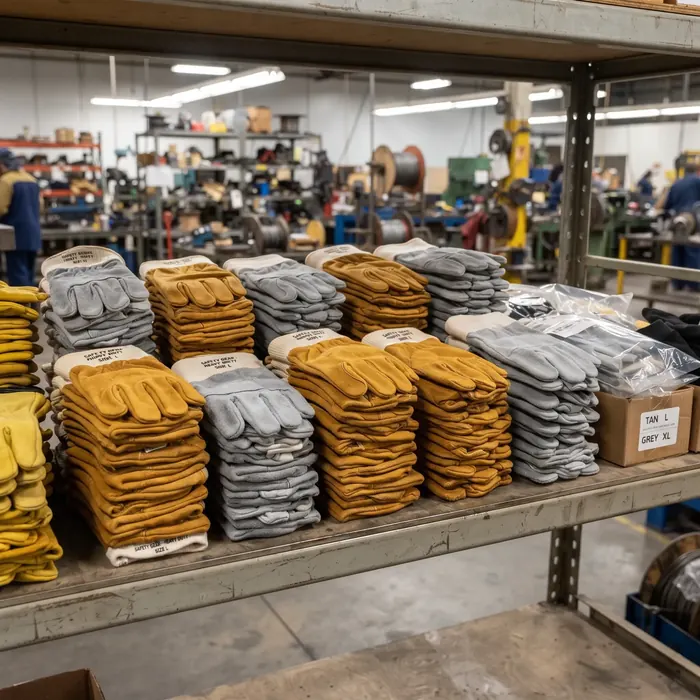
- Rigger gloves. Cow split or goat and cow grain leather with a leather or fabric back and a safety cuff, made for construction, loading, metal handling and general heavy work.
- Assembly and general leather work gloves. Full-finger goatskin or leather palm gloves in lighter weights for warehouse, assembly and light industrial work.
- Cotton and knit work gloves. Plain knit, stitched and dotted-grip gloves for light handling, packing, gardening and cleaning tasks where cost matters most.
- Hi-vis work gloves. Gloves with white, orange or yellow panels so hands stay visible near traffic, loading bays and machinery.
- Long-cuff and gauntlet gloves. Gloves with extended wrist coverage for hot, sharp or rough materials. If you need gloves rated for welding, say so in your request and ask for the supplier's test report.
Choosing the leather and palm
The palm material decides how long the glove lasts, how it feels and what it costs. Ask every supplier to state the leather type and thickness in the quote so you compare like with like.
| Palm material | Typical use | What to know |
|---|---|---|
| Cow split leather | Rigger and heavy-duty gloves | Tough and abrasion resistant. Usually the economical choice for rough work. |
| Cow grain leather | Rigger and general work gloves | A smoother, stronger outer layer than split leather. Costs more, wears better. |
| Goatskin | Assembly and precision handling | Soft and flexible with good grip. Chosen when the worker needs feel. |
| Cotton jersey or knit, with or without PVC dots | Light handling and packing | Lowest cost. Not for sharp or hot materials. Dots add grip. |
Cuff, back and lining options
- Safety cuff. A stiff cuff that covers the wrist. Standard on rigger gloves and easy to slip on and off.
- Knit wrist. An elasticated knit cuff that keeps dirt out and stays in place. Common on assembly and general gloves.
- Gauntlet cuff. A long cuff that covers part of the forearm, for materials that splash or fall onto the wrist.
- Leather back or fabric back. A fabric back is lighter, cooler and cheaper. A full leather back lasts longer on heavy work.
- Lining. Unlined for dexterity, cotton lined for comfort, or insulated for cold work. State the temperatures the glove will be used in.
- Reinforcements. Patches on the palm, thumb and index finger where wear is heaviest.
Who buys work gloves in bulk and what they ask for
- Industrial and safety distributors. Want standard styles, steady quality across batches, the right marking and a test report on file.
- Contractors and facility buyers. Want durable gloves at a price per pair that works over thousands of pairs.
- Retailers and private-label brands. Want their own label, hangtag, colours and packaging, and a consistent size split.
- Importers supplying a government or tender buyer. Want written specifications, certificates and samples that match them exactly.
Standards and tests to ask about
Gloves sold as protection must meet the rules of the market they are sold in. These are the pointers buyers meet most often. Confirm the exact requirement with your importer or a safety adviser, because it depends on the risk the glove is sold for.
- EN 388. The European standard that rates gloves for mechanical risks such as abrasion, blade cut, tear and puncture. Ask for the test report and check that the rating on the glove matches it.
- EN ISO 21420. General requirements for protective gloves, including sizing, materials and marking.
- CE or UKCA marking. In the EU and the UK, protective gloves are personal protective equipment and must carry the conformity marking that applies to their risk category.
- ANSI/ISEA 105. The North American standard for hand protection, with cut, puncture and abrasion levels.
- Leather chemistry. EU buyers often ask about restricted substances in leather, such as chromium VI. Ask the supplier what testing they can provide.
- Australia and New Zealand. AS/NZS 2161 covers occupational protective gloves. Ask your importer whether it applies to your product.
Sizes, labels and packing
Agree the size split before production, for example how many pairs of each size in a carton. Gloves are usually sold by the pair or by the dozen pairs, and packed in polybags, on header cards or loose in cartons.
Your own label, size mark, standard pictograms and care instructions can be printed or sewn in. Check the artwork against the markings required in the country you sell in.
What to tell suppliers when you ask for a quote
- Use. Rigger, assembly, cotton, hi-vis or gauntlet, and the work it is for.
- Leather and thickness. Cow split, cow grain or goatskin, or cotton, and the cuff and back style.
- Size split and quantity. Which sizes and how many pairs, with the first order and a likely yearly volume.
- Colours, logo and label. Palm, back and cuff colours and where your logo goes.
- Standards and paperwork. The test reports you need and the country you are selling in.
- Packing and destination. Pairs per carton, header cards or polybags, and the port or address.
Safety gloves or work gloves: what to ask for
Buyers use the two names for the same range, but they are not the same thing. A work glove protects against wear and rough handling. A safety glove is tested and marked to a standard for a stated risk, such as abrasion, cuts or impact. Tell the supplier which one you are buying, because it decides the paperwork and the price.
- General work gloves. Leather, cotton and knit gloves for handling, loading and light industrial work. Ask for the leather grade, the size split and the packing.
- Safety-rated gloves. Gloves sold as protection need a test report to the standard of your market, such as EN 388 in Europe and the UK or ANSI/ISEA 105 in the US. Check that the rating printed on the glove matches the report.
- Impact and mechanic safety gloves. Gloves with impact padding for oil and gas, workshops and heavy industry are on a separate page.
- Welding and heat gloves. Suppliers on Baramdat list long-cuff gauntlet gloves for welding, grinding and other hot workshop tasks. Welding gloves are tested to their own standard, EN 12477 in Europe, so ask for the test report, the leather and the heat rating.
- Cut-resistant and winter gloves. These are different products with their own standards and materials. If you need them, say so in your request and we will ask manufacturers for quotes and test reports.
Confirm the exact requirement with your importer or a safety adviser, because it depends on the risk the glove is sold for.
Hi-viz and driver-style work gloves
- Hi-viz gloves. Panels in white, orange or yellow so hands stay visible near traffic, loading bays and machinery. Ask for the colour fastness and whether the panels are stitched or printed.
- Driver-style gloves. Soft leather gloves with a keystone thumb and gathered wrist, used for driving, delivery and light handling. Ask for the leather type and the size range.
- Branding. Colours, logo placement and hangtags can usually be matched for larger orders. Ask for the minimum per colour.
Buying work gloves in bulk: pricing and packing
Work gloves are priced per pair or per dozen, and the price usually falls as the quantity rises. Always ask for the same specification from every supplier and compare the total delivered cost, not just the price per pair.
- Price breaks. Ask for prices at several quantities, for example 1,000, 5,000 and 10,000 pairs, so you can see where the price falls.
- Pairs per carton. Ask how many pairs go in an inner pack and in a carton, and the carton weight, because freight is charged by volume and weight.
- Size split. State the share of each size, for example medium, large and extra large. Mixed sizes are normal. A single size can raise the minimum.
- Mixed order. You can often order several styles together. The minimum is usually set per style.
How to check a sample pair
- Check the leather. Feel the thickness and surface, and compare the sample with the leather grade on the quote.
- Check the stitching. Look at seam strength at the thumb, the fingertips and the palm, and pull gently on the seams.
- Check fit and dexterity. Try the glove on and pick up small objects. A glove that is stiff or cut wrong will not be worn.
- Check the cuff and lining. Check the cuff finish, the lining attachment and the wrist closure.
- Check colour and finish. Rub the leather on a white cloth for colour transfer, and check that the dye is even.
- Check the markings. Check that size labels and standard markings are correct and legible.
Other glove types
Work gloves, mechanic gloves and motorcycle gloves are different products with different leathers, protection and standards. If your range includes riding gloves, see the motorcycle gloves page.
Coated and dipped work gloves: nitrile, latex and PU
Besides leather, many buyers also ask for knit gloves with a coated palm. A knit liner is dipped or coated with nitrile, latex or polyurethane (PU), which adds grip and protection in wet, oily or abrasive work. They are common in warehousing, construction, mechanical work and gardening.
| Coating | Good for | What to ask |
|---|---|---|
| Nitrile | Oily and greasy handling, general industrial work. | Foam or smooth finish, the liner material and the glove gauge. |
| Latex | Wet and dry grip, gardening and construction. | Crinkle or smooth finish, and whether any buyer needs latex-free gloves. |
| PU (polyurethane) | Light, precise work where feel matters. | The liner, the coating thickness and the colour options. |
| PVC dots on cotton | Light handling and packing where cost matters most. | The dot pattern, the cotton weight and the sizes. |
Ranges differ by factory, and coated knit gloves are not made by every leather glove maker. Tell us the liner, the coating, the sizes and the quantity, and we will ask which manufacturers make them. Ask for test reports to the standard your market uses, such as EN 388 in Europe.
Minimum order, samples and lead time
Minimum orders and prices vary by supplier and by how custom the glove is. A standard style the maker already produces is quicker and cheaper to order than a glove made to your pattern and colours. Ask for a written quote that states the price per pair, the minimum order, the lead time and the packing.
Always order samples first. Check the stitching, the fit across sizes, how the leather feels after wearing and that the markings match the test report. We can help arrange samples and an independent inspection before shipment.
Leather work gloves listed on Baramdat
A few of the products suppliers list on Baramdat today. Open one to see the supplier and ask for a quote.
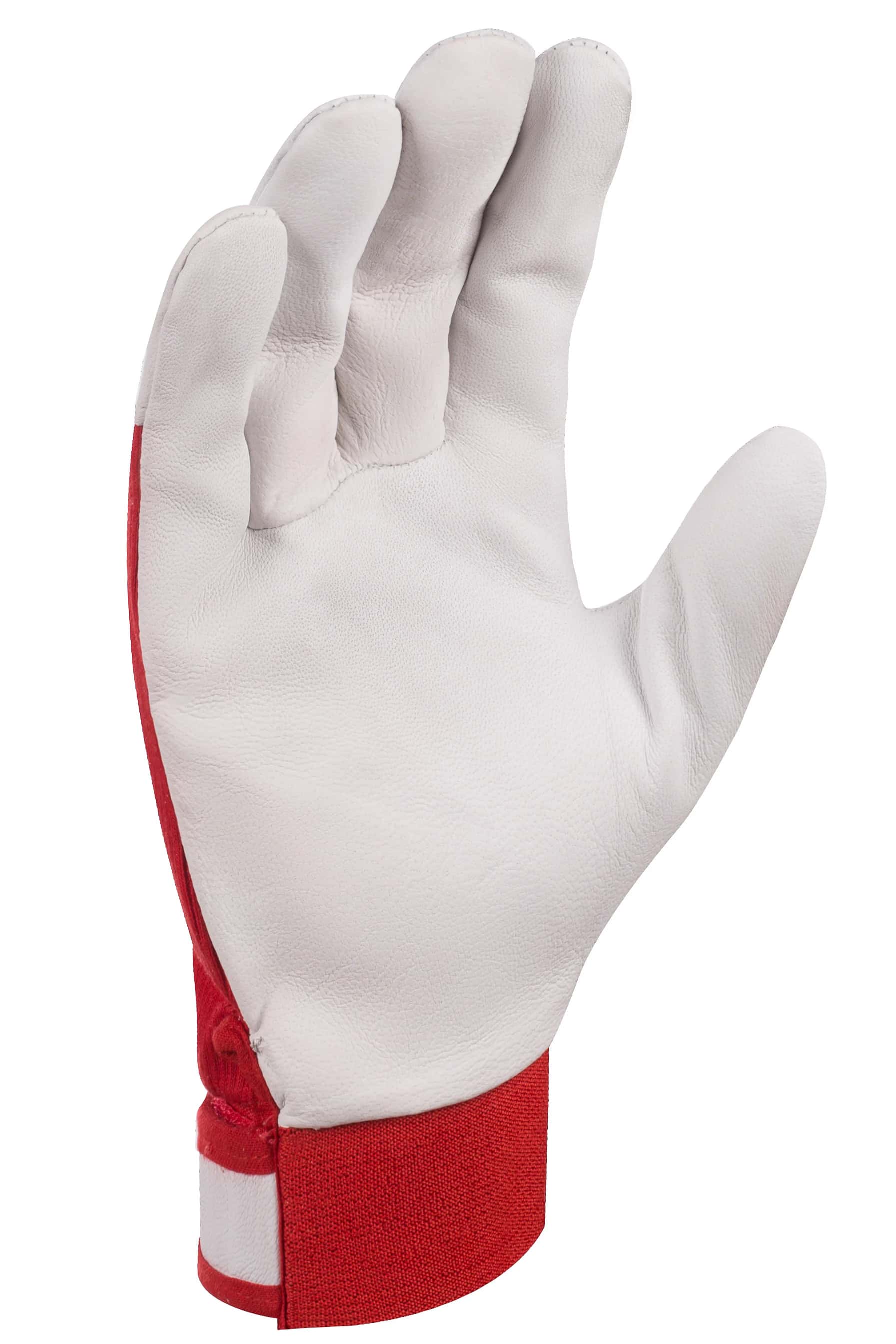
Full-Finger Work Gloves with Textured Palm – Red & White Assembly and Handling Gloves
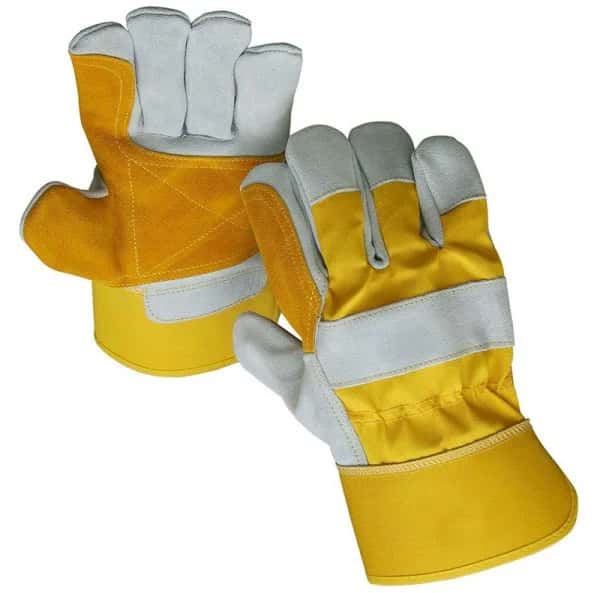
Cow Split Leather Rigger Gloves – Grey Leather Palm with Fabric Back, General Work & Handling
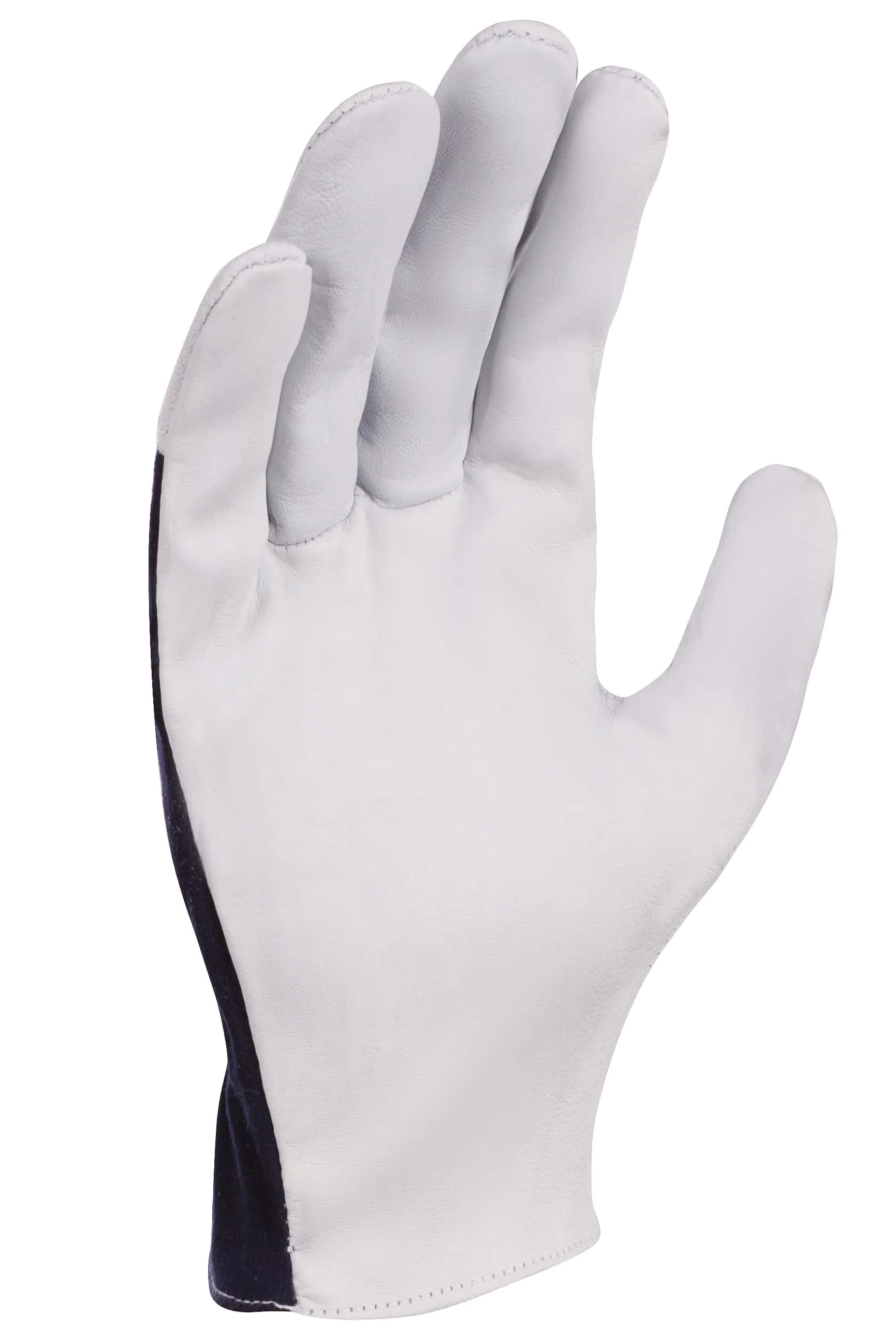
Goatskin Leather Assembly Work Gloves – Full Finger, Size 10, White & Navy (1 Pair)
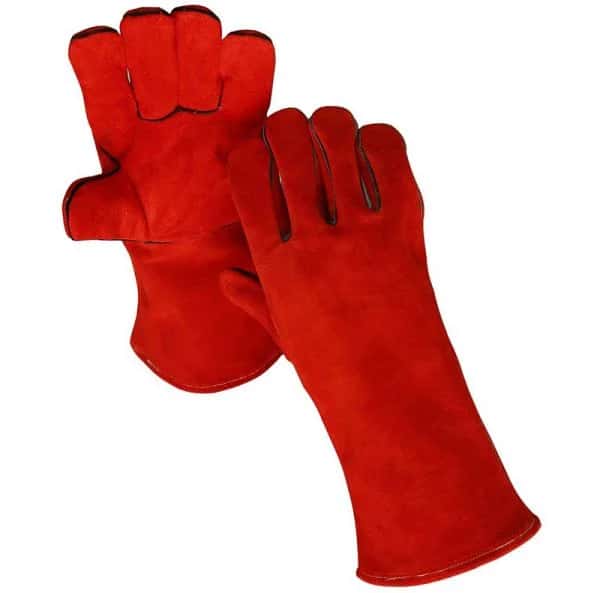
Red Long-Cuff Protective Work Gloves with Gauntlet Wrist Coverage – One Pair
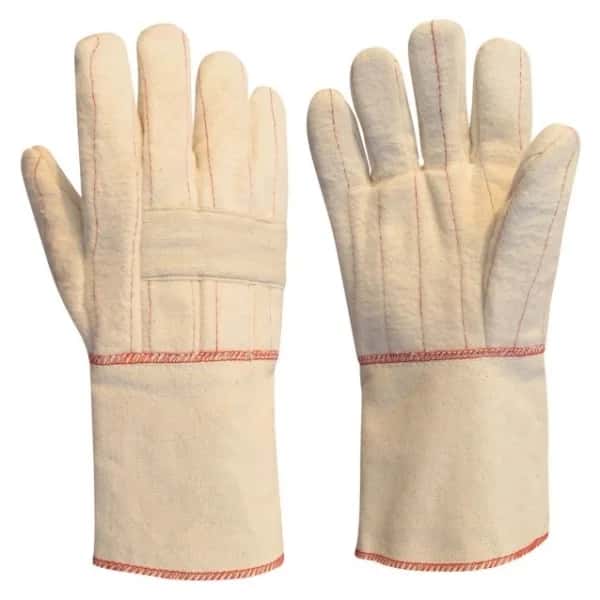
Cotton Work Gloves – Plain Knit, Dotted Grip & Stitched Styles for Everyday Use
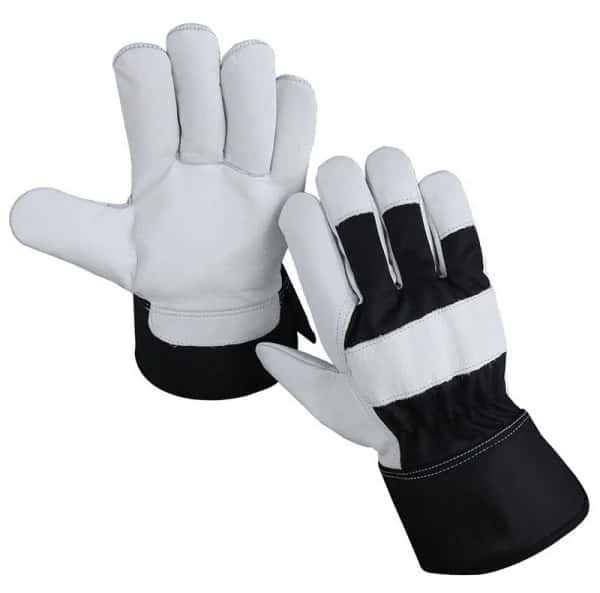
Goat & Cow Grain Leather Rigger Work Gloves – Extended Cuff, Elasticated Back
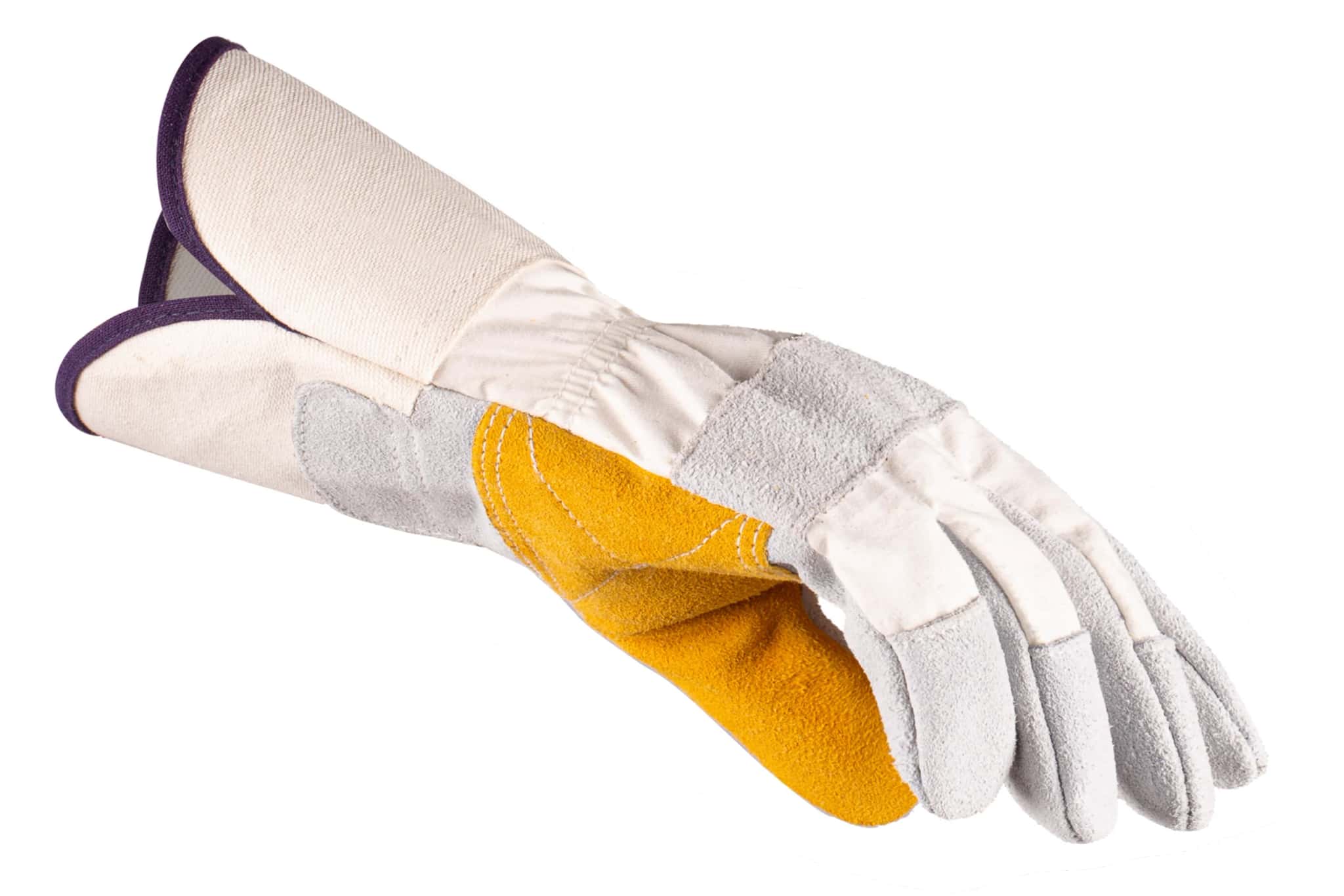
Heavy-Duty Cow Split Leather Rigger Gloves – Long Safety Cuff, Reinforced Palm, One Pair
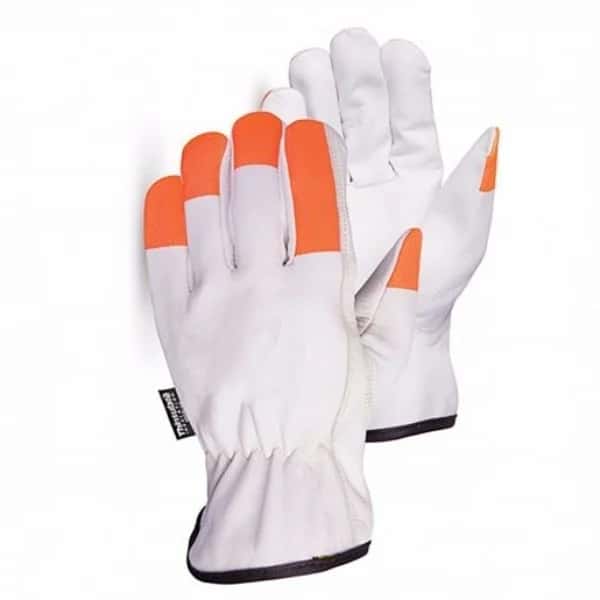
Hi-Viz Driver-Style Work Gloves – White & Orange Safety Gloves with Gathered Wrist
Browse products on Baramdat
See what suppliers already list, or send a request below for anything you cannot find.
Frequently asked questions
Who makes leather work gloves in Pakistan?
Gloves are made in several industrial cities, with Sialkot the best known. Suppliers on Baramdat list their city and the glove types they make, so you can compare them side by side.
What is the difference between rigger gloves and general work gloves?
Rigger gloves are heavier, usually cow split or cow grain leather with a safety cuff, for rough handling and construction. General work and assembly gloves are lighter, often goatskin or a thinner leather, for work that needs feel. If you also need padded or impact-protection gloves, see our mechanic and impact gloves page.
Cow split or cow grain leather: which should I choose?
Split leather is the more economical choice and works well for heavy handling. Grain leather has a smoother, stronger outer layer and tends to wear better, at a higher price. Ask the supplier for the leather type and thickness in the quote and compare samples.
Can I get work gloves made with my own label and colours?
Yes. Many manufacturers do private-label work, including your logo, labels, colours and packaging. Gloves made to your own pattern usually have a higher minimum order than standard styles.
Which standard should my work gloves meet?
It depends on where you sell and what the glove is sold for. In Europe, mechanical-risk gloves are usually rated to EN 388, and general requirements are in EN ISO 21420. In North America, buyers often ask for ANSI/ISEA 105. Ask the supplier for test reports and confirm the requirement with your importer.
What is the minimum order for work gloves?
It differs by supplier and by how custom the glove is. Ask each supplier for a written quote that states the minimum order, the price per pair, the lead time and the packing.
How are work gloves packed for export?
Usually by the pair or by the dozen pairs, in polybags or on header cards, then in export cartons. Agree the pairs per carton and the size split before production.
Can I order samples first?
Yes, and we recommend it. Check the stitching, the fit across sizes and the markings before placing the main order. We can help arrange and forward samples.
What is the difference between safety gloves and work gloves?
Work gloves protect against wear and rough handling. Safety gloves are tested and marked to a standard for a stated risk, such as EN 388 for mechanical risks. Tell the manufacturer which you need and ask for the test report.
Can I buy work gloves in bulk, and what is the minimum order?
Yes. Minimums are set per style, per leather and per size split, and they differ by manufacturer. Ask for a written quote with prices at several quantities, the pairs per carton and the lead time.
Can you supply work gloves to the US, UK, EU, Canada and Australia?
Yes. Pakistani manufacturers export work gloves to these markets. Tell us your destination so suppliers can quote the right standard marking, labels and shipping terms, and confirm the import rules with your importer or customs broker.
Do you supply welding gloves?
Yes. Suppliers on Baramdat list long-cuff gauntlet gloves for welding, grinding and heat-related workshop work. Welding gloves are tested to their own standard, EN 12477 in Europe, so ask for the test report and heat rating for your market.
Do you supply cut-resistant or winter work gloves?
These are not listed on Baramdat at the moment. Send your specification and quantity, and we will ask manufacturers for quotes and test reports.
Can I get hi-viz or driver-style gloves with my own logo?
Yes, usually. Colours, logos and hangtags can be matched on larger orders. Send the artwork, the quantity and the colour split and ask for a printed sample.
How does ordering work gloves from Pakistan compare with other countries?
It depends on the supplier, not the country. Compare written quotes on the same specification: leather, size split, standard, packing, minimum order and lead time. Ask for samples from each supplier.
Can I mix glove styles in one order?
Often yes, but minimums are usually set per style and per size. Send the full list with quantities and ask each supplier to quote the mix.
How do I get a quote?
Fill in the short form on this page with the glove type, quantity and destination country. Our team replies within one business day. You pay suppliers directly, and any fee for our service is agreed in writing before work starts.
Do you supply nitrile or latex coated work gloves in bulk?
Some glove manufacturers make knit gloves with a nitrile, latex or PU coated palm, but ranges differ by factory. Send us the liner, the coating, the sizes and the quantity, and we will ask which manufacturers make them and compare their quotes.
Where can I buy work gloves in bulk?
You can buy leather work gloves in bulk directly from manufacturers. Send us the style, leather type, sizes and quantity, and we shortlist manufacturers, compare quotes and arrange samples. Price depends on the leather, the construction and the quantity, so ask for prices at several quantities.
Can you make custom work gloves with my logo?
Manufacturers can add your logo by printing, embroidery or labels, and match colours and packaging. Send the logo files, the position and your specification, and ask for a sample before you order in bulk.
Do you offer private label work gloves?
Many manufacturers make work gloves under your own brand, with your labels and packaging. Expect a higher minimum order than for standard stock gloves, and agree exclusivity in writing if it matters to you.
How do I get cheap work gloves in bulk without poor quality?
Price comes from the leather grade, lining, stitching and order size. To keep the price down without losing quality, choose a standard style, compare quotes at several quantities, order samples first and use a pre-shipment inspection for larger orders.