
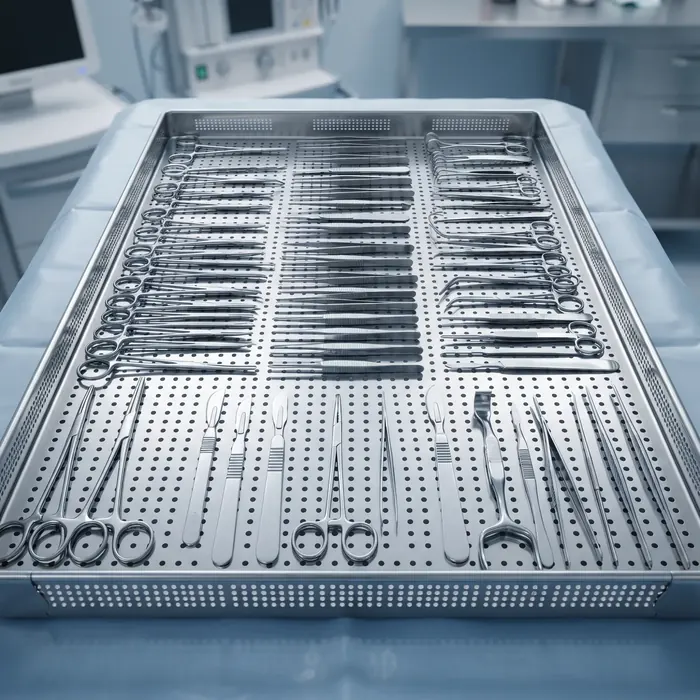
The short answer
You can source reusable stainless steel surgical instruments from Pakistani manufacturers: general surgery forceps and clamps, orthopedic and spinal sets, rongeurs, dental, ophthalmic and veterinary instruments, with your own brand (OEM) if you need it. What decides the result is the steel grade, the finish, the sterilisation guidance and the paperwork your market requires. Always order a sample before a large order.
What you can source
Suppliers on Baramdat list instruments in several groups. Ranges differ by supplier, so tell us what you need and we will match you with the right makers.
- General surgery instruments. Tissue forceps (Babcock and Allis), haemostatic forceps (Pean and Halsted mosquito), needle holders, scissors and scalpel handles, sold singly or in minor-surgery sets.
- Orthopedic and spinal instruments. Spinal fixation sets, knee arthroscopy sets, small-fragment locking and non-locking sets, cannulated screw sets, discectomy retractors and bone plate benders, supplied in fitted sterilisation trays or hard cases.
- Rongeurs. Kerrison rongeur sets in several shaft and bite patterns, and single rongeurs.
- Dental surgical instruments. Extraction forceps, luxating elevators, orthodontic pliers, rubber dam clamp sets and surgical kits.
- Ophthalmic instruments. Micro-surgery kits for cataract and other eye procedures, supplied with autoclavable trays.
- Veterinary instruments. Orthopedic and general instrument sets made for veterinary use.
- Cosmetic surgery instruments. Liposuction and fat-grafting cannula sets in many piece counts, with fixed handles or Luer-lock connections.
- Beauty and grooming tools. Precision tweezers and scissors from the same workshops, in several tip shapes.
Common surgical instruments and what to specify
These are the instruments buyers ask for most often. The same name can cover several patterns, so a drawing, a photo or a sample removes doubt.
| Instrument | Typical use | What to specify |
|---|---|---|
| Babcock forceps | Gripping delicate tissue and tubular structures gently. | Length and whether the jaws are smooth. |
| Allis forceps | Grasping and holding tissue with fine teeth. | Length and number of teeth. |
| Kelly, Pean and mosquito forceps | Clamping small vessels (haemostats). | Straight or curved, jaw serration, length and ratchet lock. Mosquito forceps are the smallest and finest. |
| Kocher forceps | A toothed clamp for gripping tough tissue. | Straight or curved, tooth pattern and length. |
| Needle holders | Holding the needle while suturing. | Jaw type (smooth, serrated or tungsten carbide insert), length and lock. |
| Scalpel handles | Holding a replaceable blade. | Handle number (for example No. 3 or No. 4) and the blade numbers it takes. |
| Kerrison rongeur | Removing small amounts of bone, mainly in spine surgery. | Bite angle, bite size, shaft length and up-bite or down-bite. |
| Elevators (Freer and others) | Lifting tissue away from bone. | Width, tip shape and length. |
| Retractors | Holding tissue aside to give the surgeon access. | Blade count, blunt or sharp tips, size and handle. |
What to specify before you ask for quotes
Surgical instruments are made to a pattern, so the more exact your request, the more comparable the quotes. Send as many of these details as you can.
| Detail | Why it matters |
|---|---|
| Instrument name and pattern | The same name can cover several patterns. A drawing, a photo or a sample removes doubt. |
| Steel grade | Stainless steel grades differ in corrosion resistance and hardness. Ask the supplier which grade they use and whether it is the same on every piece in the set. |
| Size and finish | Length, tip shape and a mirror, satin or matte finish. Finish affects glare in the operating room and how well an instrument cleans. |
| Set contents and packing | Piece count, tray or case type, and whether instruments come loose or in a fitted set. |
| Branding | Laser marking of your logo, article numbers, and your own packaging and labels. |
| Reusable or single use | Reusable instruments must withstand repeated steam sterilisation. Say which you need. |
| Destination market | Your country decides which registration or marking you need. Tell the supplier so they can say what they can provide. |
Quality and compliance: what to ask for
Medical devices are regulated, and the rules depend on the country you sell in. We cannot tell you what your market requires, but these are the usual questions to put to a supplier.
- Quality management system. Ask whether the factory holds a medical device quality certificate such as ISO 13485, and ask to see the certificate and its expiry date.
- Market approvals. Instruments sold in the EU generally need CE marking under the EU medical device rules. In the UK, check the current MHRA rules on UKCA and CE marking. In the United States, many instruments are listed with the FDA. Ask which approvals the supplier can support, and check with your importer or regulatory adviser.
- Material and test standards. Ask whether the steel and the finished instruments are tested to recognised standards, for example ISO 7153-1 for stainless steel used in surgical instruments and ISO 13402 for resistance to autoclaving and corrosion.
- Material details. Ask for the steel grade and, where relevant, a material certificate for the batch.
- Sterilisation and cleaning instructions. Reusable instruments should come with clear cleaning and steam sterilisation guidance.
- Inspection. Arrange a pre-shipment inspection for large orders. Check joints, box locks, tip alignment and finish on every piece, not only on a sample.
Pakistani and German-made instruments: how to compare
Buyers often ask whether Pakistani instruments can match German ones. The answer depends on the individual maker, not on the country. Judge both the same way: steel grade and hardening, finish, how smoothly joints and box locks move, tip alignment, markings and the paperwork that comes with the batch.
Many buyers choose Pakistani makers for the price and for the ability to produce smaller or custom runs under their own brand. Order a sample set and compare it side by side with the instrument you use today before you decide.
Instrument sets, kits and packs
Many buyers order instruments as ready-to-use sets and kits, not as single pieces. Common requests include these.
- Minor surgery sets. A small set of scissors, forceps, a needle holder and a scalpel handle for clinics and minor procedures.
- Dissection kits. Kits for medical, biology and veterinary students, usually with a scalpel, scissors, forceps and probes in a case.
- ENT and dermatology sets. Specialty sets for ear, nose and throat practice and for dermatology and cosmetic procedures.
- Cataract and eye trays. Micro-surgery sets in autoclavable trays, see our ophthalmic instruments page.
- Veterinary sets. General and orthopedic sets made for animal surgery.
- Custom sets and cases. Your own piece list, tray or case, with laser marking and your branding.
Send the piece list with the quantity of each instrument, the case or tray type, the steel grade, the sterilisation method you plan to use and any marking or packaging requirements.
Forceps, hemostats and clamps by type
| Instrument | Typical use | Notes for your brief |
|---|---|---|
| Babcock forceps | Gripping delicate tissue and tubular structures gently. | Specify length and jaw shape. |
| Allis forceps | Grasping and holding tissue with fine teeth. | Specify length and tooth count. |
| Adson forceps | Fine tissue forceps for skin and delicate work. | Plain or toothed tips, and length. |
| Kelly forceps | Haemostat serrated on the front part of the jaws. | Straight or curved, and length. |
| Pean forceps | Haemostat, usually larger, serrated along the whole jaw. | Straight or curved, and length. |
| Mosquito forceps | The smallest, finest haemostats, for small vessels. | Straight or curved, and length. |
| Kocher forceps | A toothed clamp for gripping tough tissue. | Tooth pattern, straight or curved, and length. |
| Needle holders | Holding the needle while suturing. | Smooth, serrated or tungsten carbide insert jaws, and length. |
| Towel clamps | Securing surgical drapes. | Length and tip pattern. |
| Sponge-holding forceps | Holding swabs and sponges. | Length and jaw type, ring or smooth. |
How to check a sample
- Box lock. The joint should open and close smoothly without play or grinding.
- Jaw alignment. Tips and teeth should meet exactly when the instrument is closed.
- Ratchet. The lock should hold under hand pressure and release cleanly.
- Finish. Look for even polish and no burrs, pitting or rough edges, particularly at the joint and inside the rings.
- Marking. Check that the logo, size and article number match your order.
Orthopedic and spinal instruments
Suppliers on Baramdat list the following groups. Ranges differ by supplier, so tell us the procedures you serve and we will match you with makers.
- Spinal instrument sets. Fixation sets with rods, clamps, hooks and hand tools in a hard carry case, and discectomy retractor sets with assorted blades and arms.
- Arthroscopy sets. Knee arthroscopy instrument sets in fitted, perforated sterilisation trays.
- Small-fragment sets. Locking and non-locking small-fragment instrument sets with a fitted metal tray.
- Screw instrument sets. Cannulated screw instrument sets, drivers and quick-coupling handles.
- Rongeurs. Kerrison rongeur sets with interchangeable shafts, and single rongeurs in several bite angles.
- Bone tools. Bone plate benders, elevators, hooks, probes and chisels.
- Veterinary orthopedic sets. Instrument sets made for veterinary orthopedic surgery.
Orthopedic sets: what to specify before you ask for quotes
Orthopedic sets are made to a pattern and often have to work with other parts of a system, so the brief matters more than for simple instruments.
| Detail | Why it matters |
|---|---|
| Procedure and set contents | List every instrument and the piece count. Two sets with the same name can hold different instruments. |
| Implant system compatibility | If the instruments must work with a particular implant or screw system, say which. Check fit and compatibility yourself on a sample before ordering in volume. |
| Sizes and patterns | Screw and driver sizes, shaft length, bite angle and size for rongeurs, blade and arm sizes for retractors. |
| Tray or case | A fitted perforated sterilisation tray, a hard case or loose instruments. The tray must suit the sterilisation method you use. |
| Steel grade and finish | Ask which stainless steel is used, and about the finish and any coating, such as black or gold handles. |
| Marking and branding | Laser marking of your logo and article numbers, labels and packaging. |
| Sterilisation | Ask for the cleaning and steam sterilisation guidance and the temperature the set is designed for. |
Dental instruments
Suppliers on Baramdat list the following groups. Ranges differ by supplier, so tell us what you need and we will match you with makers.
- Extraction forceps. Sets of upper and lower patterns, including atraumatic (physics-style) forceps, with plain or coated finishes and a fitted case.
- Luxating and root elevators. Straight and curved elevator sets, some with colour-coded ergonomic handles.
- Orthodontic pliers. Distal end cutters, ligature cutters, wire-bending pliers and bracket-removal tools.
- Rubber dam clamps. Sets of assorted sizes, winged and wingless, with model numbers and figure references.
- Dental surgical kits. Kits with drills, burs and drivers in a fitted metal case, and combined surgical and dental instrument sets.
- Needle holders and suturing instruments. Spring-handle needle holders with locking catches for dental suturing.
Dental extraction forceps: what to specify
Extraction forceps are sold by pattern, and different markets use different numbering. A clear brief avoids a set that does not match what your customers expect.
| Detail | What to ask |
|---|---|
| Pattern system | Dental forceps are numbered under the American or the English system. Say which one you want, or send a pattern list. |
| Set contents | Which upper and lower patterns are included (anterior, premolar, molar, root), and the piece count. A set of ten is common. |
| Atraumatic or standard | Atraumatic forceps have a slim design meant to protect the surrounding bone. Say which you need. |
| Steel and finish | Ask for the exact stainless steel grade, and whether the finish is polished, satin, black or another coating. Ask how the coating wears. |
| Handle and grip | Smooth, serrated or finger-grip handles, and the length. |
| Case and packing | Fitted case, cassette or pouches, and how sets are boxed. |
| Branding | Laser marking of your logo, article and pattern numbers, and your own packaging. |
Dental hand instruments by type
Dental buyers usually order across several groups, not only extraction forceps. These are the main groups and what to specify for each.
| Group | Examples | What to specify |
|---|---|---|
| Diagnostic | Mouth mirrors, explorers, probes, cotton pliers | Handle type, mirror size and tip shape. |
| Restorative | Spatulas, burnishers, carvers, plastic filling instruments | Working-end shape and size, and the set contents. |
| Periodontal | Scalers, curettes, periodontal probes | The pattern number, handle diameter and the hardness and sharpness of the working end. |
| Endodontic | Spreaders, pluggers, endo rulers | Size, tip and whether the set is for single or repeated use. |
| Surgical and extraction | Extraction forceps, elevators, bone files | Pattern system and number, jaw shape and steel grade. |
| Orthodontic | Pliers, wire cutters, bracket tweezers | Tip shape, joint type and hardness of the cutting edge. |
Say which pattern or number system you use, because the same name can mean different shapes in different systems. A drawing, photo or sample removes doubt.
Dental distributors, clinics and brands
Dental instruments are bought by several kinds of buyer, and each has different needs.
- Dental distributors and dealers. They often want private label marking, individual packaging, consistent quality and the test reports they need for their market.
- Clinics and group practices. They usually want complete sets and dependable instruments that last through repeated sterilisation.
- Dental schools. They order student kits in volume, with a standard piece list.
- Brands. They want their own name, laser marking and packaging on instruments made to their specification.
Tell us which of these you are, the pieces and quantity, and your destination country, and we will match your request to manufacturers.
Ophthalmic and micro-surgery instruments
Ophthalmic is a narrower range than general surgical instruments. Suppliers on Baramdat list the kits below. If you need a particular pattern or single instruments, send us the details and we will ask makers to quote.
- Cataract surgery kits. Micro-surgery instrument kits for cataract procedures, supplied with an autoclavable tray.
- General eye micro-surgery kits. Larger kits, for example in 30-piece sets, covering common eye surgery instruments.
- Single micro-instruments. Micro forceps, scissors, needle holders, hooks and speculums, depending on the maker. Ask us for a quote on the patterns you need.
Ophthalmic kits: what to specify before you ask for quotes
The difference between a good and a poor micro-instrument is often a fraction of a millimetre, so the brief should be exact.
| Detail | Why it matters |
|---|---|
| Instrument list and patterns | List every instrument in the kit. Send drawings, catalogue numbers or a reference instrument where you can. |
| Tip shape and size | Tip width, curvature and whether tips are fine, blunt, toothed or smooth. This decides how the instrument handles tissue. |
| Material | Stainless steel is common. Some buyers ask for titanium, which is lighter. Say what you need and ask for the exact grade. |
| Finish | A matte or non-reflective finish reduces glare under the operating microscope. |
| Handle | Round or flat handles and length, so the instrument suits how your surgeons hold it. |
| Tray and packing | Autoclavable tray or case, how instruments are protected inside it, and the outer packing. |
| Branding | Laser marking of your logo and article numbers, labels and packaging. |
Rules by market: US, UK, EU, Canada and Australia
Surgical instruments are medical devices, and each market has its own entry rules. These are general pointers to help you ask the right questions. Rules change, and the class of an instrument depends on how it is used, so confirm what applies with your importer or a regulatory adviser before you order.
- United States. The FDA requires makers and exporters of medical devices to register their establishment and list their devices, and foreign makers need a US agent. Many manual reusable instruments are low-risk Class I devices, and some are exempt from 510(k) premarket notification. Ask the supplier whether it is registered and which product codes it uses.
- European Union. Instruments need CE marking under the EU Medical Device Regulation (EU) 2017/745. A maker outside the EU needs an EU authorised representative, and reusable and sterile products can involve a notified body. Ask for the CE certificate, the notified body number and the declaration of conformity.
- United Kingdom. Medical devices must be registered with the MHRA, and makers outside the UK need a UK Responsible Person. CE-marked devices are accepted for a transition period and UKCA marking is the longer-term route. Check the current MHRA position with your importer.
- Canada. Importers and distributors of medical devices usually need a Health Canada medical device establishment licence. Devices of Class II and above need a device licence, and the maker needs an MDSAP certificate, which is based on ISO 13485. Ask which class your instrument falls into.
- Australia. Medical devices must be entered on the Australian Register of Therapeutic Goods by an Australian sponsor, usually your company or your importer. Ask the maker for the conformity evidence the TGA accepts, such as CE or MDSAP certificates.
- All markets. Ask for the ISO 13485 certificate, a material certificate for the steel, cleaning and sterilisation instructions for reusable instruments, a packing list and a certificate of origin.
Custom, OEM and private label surgical instruments
Many Pakistani manufacturers work for overseas brands and distributors. You can have instruments laser-marked with your brand, packed in your own packaging, or made to your drawing or a reference instrument.
- Brand marking. Laser marking of your name, logo and reference number on each instrument. Ask where the marking sits and how it holds up in the autoclave.
- Custom patterns. Send a drawing or a reference instrument with the tolerances that matter. Ask for a pre-production sample and approve it in writing.
- Packaging. Peel pouches, trays, kit boxes and labels in your language. Ask what packaging is included and what costs extra.
- Minimum order. Usually set per pattern and per size, and higher for custom designs and complete sets. Ask for it in the quote.
Send your drawing or reference instrument, the quantity and your destination, and ask each manufacturer for a written quote that states the minimum order per pattern and the lead time.
Minimum order, samples and lead time
Many listings on Baramdat show price breaks by quantity, so you can see how the unit price falls on larger orders. Minimum order quantities, prices and lead times still vary a lot between suppliers and between standard and custom instruments. Standard patterns in stock usually ship faster than instruments made to your drawing or with your own branding. Ask every supplier for a written quote that states the unit price, the minimum order, the lead time and what is included.
Order a sample set before a larger order. Check the finish, how smoothly joints move, the fit of tips and the packaging. We can help arrange samples and forward them to you, and we can organise an independent inspection before shipment.
Who we source for
- Medical distributors and dealers. Instruments in volume, with price tiers and a regular supply.
- Brands and private-label buyers. Your pattern, laser marking, packaging and labels.
- Dental and veterinary suppliers. Extraction instruments, rubber dam clamps and veterinary orthopedic sets.
- Clinics and hospital purchasers. Instrument sets in fitted trays, with documents your procurement team asks for.
How Baramdat helps you source surgical instruments
- 1. Tell us what you need. Send your instrument names, quantities, destination and any drawings or photos.
- 2. We shortlist suppliers. We match your request with manufacturers that already list similar instruments and ask them for quotes.
- 3. You compare. We put prices, minimum orders, lead times and certificates side by side.
- 4. Samples and checks. We help arrange samples and, if you want, an inspection before shipment.
- 5. You buy directly. You pay the supplier directly. We agree any fee for our service with you in writing before work starts.
Prefer to browse first? Look through the surgical and dental instrument listings in the links on this page, then send a request for anything you do not find.
Surgical instruments listed on Baramdat
A few of the products suppliers list on Baramdat today. Open one to see the supplier and ask for a quote.
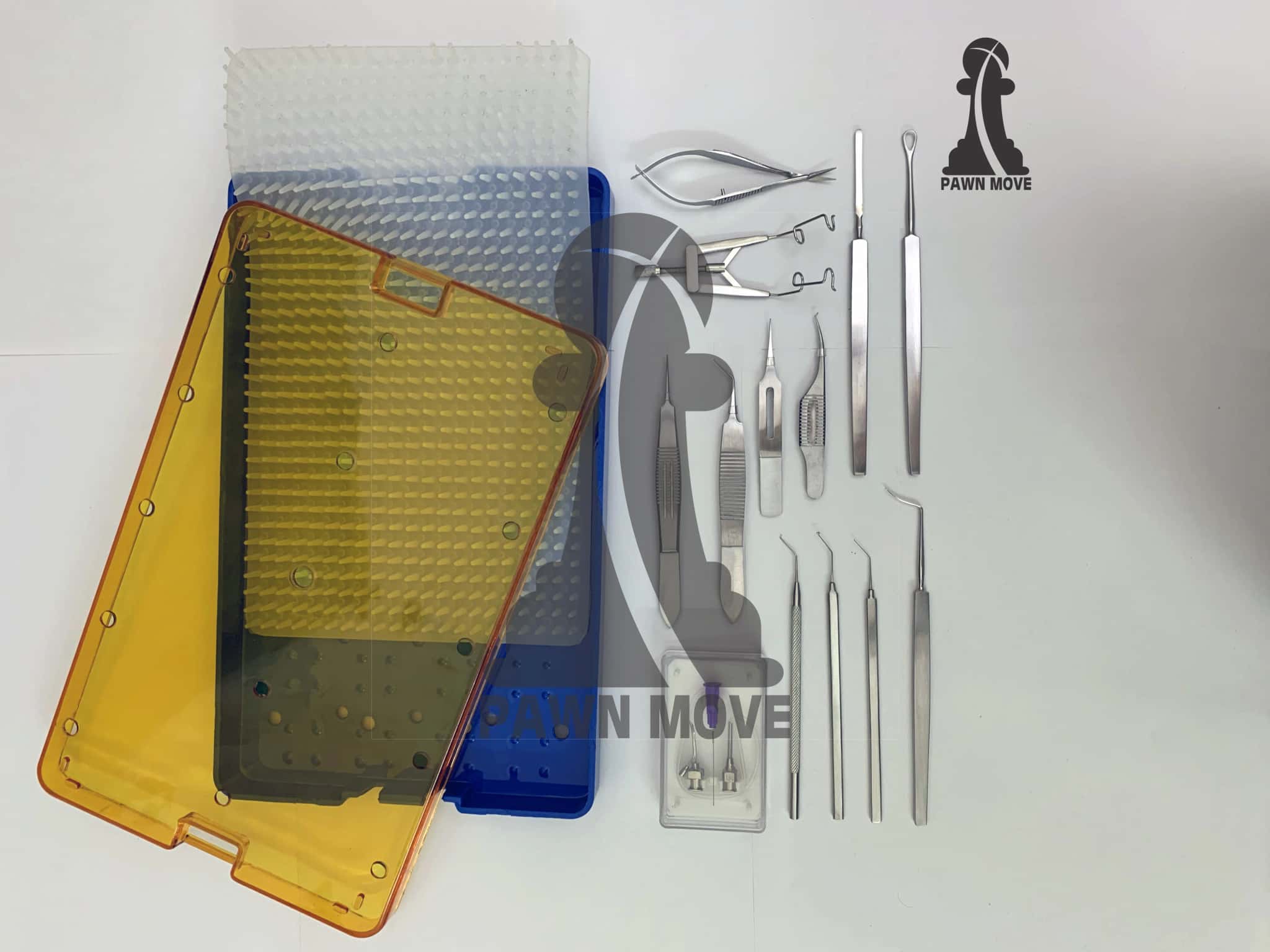
Ophthalmic Cataract Micro Surgery Instrument Kit with Autoclavable Tray - 13 Pieces
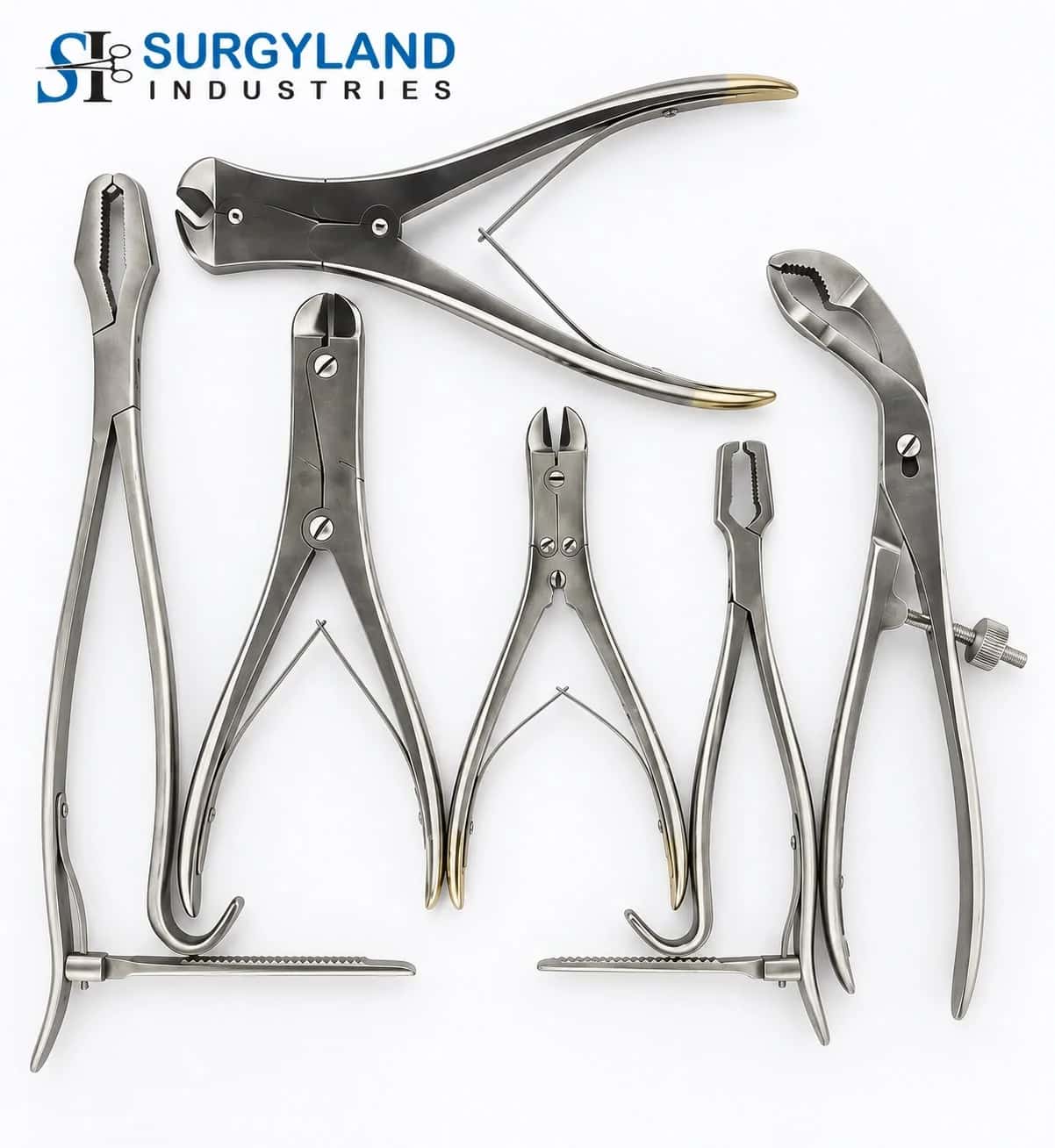
SURGYLAND INDUSTRIES 6-Piece Veterinary Orthopedic Surgical Instrument Set – Serrated Jaw Forceps with Spring-Action & Screw Adjustment
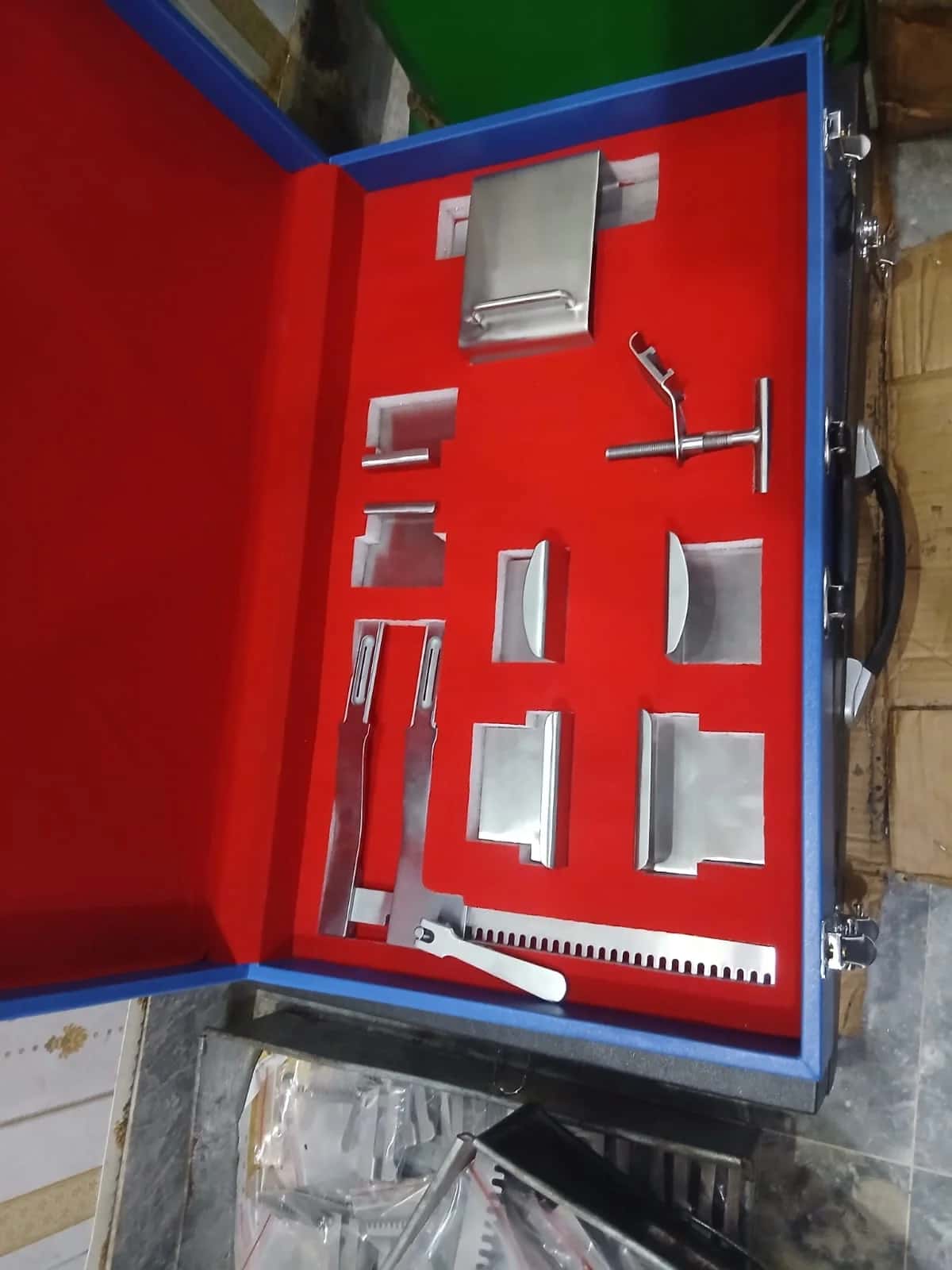
Citrine Surgical Metal Retractor Instrument Set with Interchangeable Blades & Fitted Carrying Case
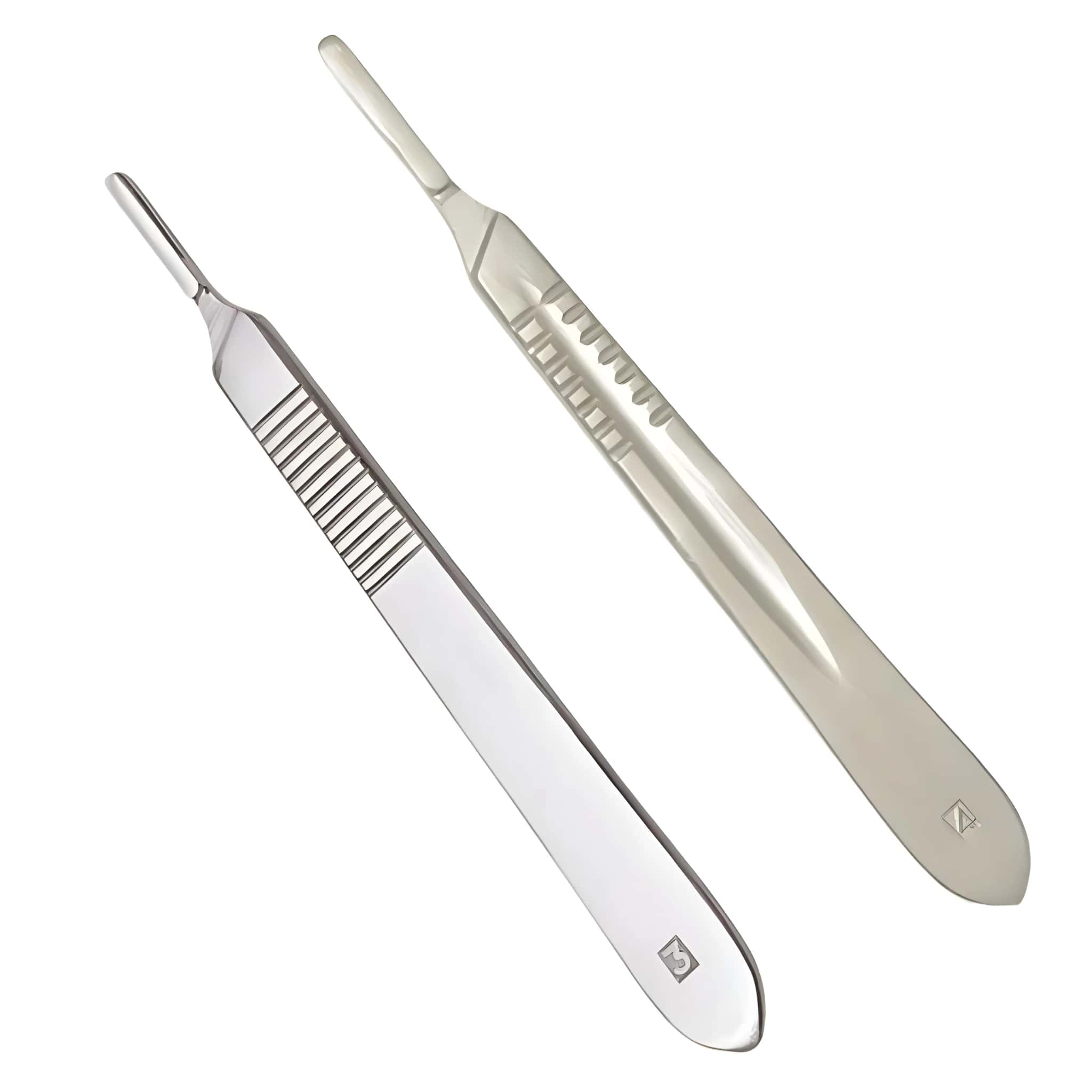
Ergonomic Stainless Steel Scalpel Handle for Precision Cutting
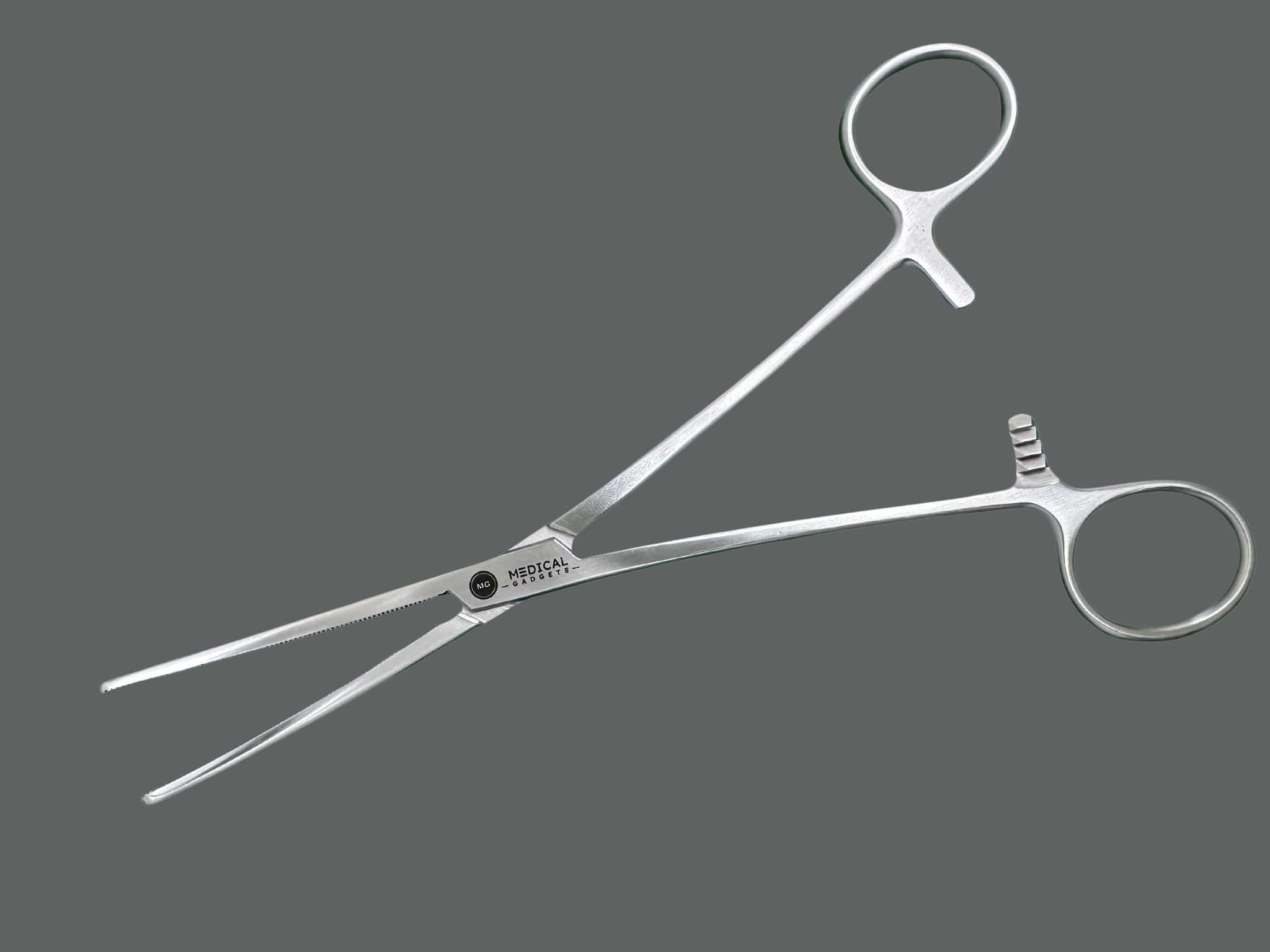
Medical Gadgets Pean Forceps 18cm Curved – Serrated Jaws, Ratchet Lock & Ring Handles
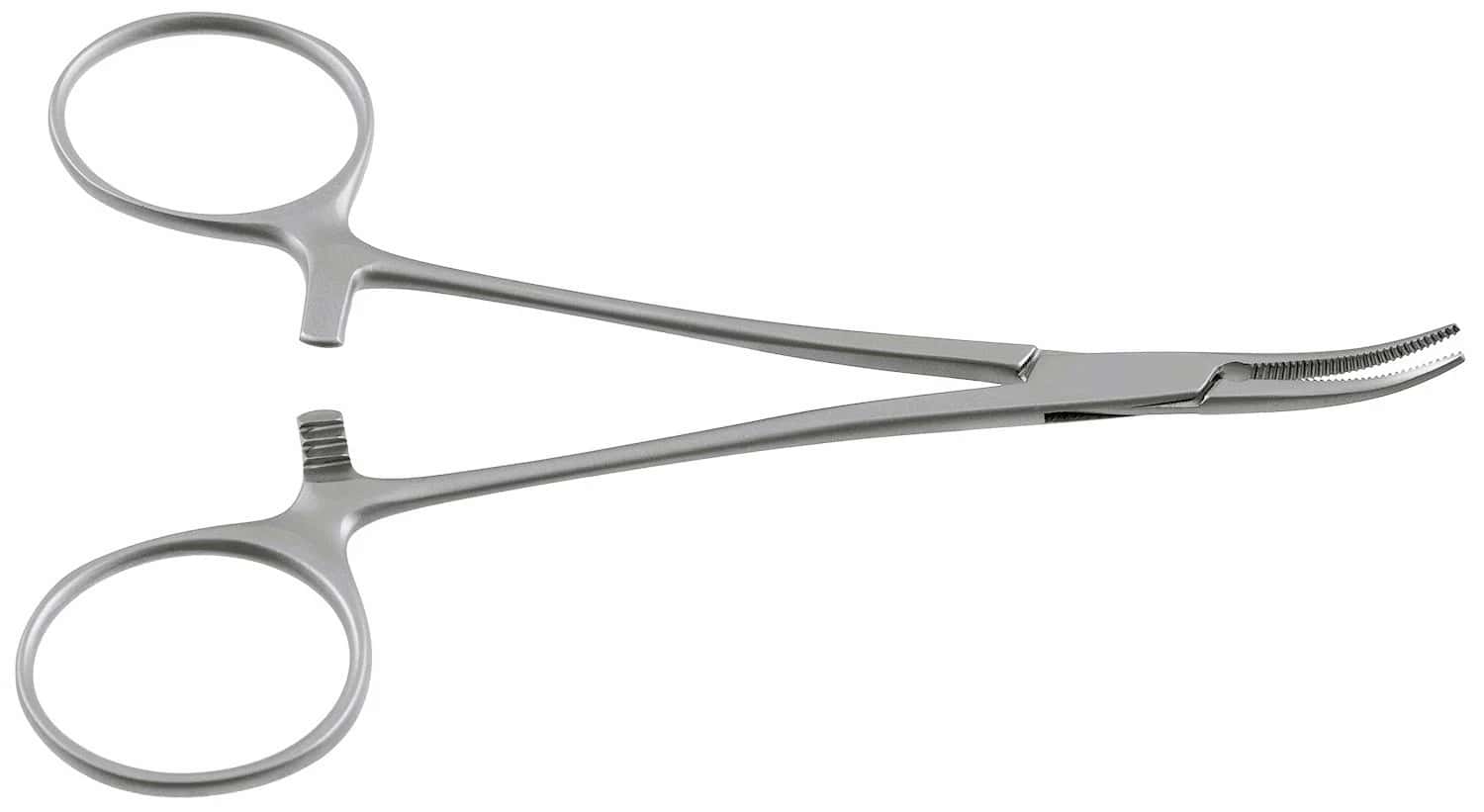
Halstead Mosquito Forceps
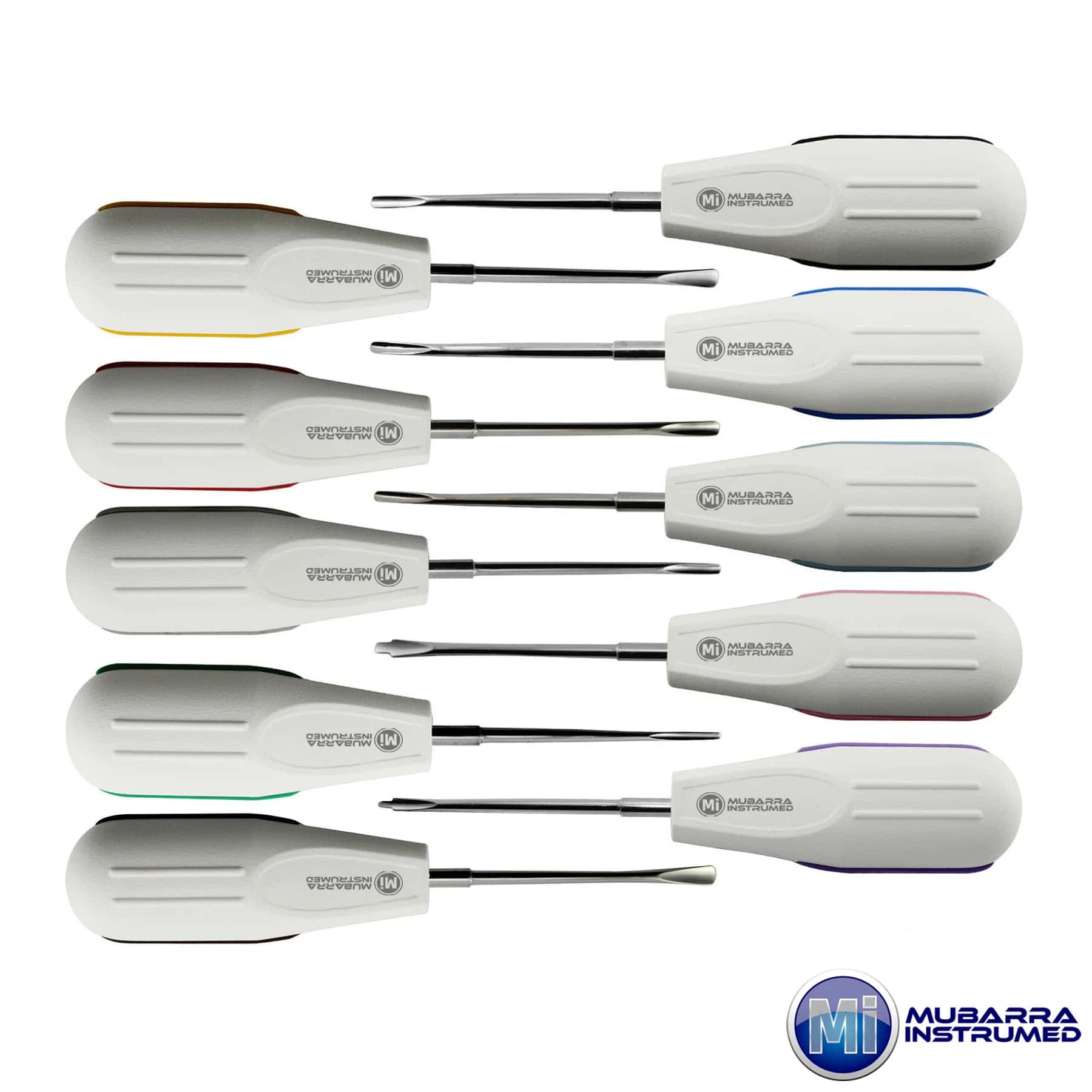
Mubarra Instrumed Dental Luxating Elevator Set – 10-Piece Straight & Curved Root Extraction Instruments with Color-Coded Ergonomic Handles
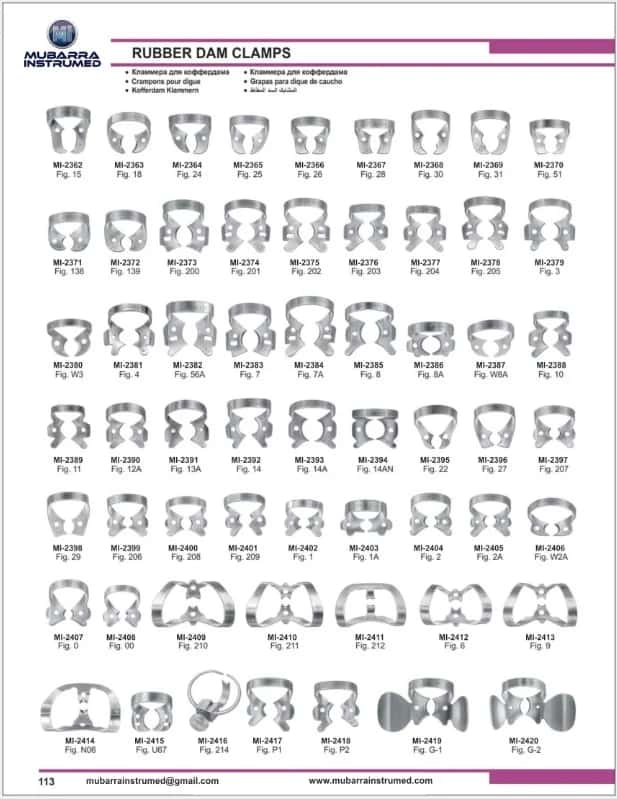
Mubarra Instrumed Rubber Dam Clamp Set – 65 Assorted Sizes, Winged & Wingless, MI Model Numbers with Fig. References
Browse products on Baramdat
See what suppliers already list, or send a request below for anything you cannot find.
Frequently asked questions
Where in Pakistan are surgical instruments made?
Sialkot, in Punjab, is the best-known centre, with many workshops and factories producing surgical, dental and cosmetic instruments for export. Suppliers on Baramdat list their city on their profile.
Can I get surgical instruments made with my own brand?
Many Pakistani manufacturers offer OEM work, including laser marking of your logo and article numbers and custom packaging. Tell the supplier your branding needs when you ask for a quote, as the minimum order is often higher for branded items.
What are the most common surgical instruments?
Forceps (such as Babcock, Allis, Pean and mosquito), needle holders, scissors, scalpel handles, retractors, elevators and rongeurs. The table above shows what each is used for and what to specify when you ask for a quote.
Can I buy surgical instruments in bulk?
Yes. Many listings show price breaks by quantity, and suppliers quote larger volumes on request. Ask for a written quote that states the unit price, the minimum order and the lead time.
Do you have orthopedic and spinal instrument sets?
Yes. Suppliers on Baramdat list spinal fixation, arthroscopy, small-fragment and screw instrument sets, rongeurs and retractors, usually in fitted sterilisation trays. Send us your requirement and we will match suppliers.
What certificates should a surgical instrument supplier have?
Ask whether the factory holds a medical device quality certificate such as ISO 13485, and ask to see it. Depending on your market you may also need CE marking or FDA registration. Confirm the exact requirements with your importer or a regulatory adviser.
Are Pakistani surgical instruments as good as German ones?
It depends on the maker, not the country. Compare steel grade, finish, joint fit, tip alignment and paperwork on a sample set, side by side with the instrument you use today.
What is the minimum order for surgical instruments?
It depends on the supplier and on whether the instrument is a standard pattern or made to your drawing. Many suppliers accept smaller orders for standard instruments and ask for more for custom or branded ones. Ask each supplier for a written quote that states the minimum order.
Do you supply veterinary surgical instruments?
Yes. Suppliers on Baramdat list veterinary orthopedic and general instrument sets. Tell us the species and procedures and we will match makers.
Can I order a sample before a bulk order?
Yes, and we recommend it. Check the steel finish, joint movement, tip alignment and packaging. For larger orders, arrange an independent pre-shipment inspection. We can help arrange samples and inspection.
Do you sell the instruments yourselves?
No. Baramdat connects you with Pakistani suppliers and helps you compare and manage the process. You pay the supplier directly, and any fee for our service is agreed with you in writing before work starts.
Can I order minor surgery sets and dissection kits?
Yes. Suppliers make minor surgery sets, dissection kits and other instrument sets, and can pack them in your choice of case or tray. Send the piece list, the quantity and the branding you need.
Can you make a custom instrument set with my own piece list?
Yes. Many manufacturers will build a set to your list and pack it in a case or tray, with laser marking. Minimums depend on the supplier and the set, so ask for a written quote.
What is the difference between Kelly, Pean and mosquito forceps?
All three are haemostats used to clamp vessels. Kelly forceps are serrated on the front part of the jaws, Pean forceps are usually larger and serrated along the whole jaw, and mosquito forceps are the smallest and finest. Give the pattern name and length in your quote request.
What steel are surgical forceps made from?
Reusable instruments are made from stainless steel, and the grade differs between makers and between instrument types. Ask each supplier for the exact grade and whether it is the same on every piece.
How do I check forceps before a bulk order?
Order a sample. Check that the box lock moves smoothly, that the jaws or teeth meet exactly, that the ratchet holds and releases, and that the finish and markings are right. For larger orders, arrange an independent pre-shipment inspection.
Do the sets come in a sterilisation tray?
Many do, in fitted perforated metal trays or hard cases. Tell the supplier your sterilisation method when you ask for a quote, so the tray and case suit it.
Can the instruments be made to work with a specific implant system?
Some makers can work to your drawings or to a reference instrument. Compatibility is for you to confirm. Order a sample and check it against your system before you order in volume.
What is the difference between American and English pattern forceps?
They are two numbering systems for extraction forceps. The same tooth can call for a different number in each system, so tell the supplier which system you want or send a pattern list.
Can I order dental instruments as a distributor, with my own brand?
Yes. Many manufacturers laser-mark your brand and pack the instruments in your packaging. Ask for the minimum order, the steel grade and the test reports your market requires.
Can I get ophthalmic instruments in titanium?
Some makers can work in titanium or in stainless steel. Say which you need and ask each supplier for the exact material and a material certificate.
How do I check micro-instruments before a bulk order?
Order a sample and inspect the tips under magnification, check the spring action and the finish, and check that every instrument fits securely in the tray. For larger orders, arrange an independent pre-shipment inspection.
Can I import Pakistani surgical instruments into the US, UK, EU, Canada or Australia?
Yes, if the manufacturer and the product meet the entry rules of your market. These include FDA registration in the US, CE marking in the EU, MHRA registration in the UK, a Health Canada licence in Canada and TGA entry in Australia. Ask the supplier which it supports, and confirm the rules with your importer or a regulatory adviser.
Do you supply custom or OEM surgical instruments?
Yes. Many manufacturers laser-mark your brand, pack the instruments in your packaging or make them to your drawing. Send the drawing or reference instrument, the quantity and your destination, and ask for the minimum order per pattern.
What is the difference between a surgical instruments manufacturer, supplier and distributor?
A manufacturer makes the instruments in its own workshop. A supplier or exporter may buy from several makers and pack for export. A distributor buys and resells in your country. Ask each company which it is, because it affects price, quality control and OEM options.
Can I buy a small first order before committing to a large one?
Yes. Order a sample set or a small first batch, check the steel, finish and markings, then place the larger order. Minimums are set per pattern and per set, so ask each manufacturer.
How do I get a quote?
Fill in the short form on this page with the instruments you need, the quantity and your destination country. Our team replies within one business day with questions or a shortlist plan.
Do you supply dental instruments wholesale?
Dental instruments such as extraction forceps, elevators, mirrors and scalers are part of the surgical range, and Pakistani manufacturers supply them in bulk, under your brand or as plain stock. Send the instrument list and quantities and we will shortlist suppliers who make them.
What is the difference between a surgical instruments manufacturer and a supplier?
A manufacturer makes the instruments in its own workshop and can work to your specification. A supplier may buy from several workshops and resell. Ask which one you are dealing with, and ask for a workshop video or visit before a larger order.
Can I buy wholesale surgical instruments without a minimum order?
Most manufacturers set a minimum order. It is usually lower for standard catalogue instruments than for custom or branded ones. Tell us the quantity you have in mind and we will say honestly which suppliers can accept it.