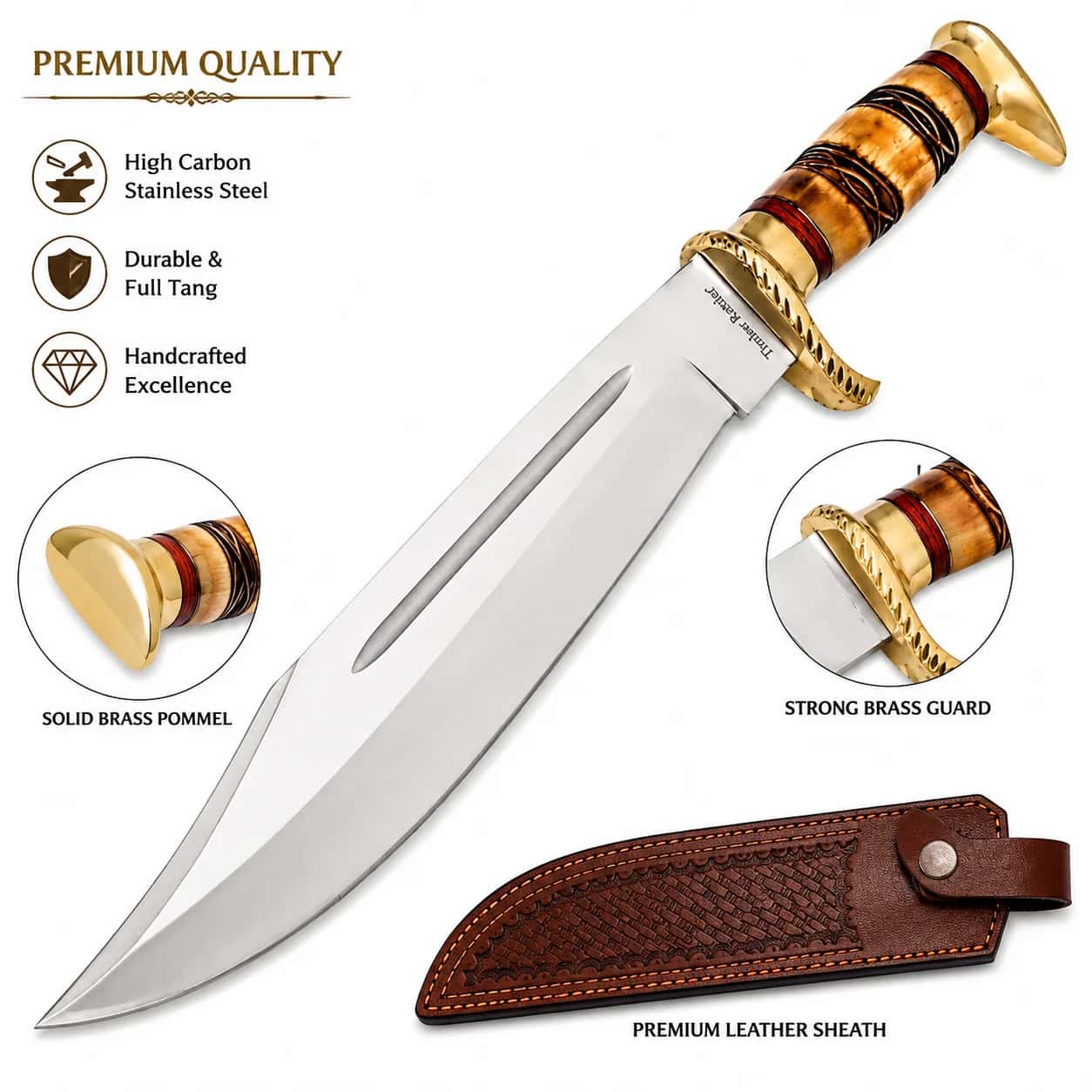
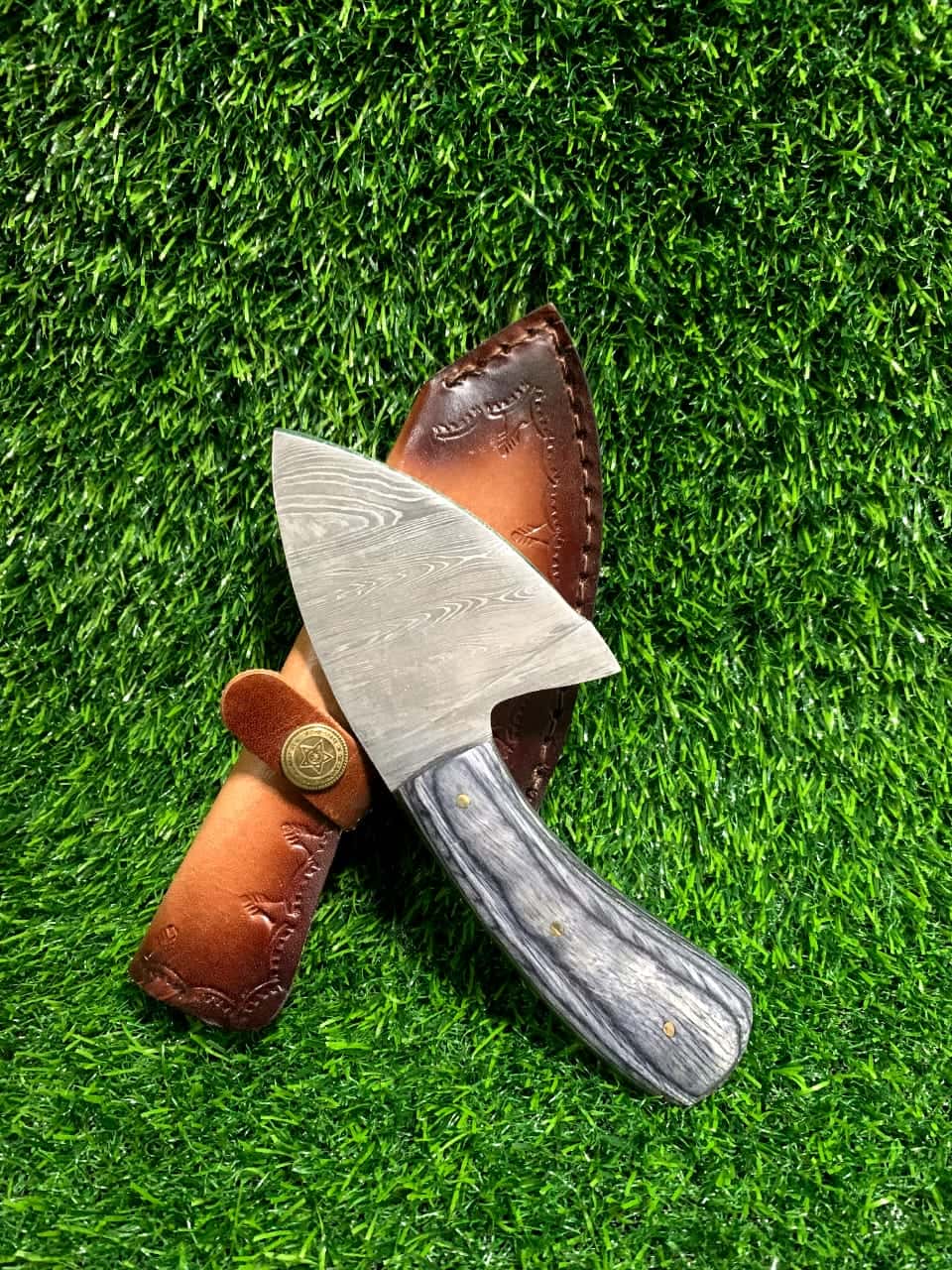
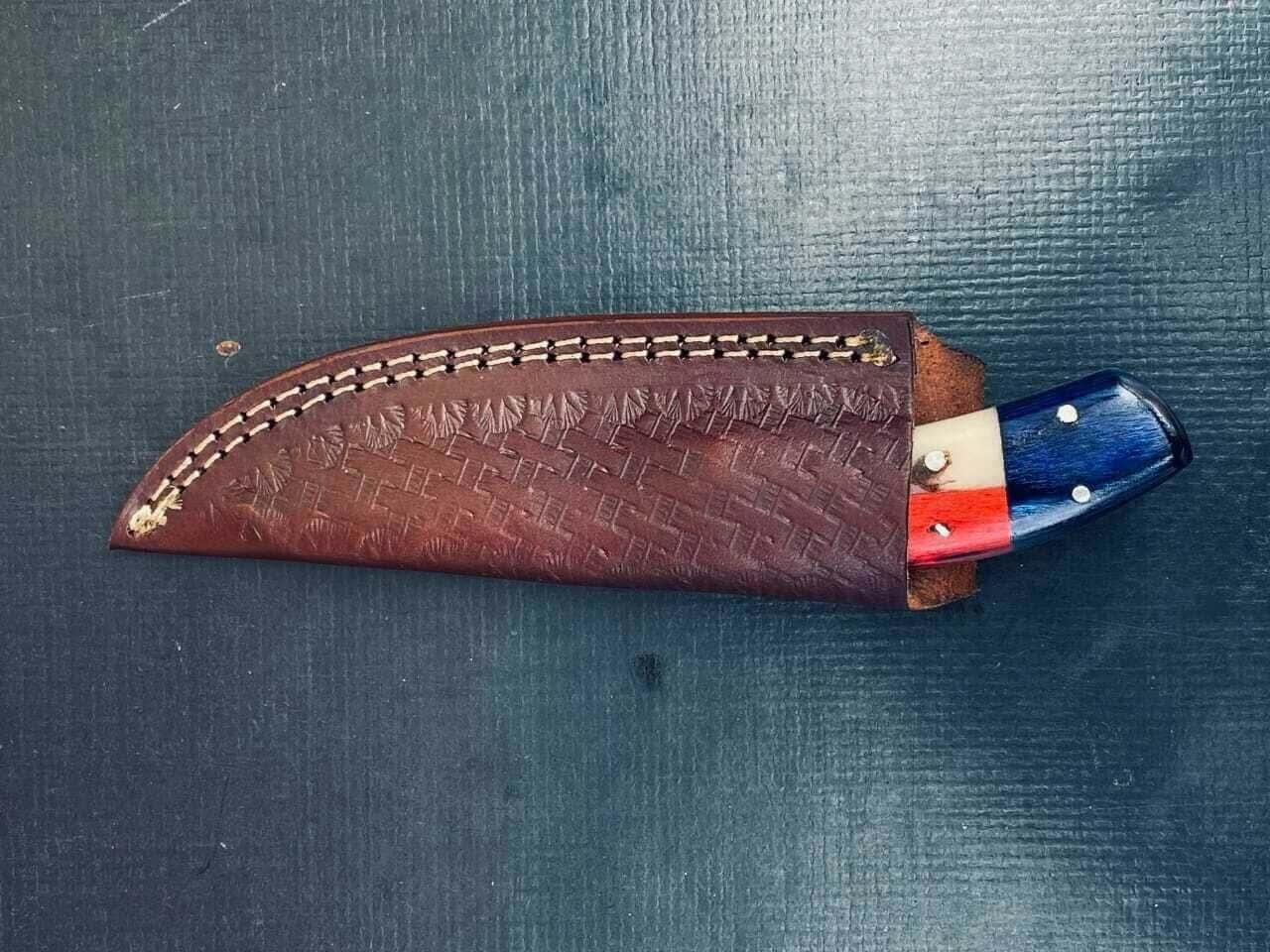
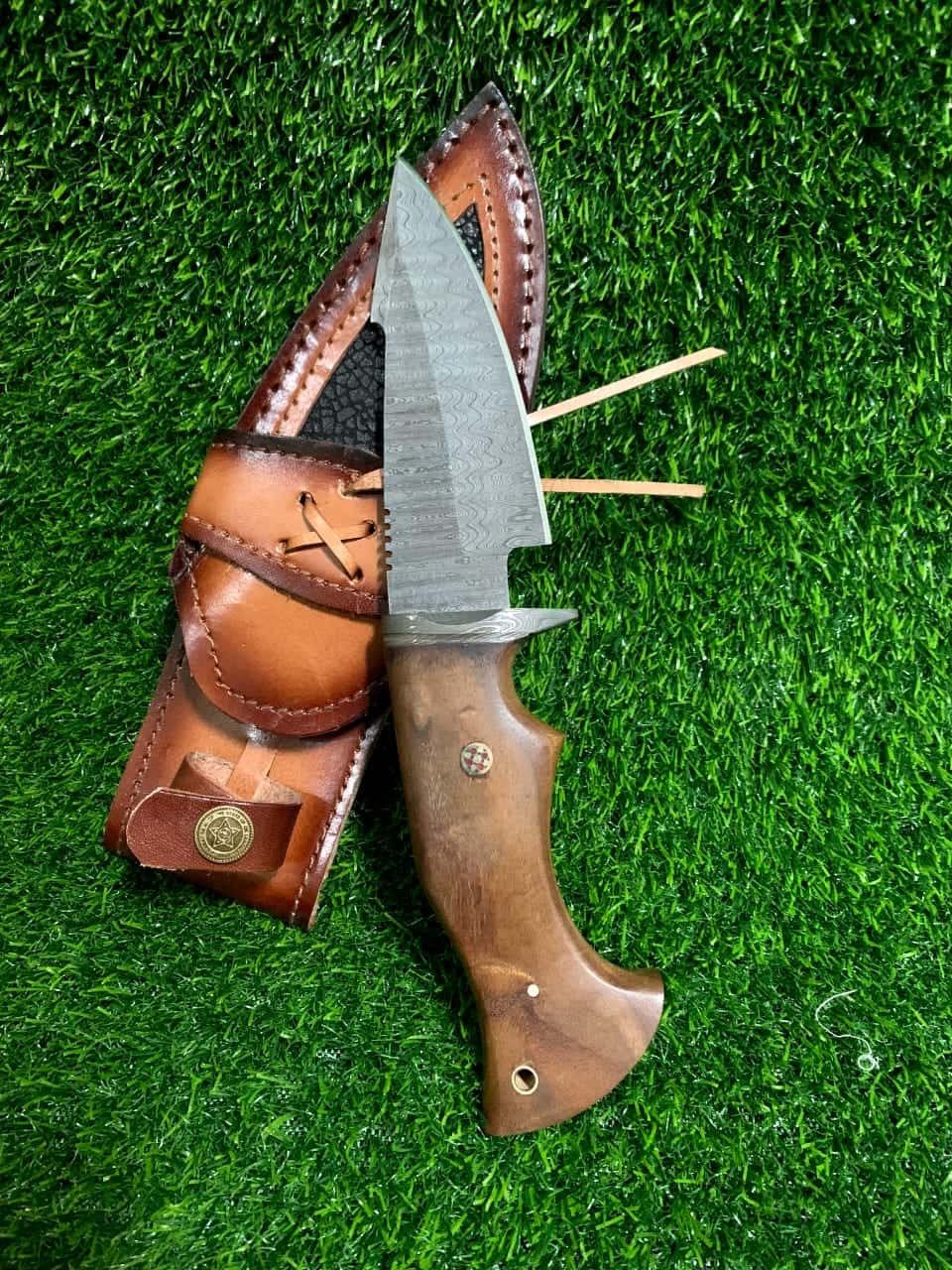
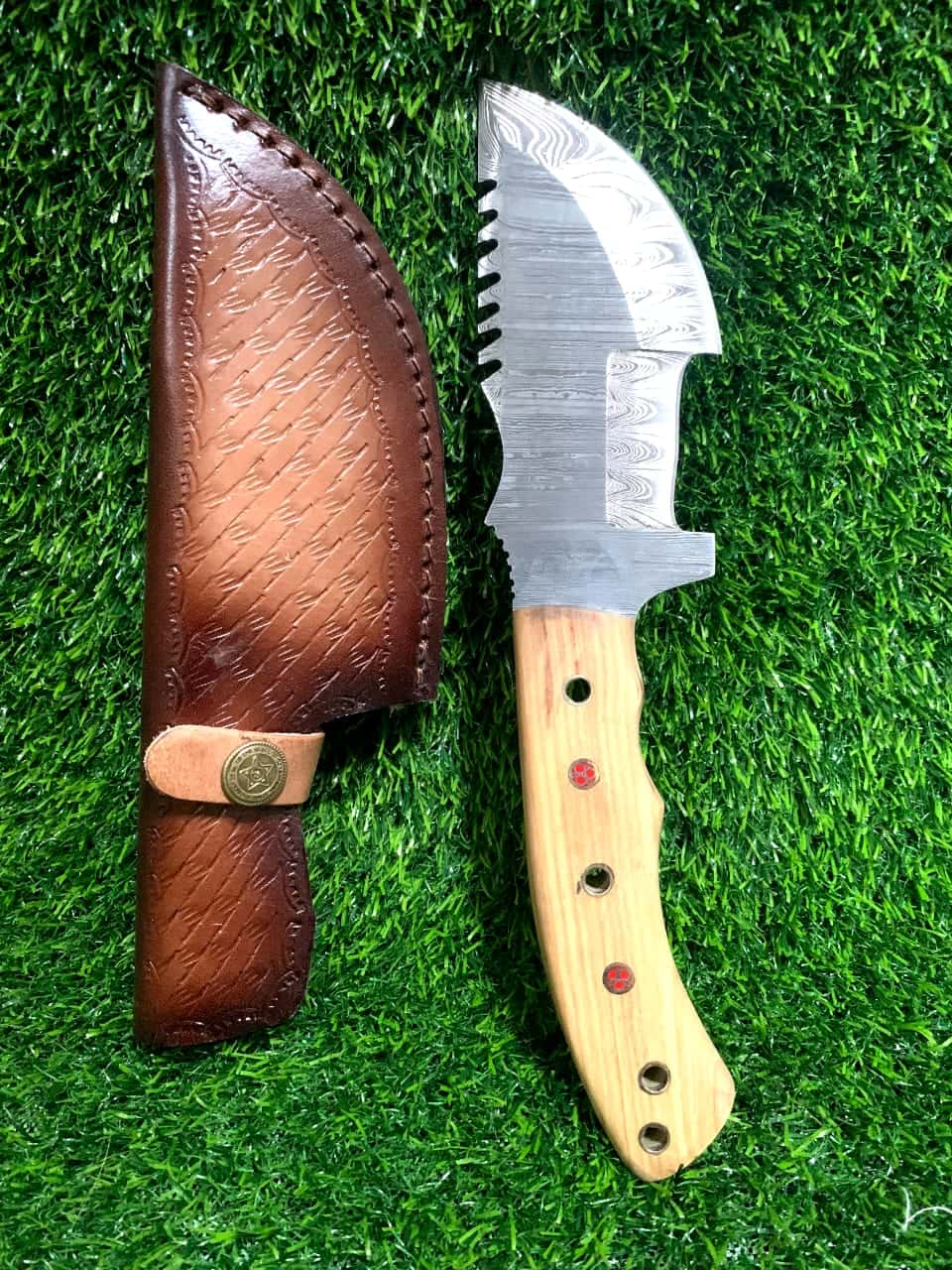
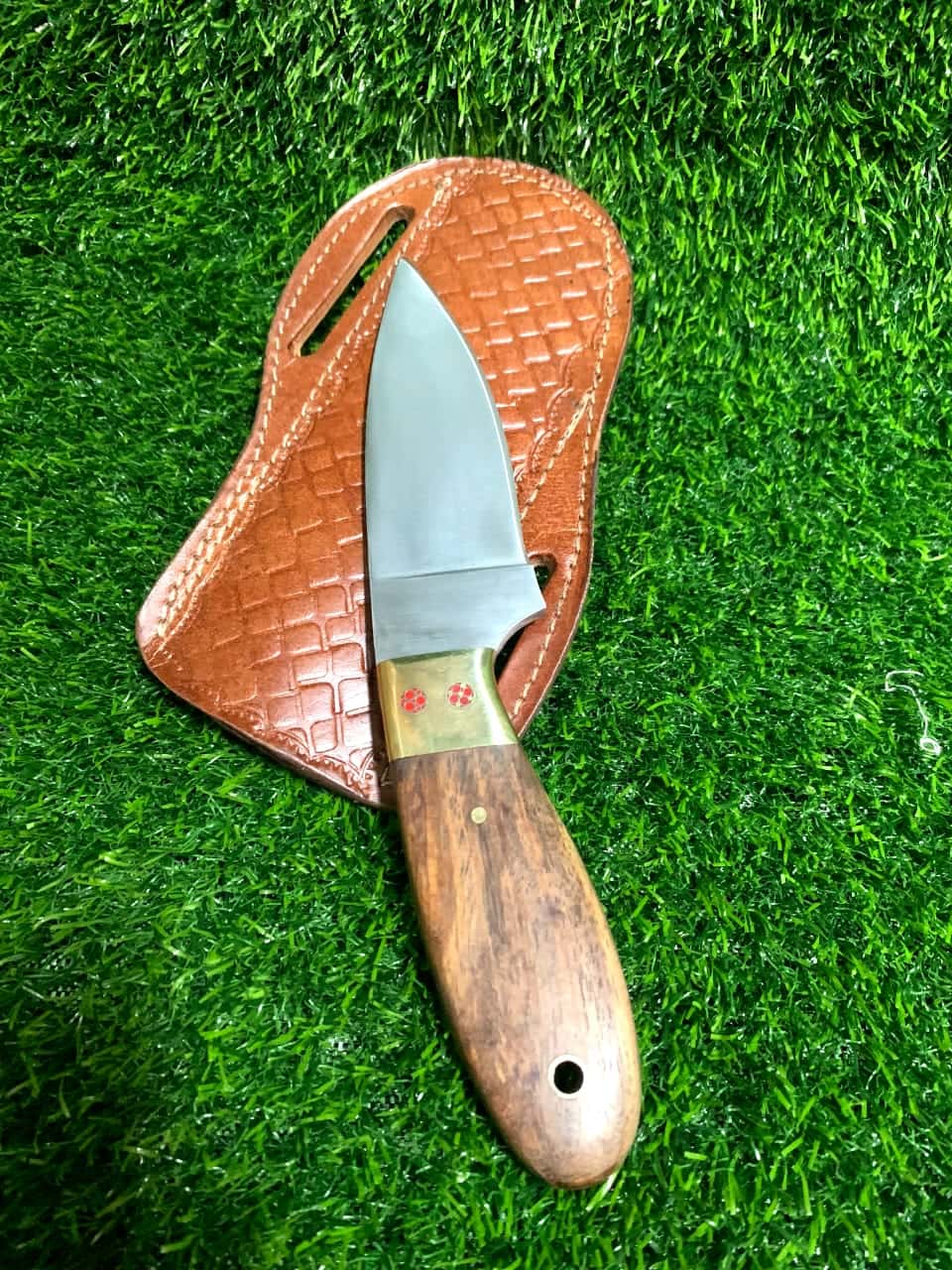
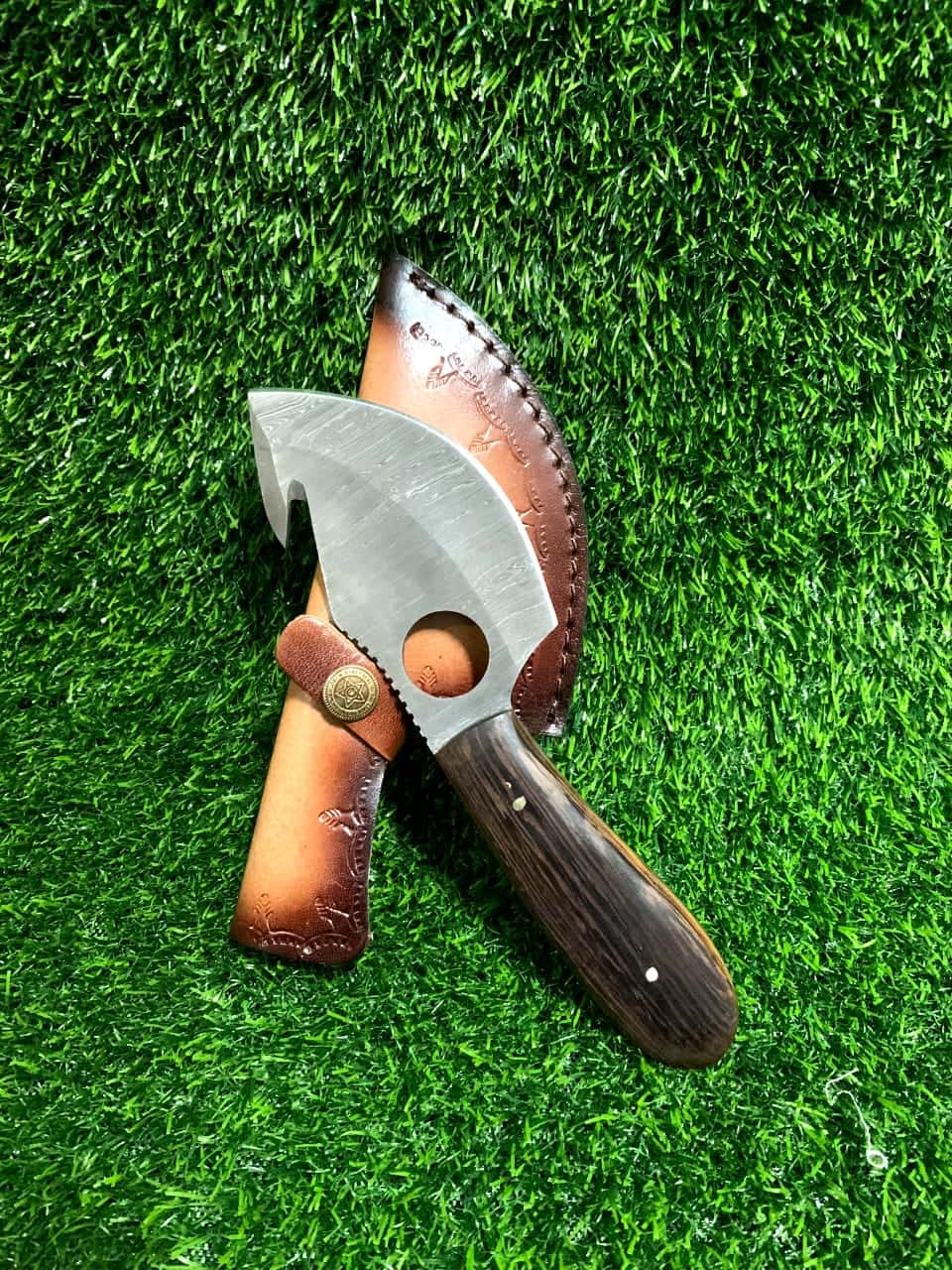
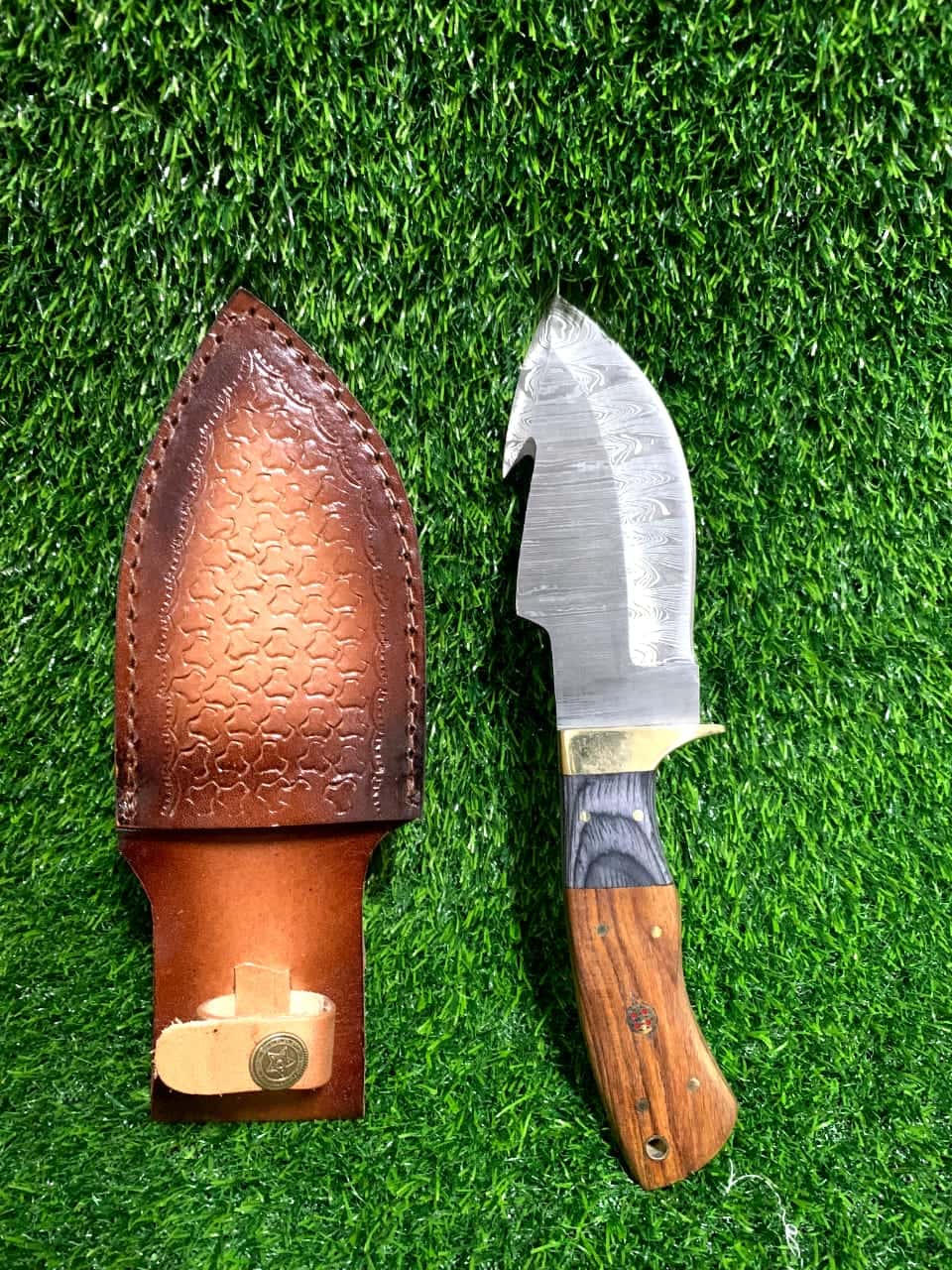
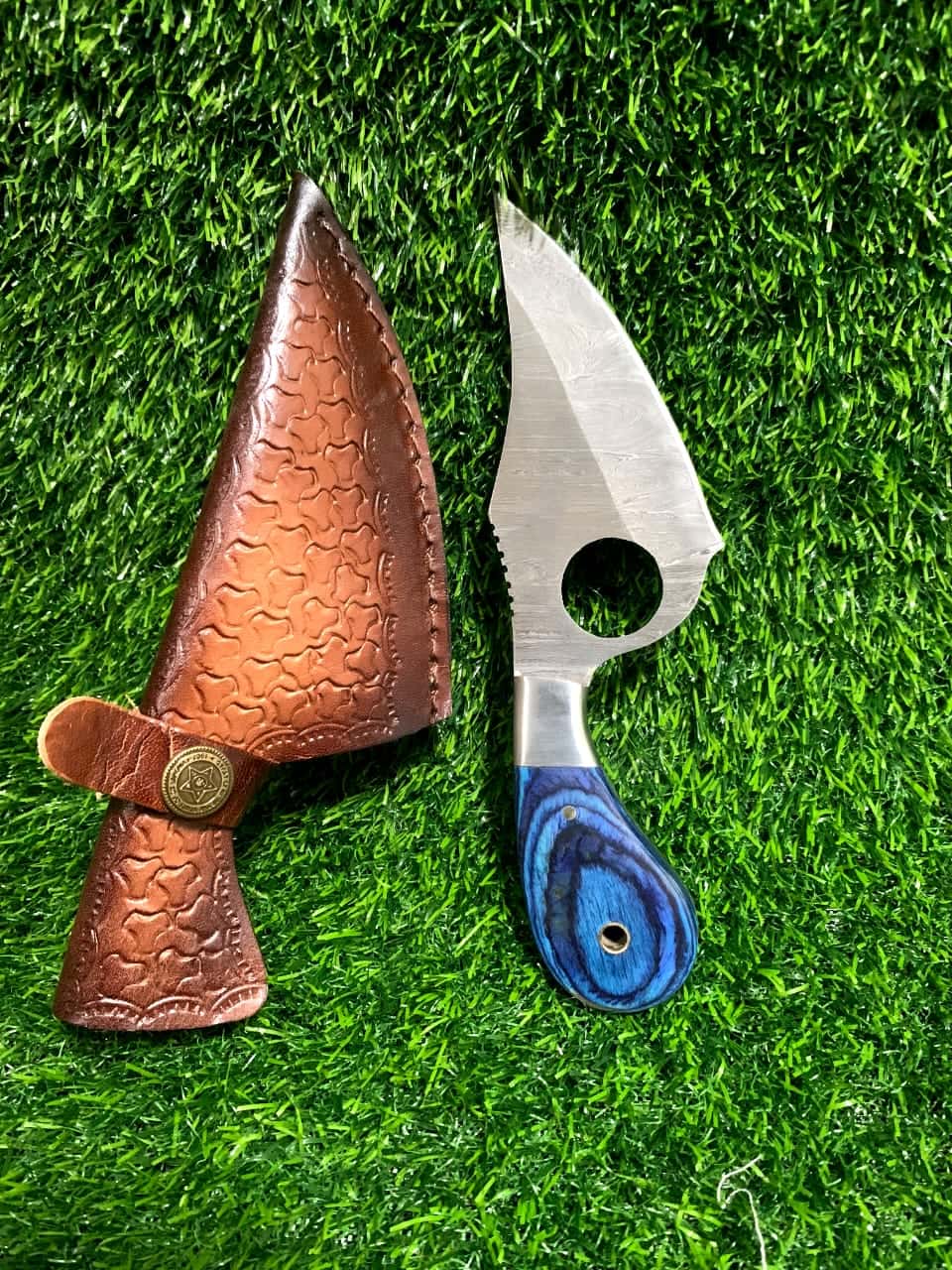
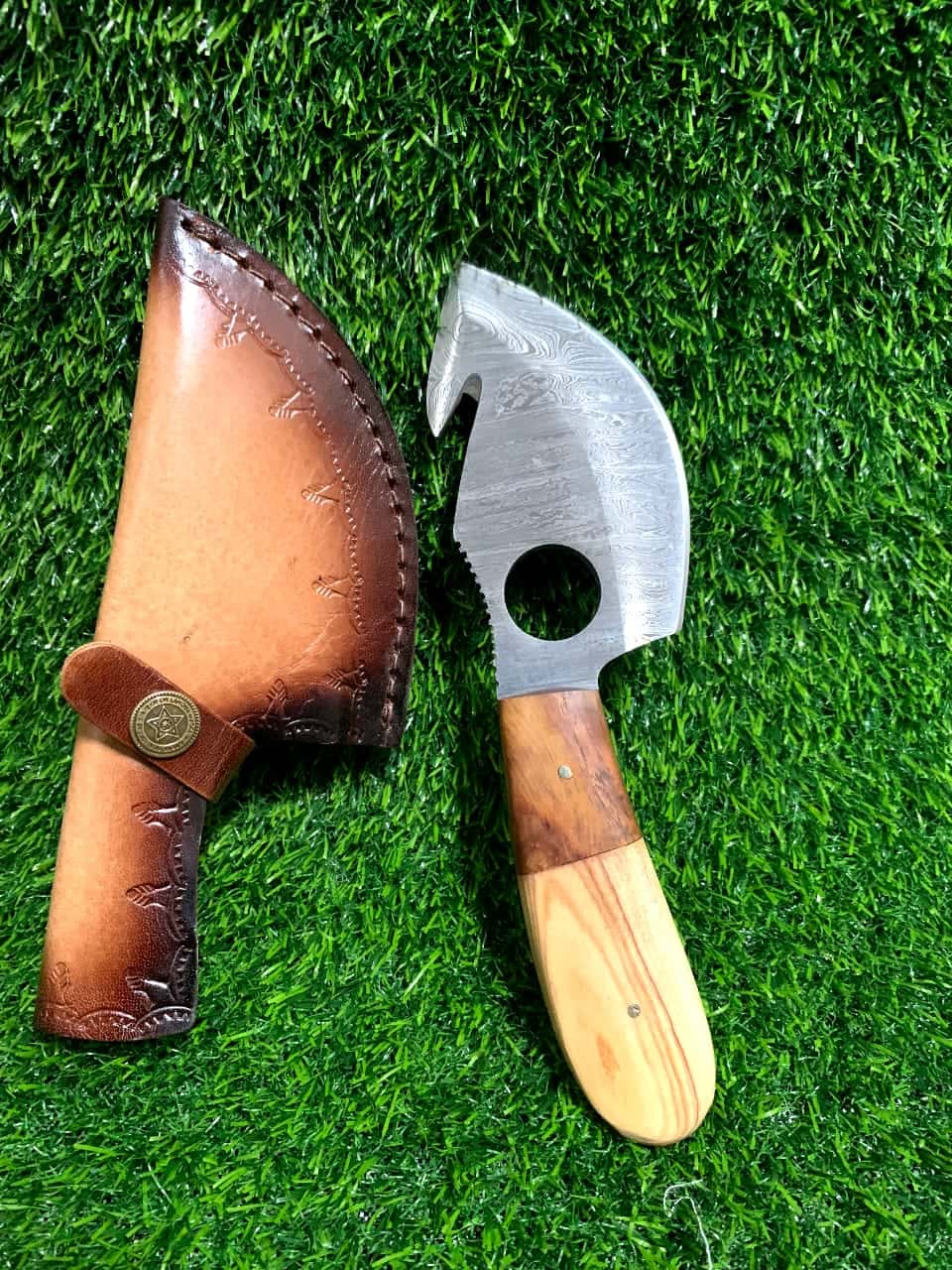
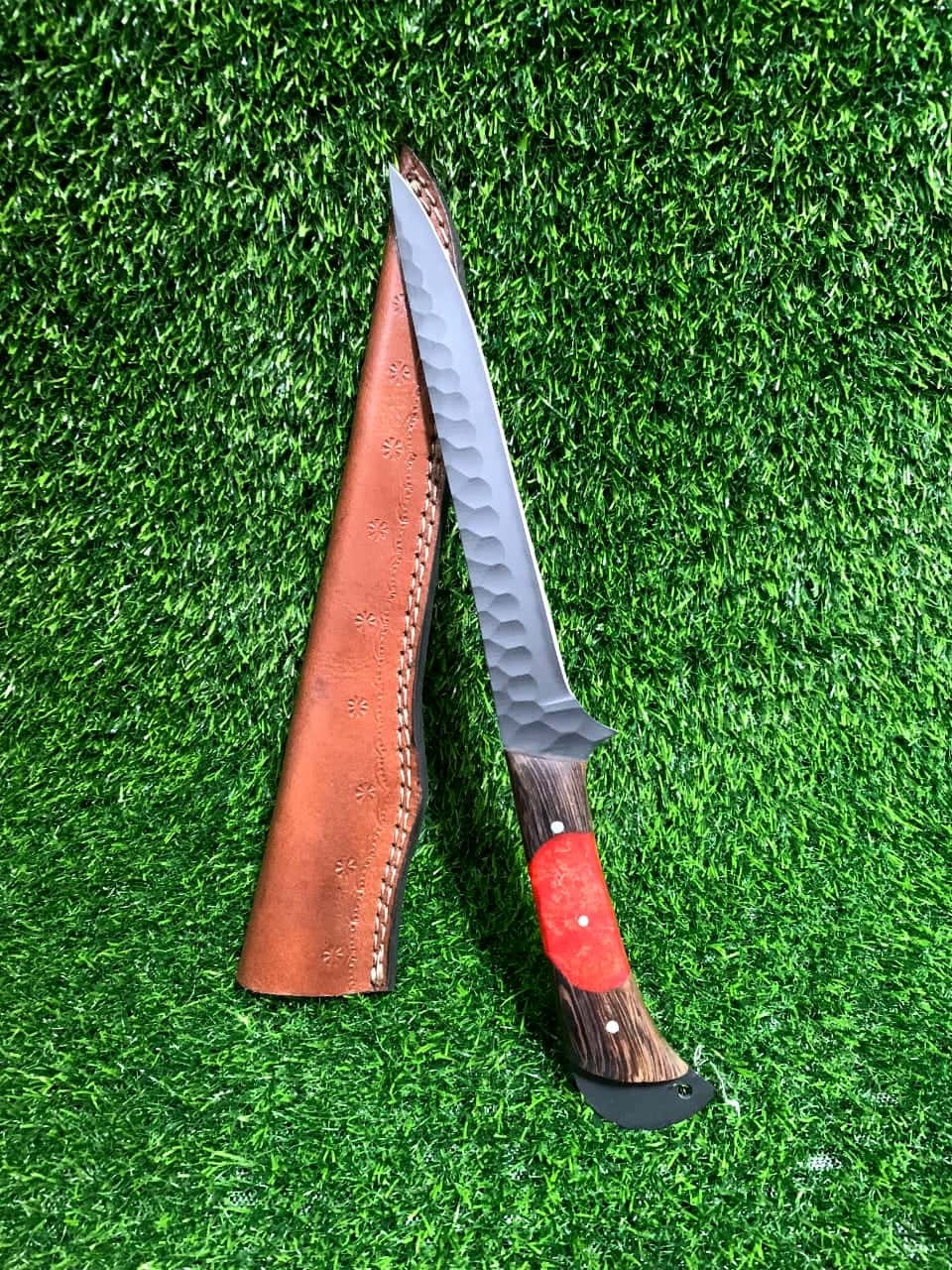
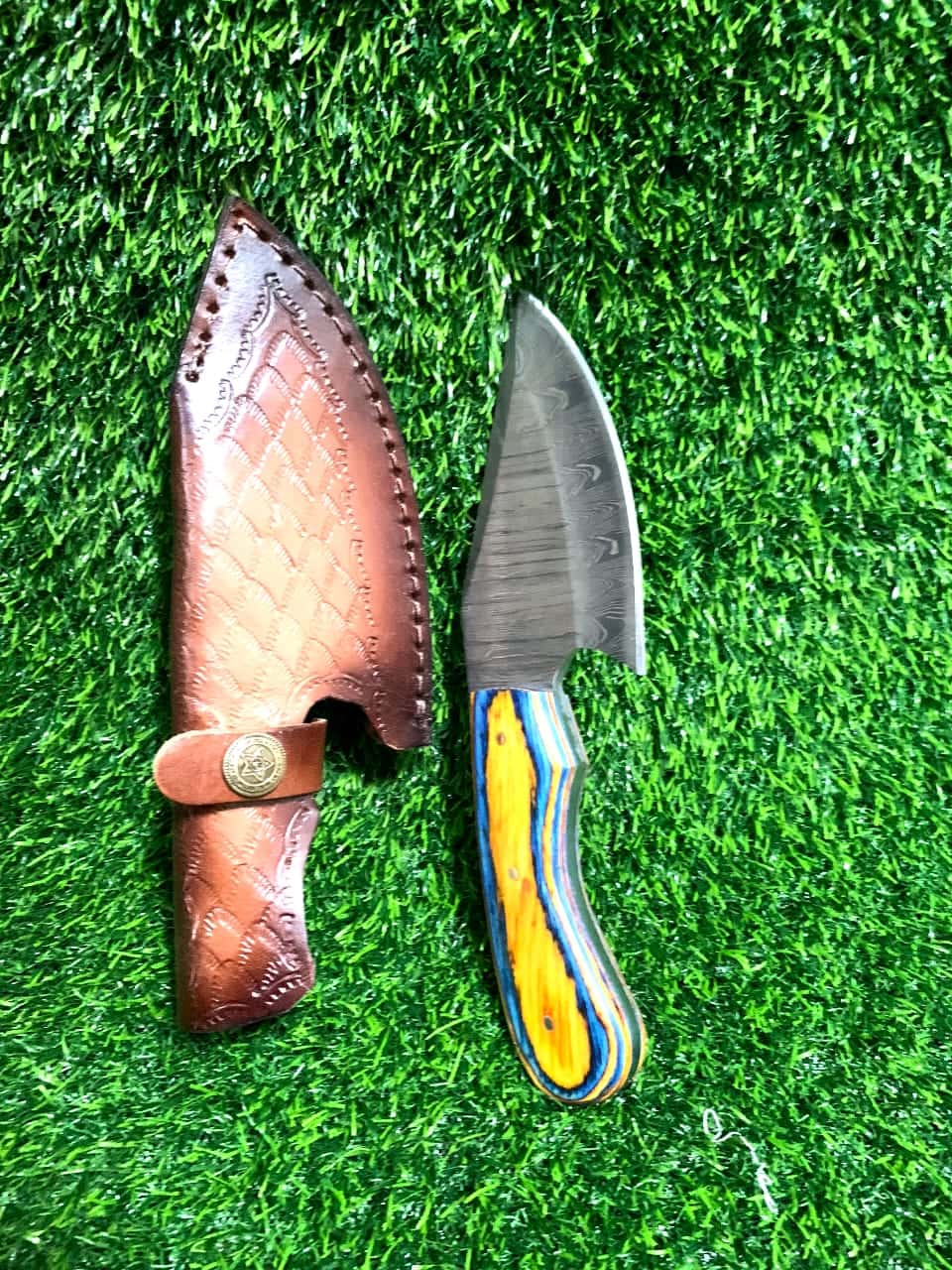
A hunting knife is the one tool most hunters never leave behind. It field dresses game, skins, cuts rope and kindling and handles camp jobs. A Damascus hunting knife adds a pattern-welded steel blade, which many hunters and collectors choose for its looks and for the way a well-made blade takes a sharp edge. This guide explains what to look for in a Damascus hunting knife: blade shape and length, steel, full tang, handle materials, sheaths, care, laws, and how to order custom or wholesale hunting knives.
What Is a Damascus Hunting Knife?
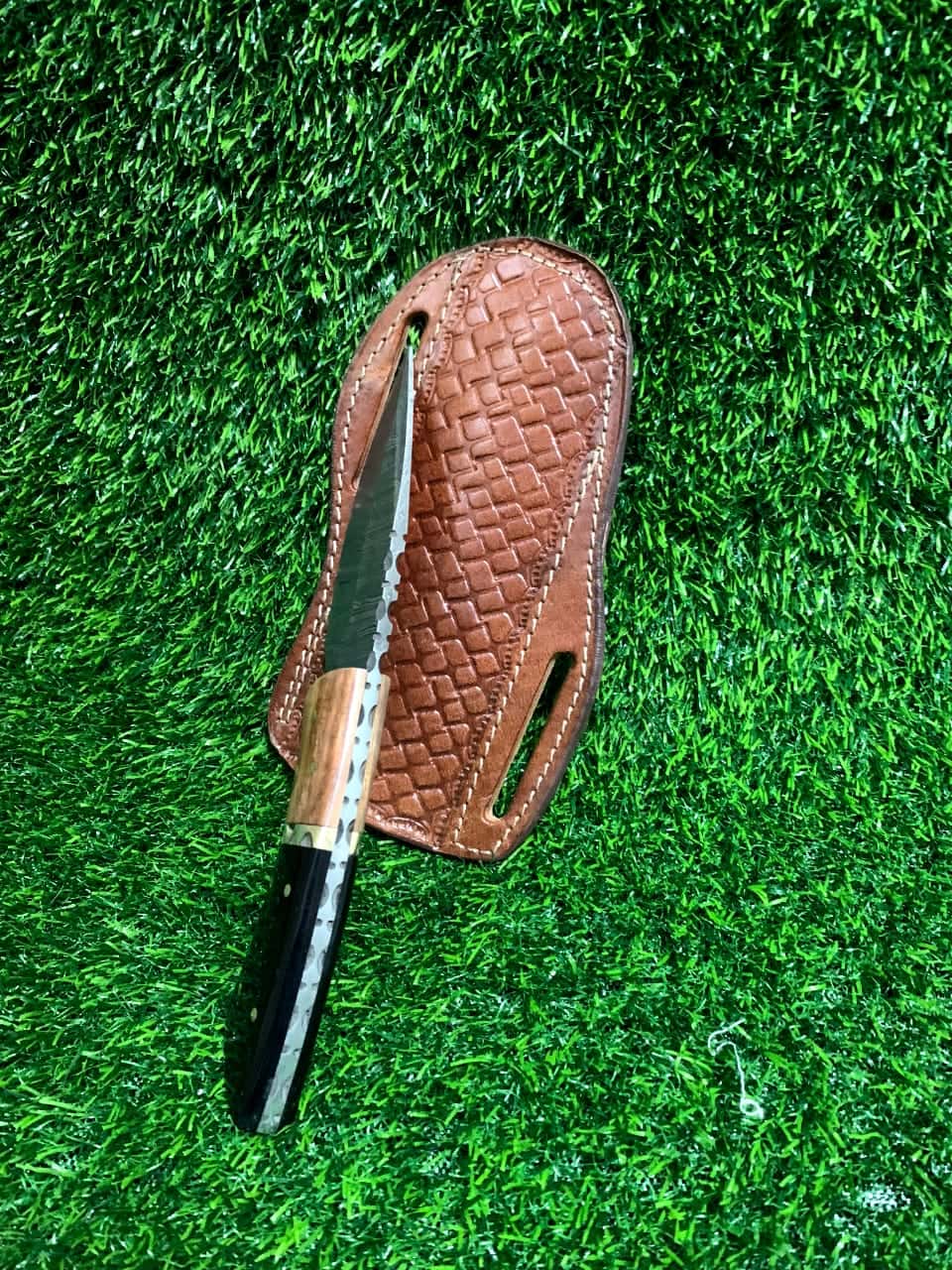
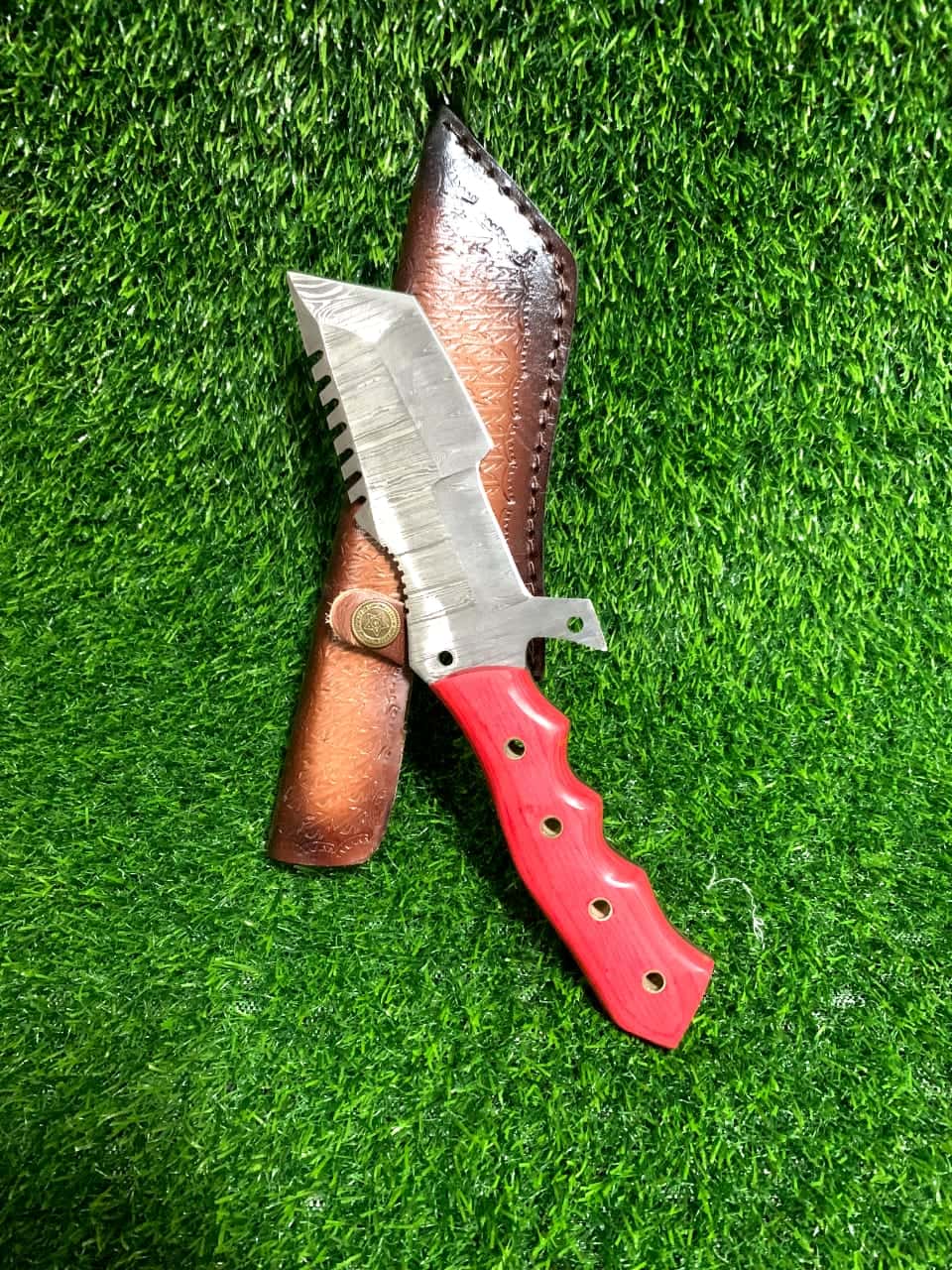
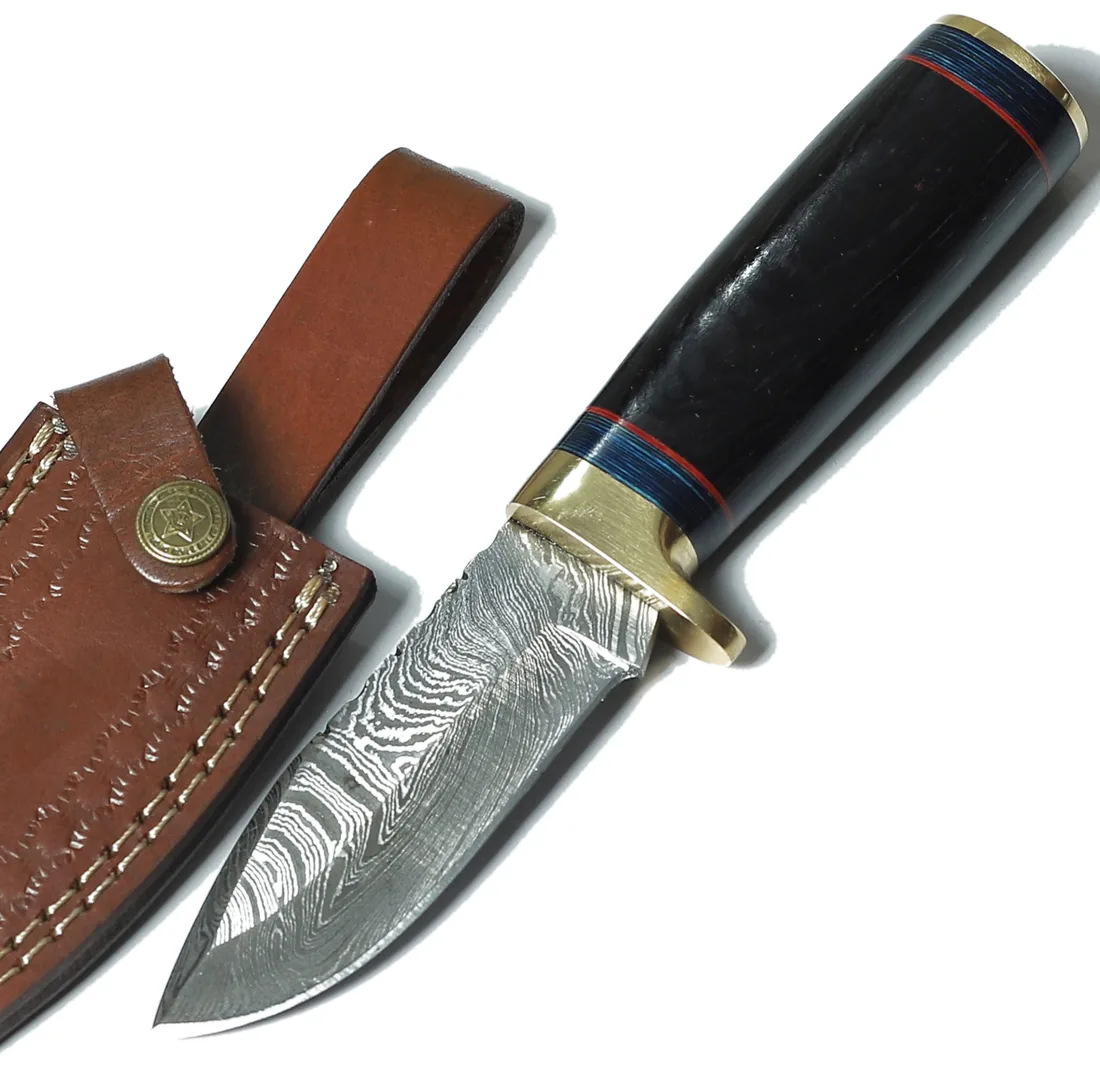
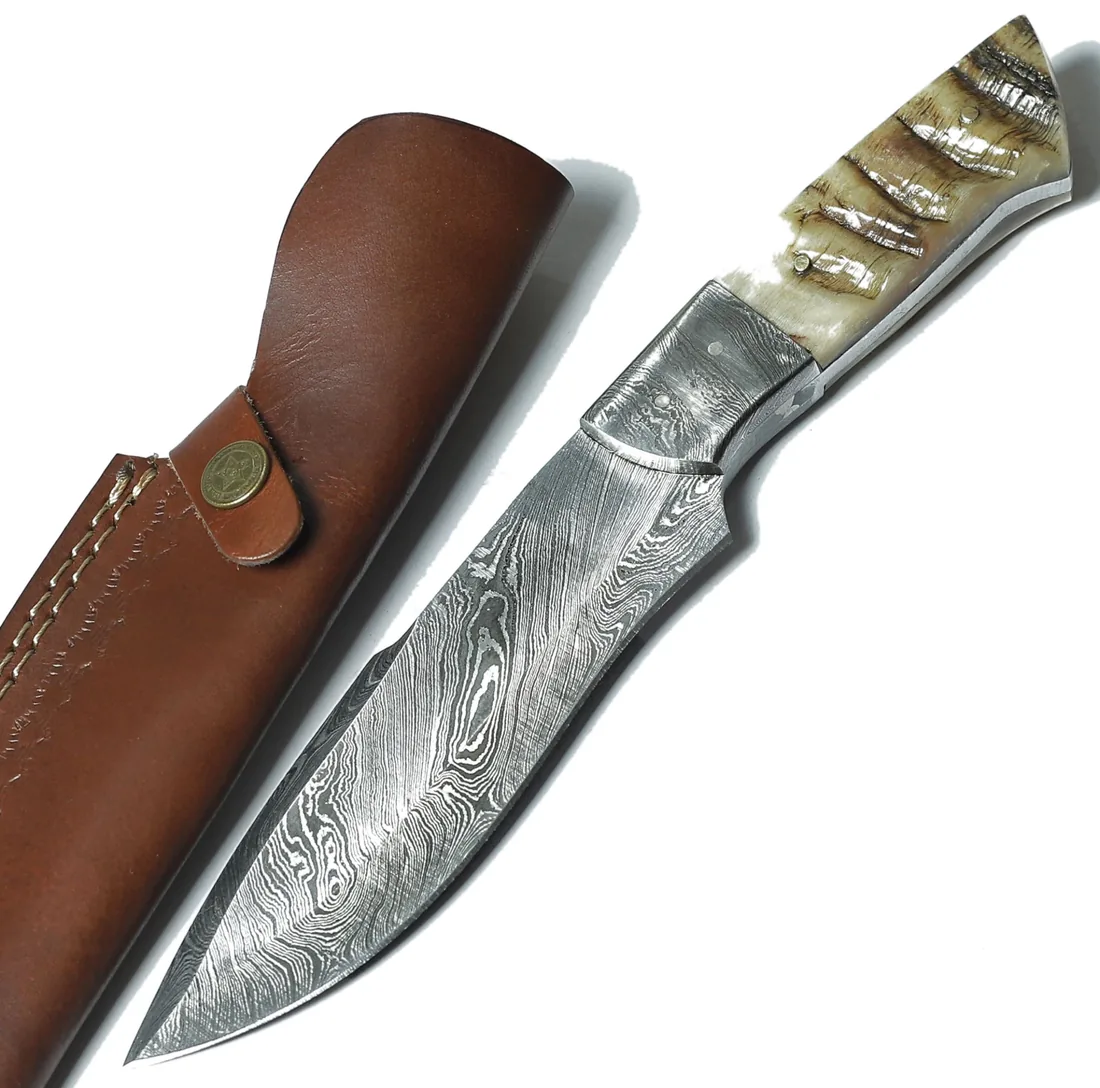
A Damascus hunting knife is a hunting knife whose blade is made from Damascus steel, which is steel forge-welded in layers and etched to show a wavy, ringed or twisted pattern. Most modern Damascus is pattern-welded from carbon steels such as 1095 and 15N20. A hunting knife is usually fixed-blade, 3.5 to 5 inches long, with a full tang and a leather sheath.
Is Damascus Steel Good for a Hunting Knife?
Yes, if it is well made, but the pattern is not the reason. The pattern is decorative. How well the knife performs depends on the steel, the heat treatment and the blade geometry. A good Damascus hunting knife can be very sharp and tough, and it is easy to resharpen. The trade-offs:
- It is usually carbon steel. It can rust if left wet or bloody, so you need to dry and oil it after use.
- Quality varies. A cheap Damascus knife with an etched or printed pattern is not the same as real pattern-welded steel. Read how to tell real from fake Damascus.
- It costs more. The forging takes extra work.
If you do not want to look after carbon steel, choose a stainless steel hunting knife instead. If you like the look and will care for the blade, Damascus is a rewarding choice.
Hunting Knife Blade Shapes
- Drop point. The spine slopes down to a strong, controllable point. The most popular shape, good for field dressing, skinning and camp tasks.
- Clip point. The back of the blade near the tip is cut away, which makes a sharp, fine point. Good for detail work and piercing, and it is the Bowie shape.
- Skinner. A curved belly with a blunt point, made for removing the hide. See our skinning knife guide.
- Gut hook. A notch on the spine that opens the belly from the inside.
- Trailing point. An upswept blade with a long point, good for slicing.
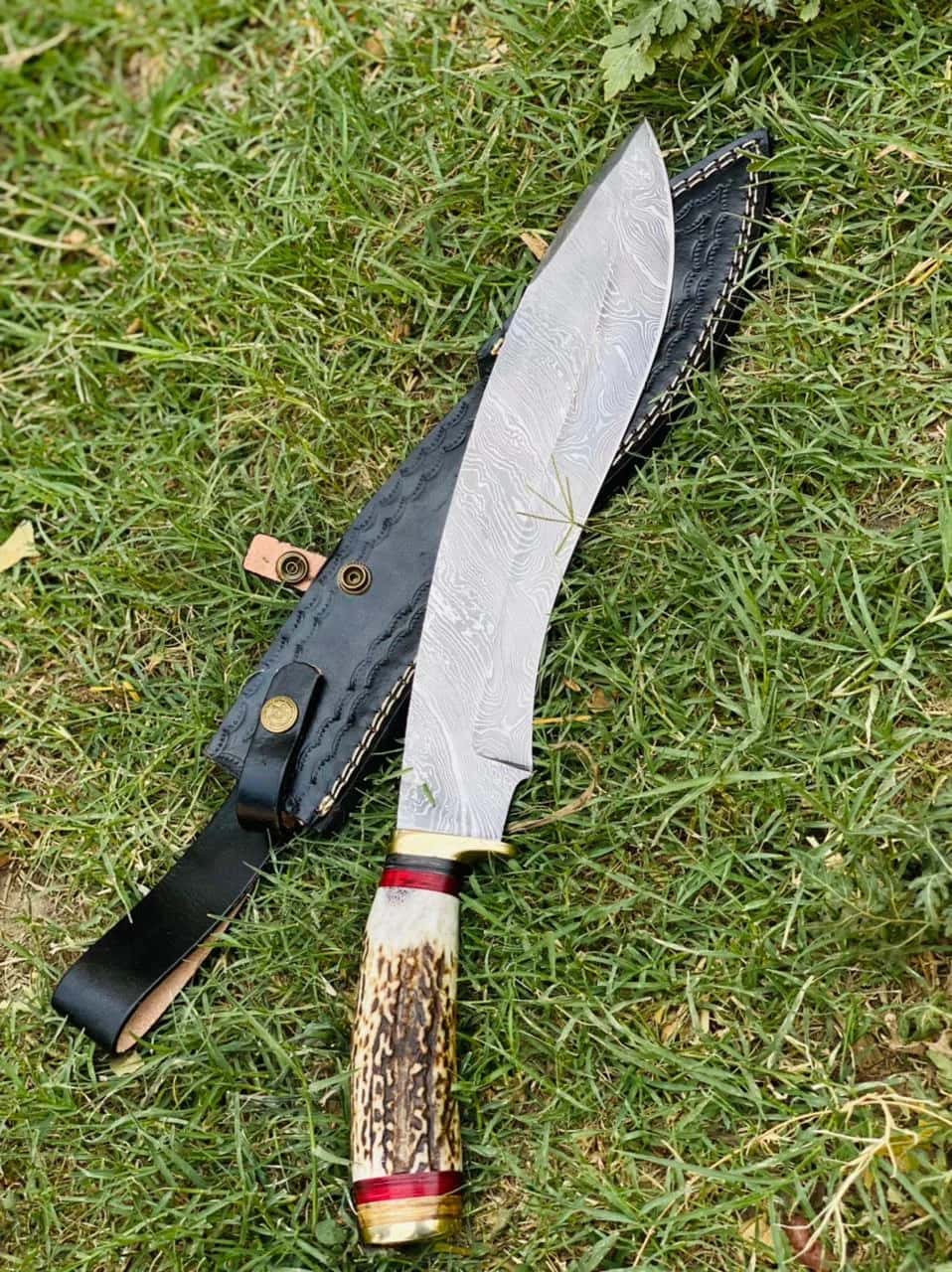
- Bowie. A large clip-point blade with a crossguard, for heavy work. See our custom Bowie knife guide.
Blade Length and Thickness
- 3 to 4 inches. Light and precise, good for small game and for a second, smaller knife.
- 4 to 5 inches. The best all-round size for deer and similar game.
- 5 to 7 inches and over. For large game, heavy camp work and survival, but harder to control for fine cuts.
A blade about 3 to 4 mm thick is a good balance of strength and slicing. Thicker blades are stronger for chopping but cut less well.
Full Tang vs Hidden Tang
The tang is the part of the steel that runs into the handle. A full tang runs the full shape of the handle and is the strongest, and it is the best choice for a hard-use hunting knife. A hidden tang is narrower and is held with epoxy and a pin or nut. It is lighter and traditional, and fine for lighter use if well made. Check that the handle is firmly fixed and has no gaps at the guard.
Handle Materials for a Hunting Knife
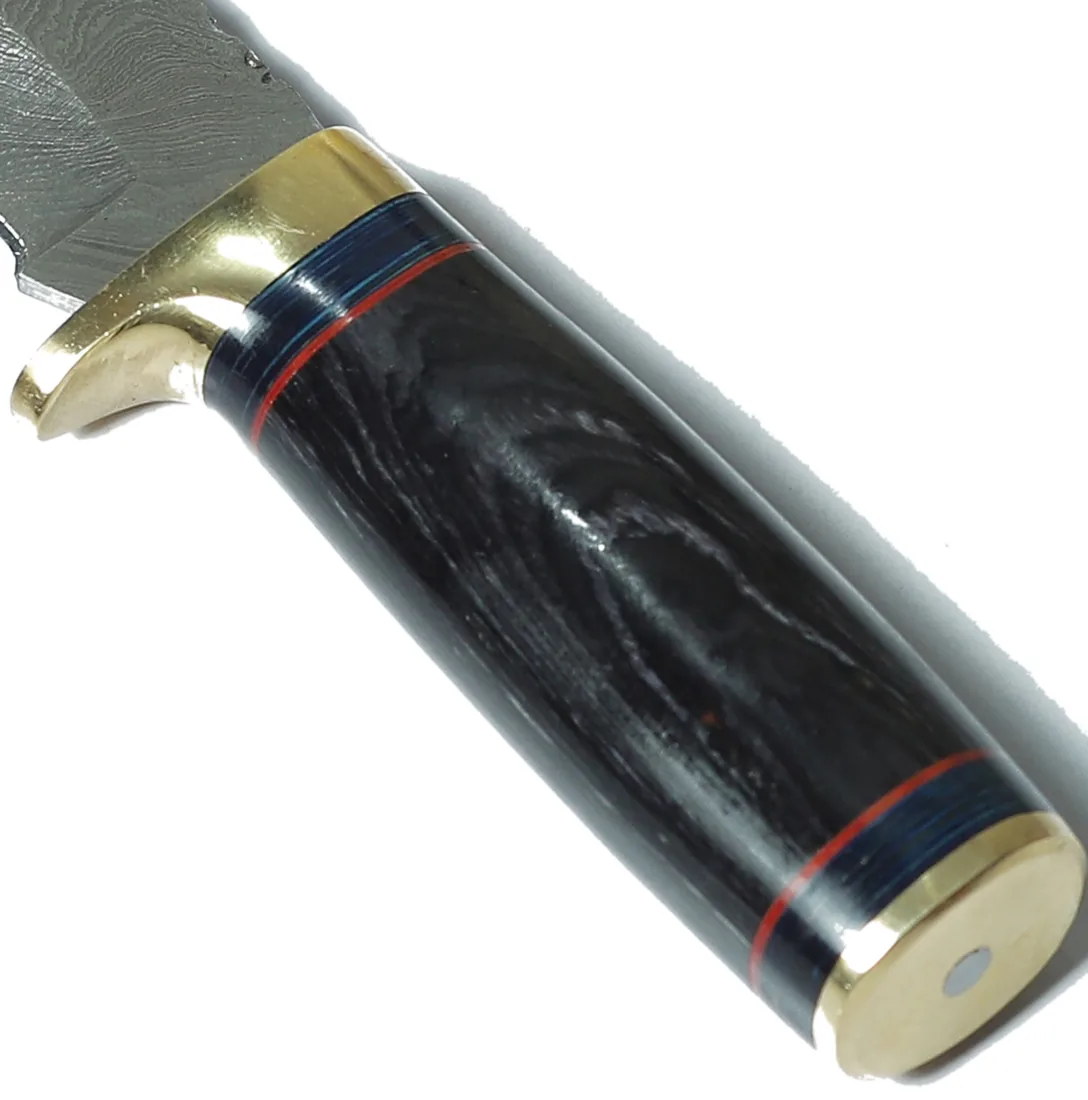
A hunting knife is often held with wet or bloody hands, so grip comes first.
- Micarta and G10. Very tough and grippy when wet, the best for hard use.
- Stabilised and dyed wood. Water resistant, durable and available in colour.
- Natural wood. Walnut, rosewood or olive wood. Warm and attractive, but it needs care.
- Stag antler, horn and bone. Classic looks, but smooth when wet and restricted in some countries.
Read the full comparison in our guide to knife handle materials.
Sheath: Protection and Retention
The sheath protects the edge, holds the knife securely and carries it on your belt. A stitched leather sheath with a snap strap is traditional and quiet. Look for double stitching, a welt that protects the stitching from the edge, a secure fit and a belt loop that suits your belt. Wipe a carbon steel blade clean and dry before you sheathe it, and do not store it long in leather. See our knife sheaths guide.
Fixed Blade vs Folding Hunting Knife
- Fixed blade. Stronger, with no joint to fail, and easier to clean. Best for field dressing and hard use. Searches for "fixed blade hunting knife" run at about 450 a month.
- Folding hunting knife. Compact and convenient, and often legal in more places. A folder with a good lock suits light use and as a backup.
How to Choose a Hunting Knife for Your Game
- Deer and similar game. A 4 to 5 inch drop-point or skinning knife, with a good grip.
- Small game. A small 3 to 4 inch knife, light and precise.
- Elk, moose and large game. A longer, stronger blade of 5 to 6 inches, and a second knife for heavy jobs.
- Camp and bushcraft. A sturdy full-tang drop-point or a Bowie.
How to Care for a Damascus Hunting Knife
- Clean off blood and fat with warm water and mild soap, then dry the blade completely.
- Wipe the blade with a thin coat of mineral or food-safe oil.
- Do not leave it in a wet leather sheath, and do not put it in a dishwasher.
- Avoid leaving acidic foods on the blade, which can mark the etched pattern.
- Sharpen with a whetstone at about 15 to 20 degrees per side, and hone it regularly.
Hunting Knife Laws
Rules on carrying, owning and importing hunting knives differ between countries, states and cities, and some places limit blade length or restrict carrying a fixed blade in public. Hunting regulations also cover how game can be handled. This is general information, not legal advice. Check the rules for your own area, and follow the hunting rules where you hunt.
Custom and Wholesale Damascus Hunting Knives
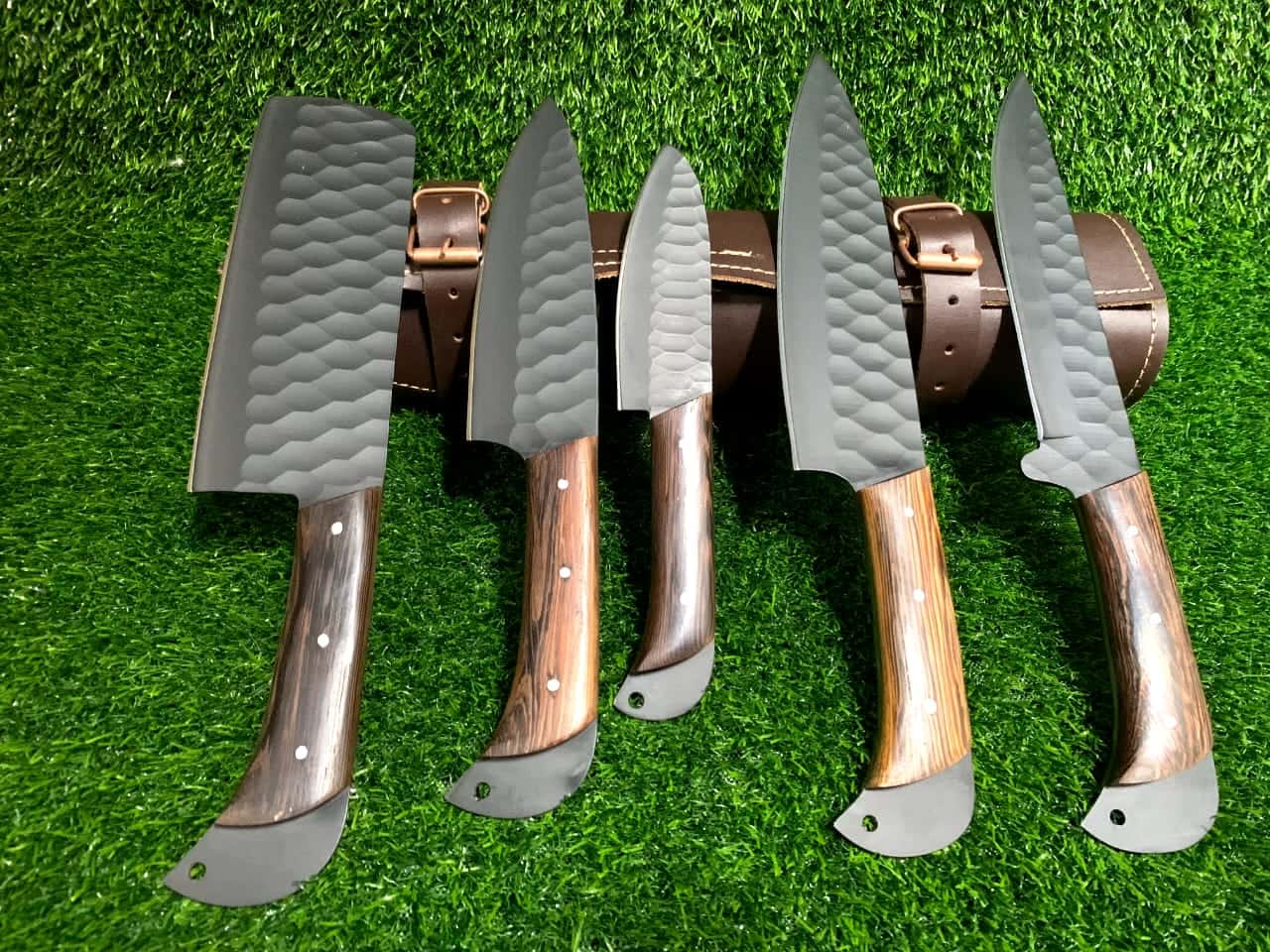
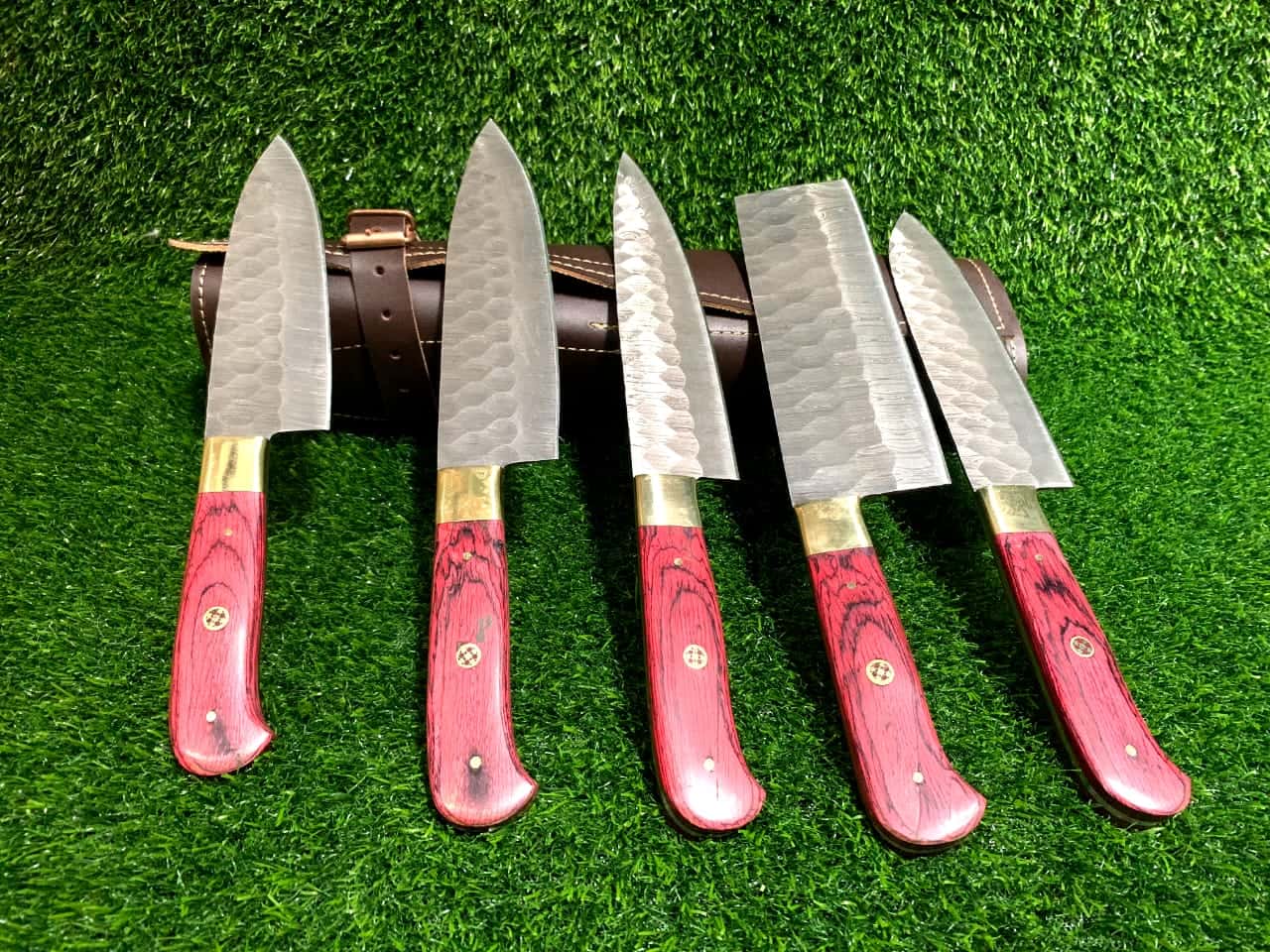
Makers in our network in Wazirabad, a Punjab city known for cutlery, hand-make Damascus, carbon and stainless steel hunting knives, with blade shapes from drop point to skinner and gut hook, handles in wood, stabilised wood, micarta, horn and stag, brass or Damascus guards, and handmade leather sheaths. You can ask for your own pattern, handle and logo. Send your requirement, the quantity and your destination, and approve a sample before the full order.
Conclusion
A good Damascus hunting knife is a full-tang fixed blade of 4 to 5 inches with a drop-point or skinner shape, good steel and heat treatment, a grippy handle and a secure leather sheath. The pattern is the bonus: the steel does the cutting, so judge the maker and the specs. Dry and oil the blade after every hunt. For retailers and outdoor brands, custom Damascus hunting knives from the makers give you your own design and a better price per knife.