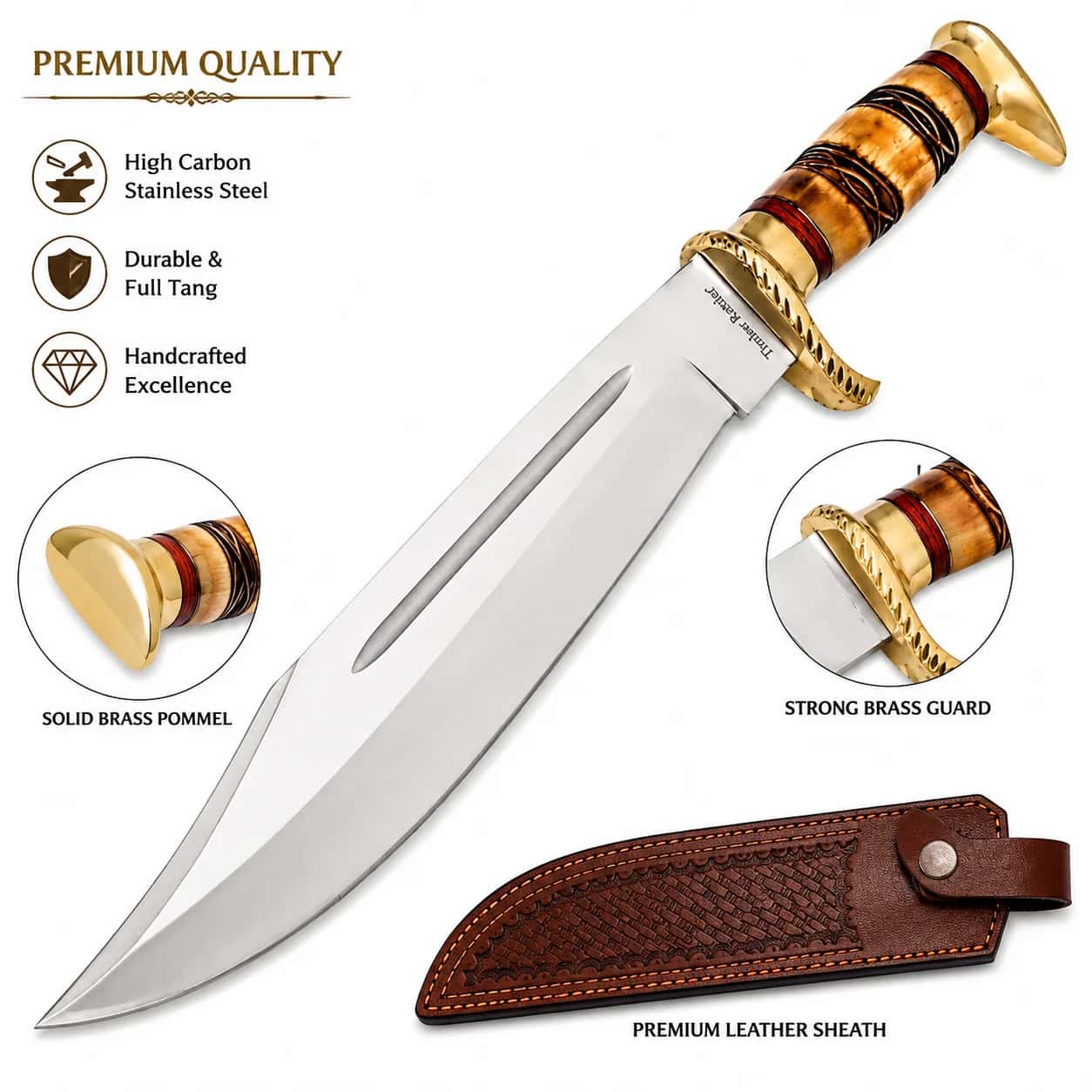
A skinning knife is a hunting knife made to remove the hide from game quickly and cleanly. The shape of the blade, the grip and the sheath all matter, because skinning is wet, slippery work that you may do for an hour or more. This guide explains what a skinning knife is, the main blade shapes (including the gut hook), how to choose steel, handle and blade size, the best skinning knife for deer and for other game, how to look after one, how to sharpen it, and how shops and brands can order custom or wholesale skinning knives.
What Is a Skinning Knife?
A skinning knife has a short to medium fixed blade, usually 3 to 4.5 inches, with a curved belly and a sharp point or a rounded tip. The curve lets you run the blade under the hide with long, shallow strokes and cut the connective tissue without nicking the meat or cutting through the skin. Skinning knives are used on deer, elk, moose, hogs, rabbits and other game, and also for livestock and fur work.
Skinning Knife vs Hunting Knife vs Boning Knife
- Skinning knife. A curved blade for removing the hide. The belly does the work, and the point is kept away from the meat.
- General hunting knife. A drop-point or clip-point knife that does a bit of everything, from skinning to camp chores. Many hunters use one knife for all jobs. See our Damascus hunting knife guide.
- Boning knife. A narrow, stiffer blade for taking meat off the bone at the table or in the kitchen.
- Caping knife. A small, very sharp knife with a fine point, used to skin around the head and face of a trophy animal without damaging the cape.
Skinning Knife Blade Shapes
Classic Curved (Upswept) Skinner
The traditional skinner has a rounded, upswept belly and a blunt or gentle point. The big curve is the best part for long cuts under the hide. This shape is easy to control and hard to puncture the skin with.
Drop-Point Skinner
A drop-point blade has a spine that slopes down to a strong, controllable point. It is a good all-round hunting shape that skins well and also handles field dressing and camp tasks. It is the most popular choice for hunters who carry one knife.
Trailing-Point Skinner
The spine curves upwards, leaving a long, sharp point that sits above the line of the handle and a large belly. It slices very well but the point is more delicate and needs care.
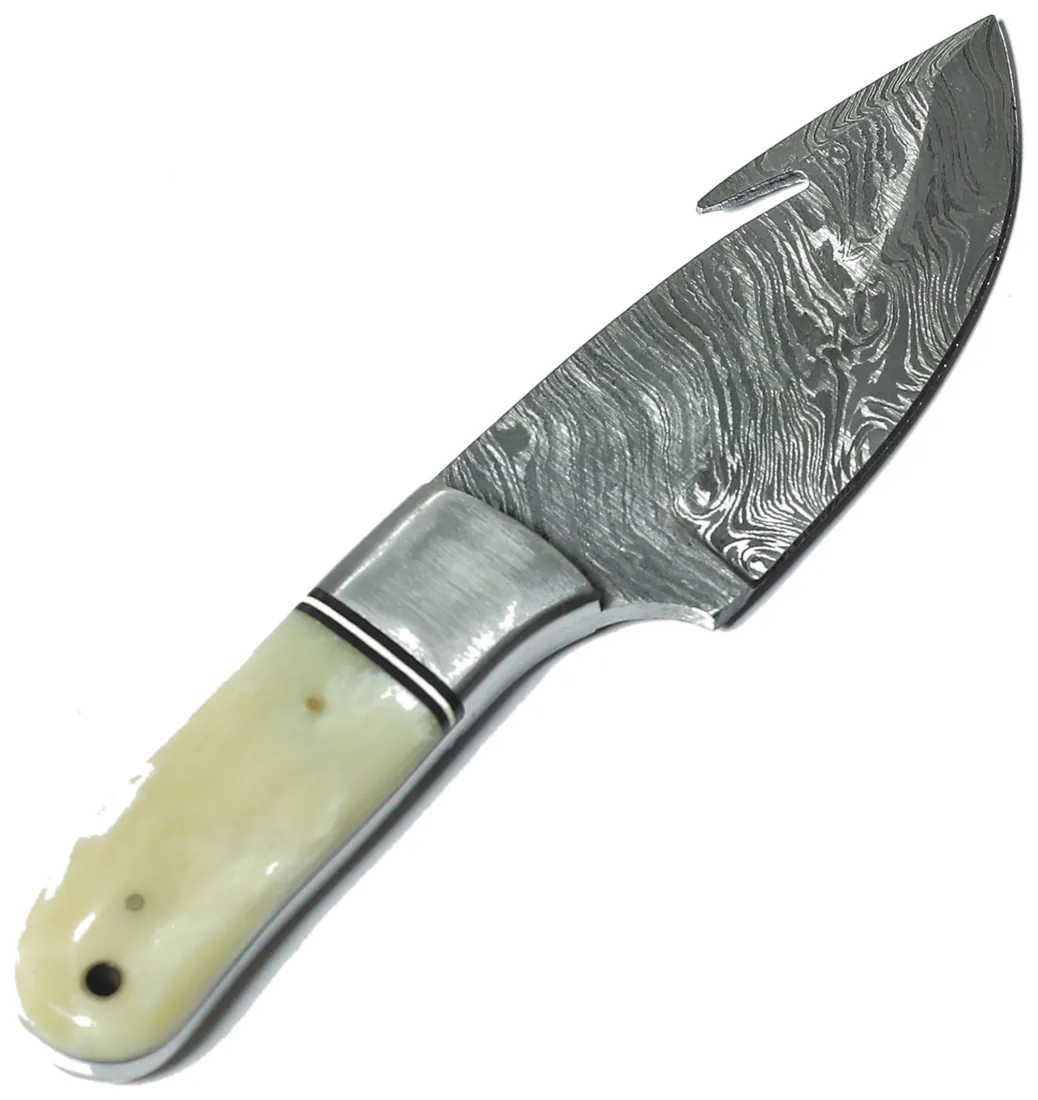
Gut-Hook Skinning Knife
A gut hook is a small notch with a sharp inner edge on the spine of the blade. It opens the belly cavity from the inside, without the point touching the organs. It is also used to cut hides and open up game quickly. Gut-hook skinners are one of the most requested wholesale hunting knife styles, and "skinning knife with gut hook" is a search of about 200 a month in the US.
Replaceable-Blade Skinning Knives
Some skinning knives hold a disposable scalpel-style blade. They are extremely sharp and quick to change, which is useful when you skin many animals. The blades are thin and can snap, so they are not for heavy work.
How to Choose the Best Skinning Knife
Blade Length
Most skinning knives are 3 to 4.5 inches. A short blade is easier to control around the legs and head and for smaller game. A longer blade (4.5 to 6 inches) is better for large animals and longer cuts. The best skinning knife for deer is usually around 3.5 to 4.5 inches.
Blade Thickness and Grind
A thin blade (about 2.5 to 3.5 mm) slices better and is the best for skinning. A thick blade is stronger for chopping and prying but is a poor slicer. A full flat or hollow grind gives a very keen edge for skinning.
Steel
- Stainless steel. Resists rust and blood, and is easy to maintain. It suits wet work.
- Carbon steel. Takes a very sharp edge, but it rusts if left wet or with blood on it. Dry and oil it after use.
- D2. A tool steel that holds an edge for a long time and is semi-stainless, but can stain.
- Damascus. Layered, pattern-welded steel, usually carbon steel. It is very attractive, and a well-made Damascus skinner cuts well. The pattern is decorative, and the steel and heat treatment decide how it performs. Read how to tell real from fake Damascus.
Handle and Grip
Skinning is slippery work, so grip comes first. Micarta, G10, rubber and textured stabilised wood give a secure hold when wet or bloody. Natural stag, bone and horn look excellent but are smooth, so choose a shape with a good finger guard. Read about the options in our guide to knife handle materials. A full tang (the steel runs through the handle) is stronger.
Sheath
A good sheath holds the knife securely and protects the edge. Leather looks classic, but wet leather can rust a carbon steel blade, so wipe the knife clean before you sheathe it. See our guide to knife sheaths.
Best Skinning Knife for Deer
For deer, choose a fixed-blade knife of 3.5 to 4.5 inches with a curved belly or a drop point, a thin enough grind to slice, a handle that stays grippy when wet and a secure sheath. A gut hook is a useful extra for field dressing, but it is not essential, and many hunters prefer a plain belly. For a complete outfit, add a small caping knife for trophy work and a sharpener for the field.
Best Skinning Knives for Other Game
- Small game (rabbit, squirrel, birds). A small skinning knife of 2.5 to 3.5 inches, light and precise.
- Hogs. A sturdy knife with a thicker blade, because hog hide is tough.
- Elk and moose. A longer, stronger blade of 4.5 to 6 inches, and often a second knife for heavy cuts.
- Trophy work. A caping knife with a fine point.
How to Use a Skinning Knife
- Hang or support the animal so that you can work at a comfortable height.
- Cut through the skin with the point or a gut hook, then switch to the belly of the blade.
- Use long, shallow strokes between the skin and the meat, pulling the skin away with your free hand and keeping the edge toward the hide.
- Work around the legs, tail and neck carefully, and keep hair off the meat.
- Stop to touch up the edge when the knife begins to drag. Cutting hair dulls a blade quickly.
- Always cut away from yourself, and keep your free hand out of the line of the blade.
Follow your local hunting rules on field dressing, tagging and the handling of game, and follow food-safety advice on cleaning and cooling meat.
How to Sharpen and Care for a Skinning Knife
- Sharpen before the hunt. Start with a very sharp edge. A pocket stone or a ceramic rod lets you touch it up in the field.
- Hone, then sharpen. Keep the edge straight with a honing rod, and sharpen on a whetstone at about 15 to 20 degrees per side when it dulls.
- Clean it straight away. Wash off blood and fat with warm water and mild soap, then dry the knife completely.
- Oil carbon steel. A thin coat of mineral oil stops rust.
- Do not store it wet in leather. Moisture in a leather sheath can rust a carbon steel blade. Let it dry first.
Skinning Knife Sets
A skinning knife set usually includes a skinner, a smaller caping or boning knife and sometimes a gut hook, in a roll or a pouch with a sharpener. Sets suit gift buyers and outdoor retailers, and matched handles and a leather roll make a good presentation.
Custom and Wholesale Skinning Knives
A custom skinning knife can have the blade shape, length, steel, gut hook, handle material and sheath you choose, plus your logo. Makers in our network in Wazirabad, a Punjab city known for cutlery, hand-make skinning knives in Damascus, carbon and stainless steel, with stag, horn, bone, wood and micarta handles and stitched leather sheaths. Send your requirement, the quantity and your destination, and approve a sample before the full order. Check that the style and the handle material are legal to import in your market.
Conclusion
The best skinning knife is a fixed blade of 3.5 to 4.5 inches with a curved belly or a drop point, a thin enough grind to slice, steel you will look after, a grippy handle and a good sheath. Add a gut hook if you field dress your own game. For retailers and brands, custom skinning knives from the makers give you your own pattern, handle and logo at a better price per knife.