How to Find a Clothing Manufacturer: Domestic vs Overseas Options for Small Brands
How small brands find and vet clothing manufacturers: domestic vs overseas, where to look, what to ask, red flags and how to run a first order.
Finding a clothing manufacturer is one of the hardest steps in starting or growing a fashion brand. There are thousands of factories, agents and middlemen, and from the outside they all look the same. Pick the wrong one and you can lose months, money and your launch date. Pick the right one and you get a partner who can grow with your brand.
This guide explains how to find a clothing manufacturer step by step: what type of factory you need, where to look, how domestic and overseas production differ, how to compare quotes, how to vet a factory and how to run a safe first order. It is written for small brands, startups, retailers and clubs that want to source clothing without owning a factory.
Quick answer: how to find a clothing manufacturer
Define what you need. Write down your product, quantity per style, quality level, budget and deadline.
Build a shortlist of 5 to 10 factories from directories, referrals from other brands, trade shows, a sourcing agent or direct outreach.
Send the same written brief to 3 to 5 of them so their quotes can be compared.
Compare quotes on price per piece, minimum order, lead time, payment terms and what is included.
Vet the factory and order samples of your actual garment, and approve one in writing.
Start with a small first order, arrange an inspection before shipment and plan the full landed cost.
The rest of this guide explains each step in detail.
What type of clothing manufacturer do you need?
Before you start searching, it helps to know how factories work, because the term “clothing manufacturer” covers several different services. Asking for the wrong one wastes time.
Cut-and-sew (CMT) manufacturers
CMT stands for cut, make and trim. You bring a finished design, a pattern and often the fabric, and the factory cuts and sews the garments. This is the most common model for brands that already have a clear product and a tech pack.
Full-package manufacturers
A full-package (or “FOB”) manufacturer handles more of the process: sourcing fabric and trims, making samples, producing the garments and sometimes packing them. It suits brands that want fewer moving parts, but the minimums are often higher.
Private label manufacturers
A private label manufacturer makes garments to your design and puts your label on them. You own the brand, and the design is yours. Read our guide to private label and custom clothing manufacturers in Pakistan for how this works in practice.
White label suppliers
White label means ready-made garments from the factory’s existing range with your label added. It is faster and often has lower minimums, but other brands may sell the same product. It works for testing a market quickly.
Print-on-demand and small-batch studios
For very small runs or tests, print-on-demand services and small-batch studios let you order a few pieces at a time. They are flexible, but the cost per piece is usually higher. Many brands start here and move to a factory when volumes grow.
Step 1: Define your product, quantity, budget and timeline
A factory cannot quote properly, and you cannot judge a quote, without a clear brief. Before you contact anyone, write down:
The product. The garments you want to make, with reference photos, sketches or a tech pack. If you do not have a tech pack, a sample garment to copy works.
The quantity. How many pieces per style and per colour you want for a first order, and a realistic range for reorders. Minimum order quantities (MOQs) are usually set per style and colour.
The quality level. Fabric type and weight (GSM), how the garment should feel and how long it should last.
The target cost. A price per piece that works with your selling price and margin after freight and duties.
The timeline. The date you need the goods in your hands, so factories can say whether it is realistic. Remember to add time for samples and shipping.
Branding. Neck labels, care labels, hangtags, polybags and carton marking.
This one page becomes the brief you send to every factory. The clearer it is, the more useful the replies will be.
Step 2: Where to find clothing manufacturers
There is no single best place to look. Most brands use two or three of these routes together.
B2B directories and marketplaces
Directories and marketplaces list thousands of factories by product and country. They are a fast way to build a first shortlist, and you can often see photos, product ranges and sometimes verification badges. The downside is that many listings look alike, and some suppliers are traders, not factories, so the vetting is up to you. Baramdat lists Pakistani manufacturers and can send your brief to suitable ones.
Referrals from other brand owners
Founders who make similar products can point you to factories they trust. Ask in brand communities, founder groups and at industry events. A factory that works well for a similar product is a strong lead, though it may not suit yours.
Trade shows and sourcing events
Apparel and textile trade shows let you meet factories, see fabrics and compare quality in person. They cost time and travel, and each visit covers a limited number of suppliers, so plan your questions in advance.
Sourcing agents
A sourcing agent finds, vets and manages factories on your behalf, which is helpful when you are new to a country or product. Fees vary, so ask how the agent is paid and avoid hidden markups. Read what a sourcing agent does and how they charge for more detail.
Direct outreach to factories
You can also contact factories directly through their websites or social media. Keep your first message short and specific: your product, quantity, timeline and what you want them to quote.
Clothing manufacturers for small brands: what to look for
Small brands have different needs from large buyers. When you shortlist, look for factories that:
state or accept a low MOQ for first orders, and will tell you the minimum in writing;
answer questions clearly and quickly, because small orders need more communication;
help with patterns, grading and fit, if you do not have a technical team;
show past work in similar garments, not only photos of other brands’ products.
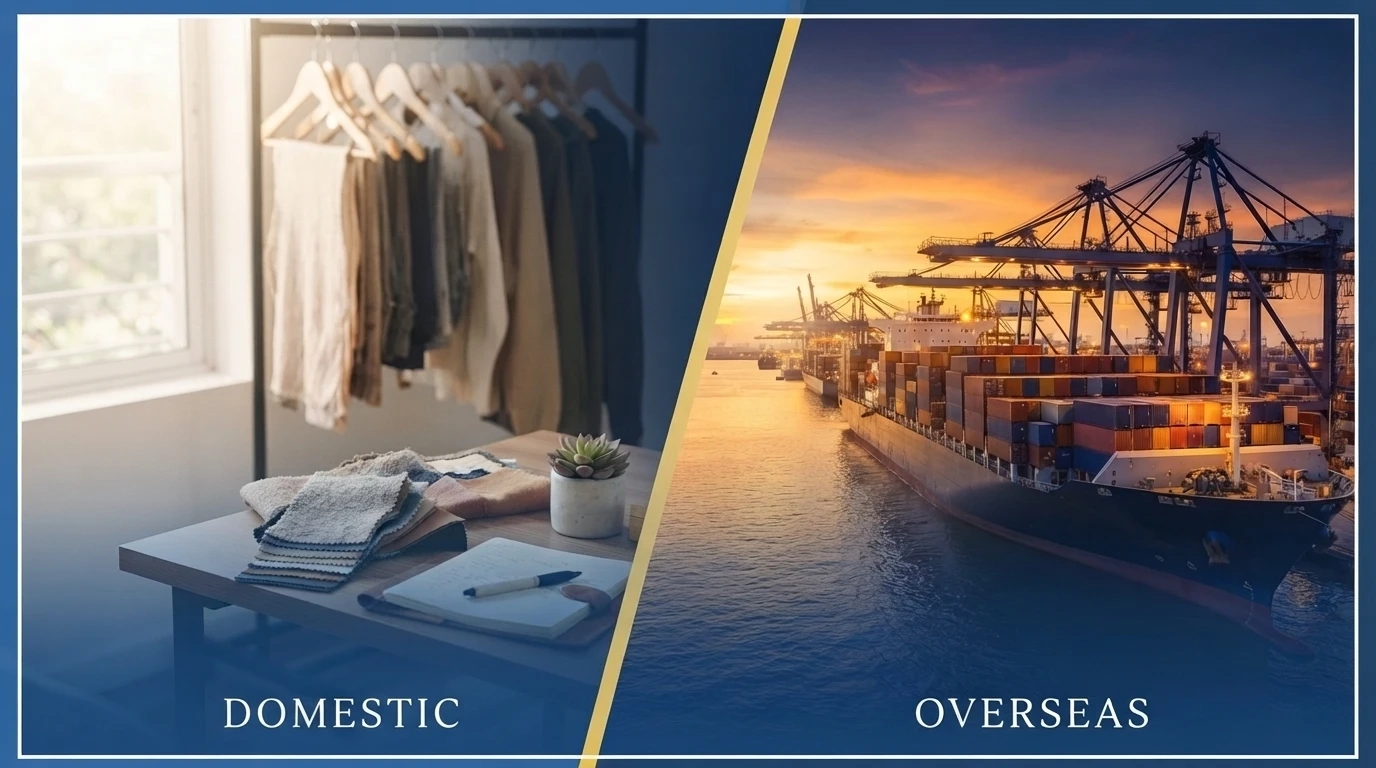
Domestic vs overseas clothing manufacturers: how to decide
Neither route is better for every brand. The right choice depends on your product, your quantity, your budget and how quickly you need the goods. Get written quotes from both and compare the total cost and lead time, not only the price per piece.
Minimum order quantity
Minimums vary by factory, garment and fabric in both domestic and overseas production. Some factories accept small first orders, and others work only in larger runs. Ask each one for the minimum per style and per colour in writing.
Lead time
Domestic production often has shorter transit and simpler logistics. Overseas production adds freight and customs, so plan more time between approval and delivery.
Communication
Working in the same language and time zone is easier. Overseas, you will rely more on clear written specs and scheduled calls, so look for factories that reply clearly and promptly.
Choice of fabrics and processes
Overseas factories often offer a wider choice of fabrics, knits and processes, especially in cotton and knitwear. Domestic factories may be limited by local mills and trims. Check that the factory can make the exact construction you need.
Shipping, duties and landed cost
Landed cost is what a garment really costs when it reaches your warehouse: the price per piece plus freight, import duties, customs fees and handling. Duties depend on the product and where it is made, and some markets offer preferential tariffs for eligible goods. Ask a customs broker or your importer to confirm the rates for your product before you compare.
Labelling and compliance
Clothing sold in the US, UK and EU must carry the right labels for fibre content, care and origin, and children’s wear has stricter safety rules. Some buyers ask for textile safety certificates such as OEKO-TEX Standard 100. Confirm the requirements for your market and ask the factory what it can provide.
Quality control
Domestic factories are easier to visit. Overseas, rely on approved samples, video calls and an independent inspection before shipment.
Step 3: Shortlist factories and send a brief
Narrow your list to the factories that fit your product, quantity and timeline, then send the same brief to three to five of them. A good first message includes:
two or three sentences about your brand and who you sell to;
the garments you want, with photos or a tech pack;
quantities per style, colour and size;
fabric and weight, or a sample garment to match;
branding requirements;
your target date and destination;
the questions you want answered: price per piece, minimum order, lead time, sample cost and payment terms.
Sending the same brief to each factory makes the replies comparable, and how a factory responds already tells you something about how it will work with you.
Step 4: Compare quotes properly
The lowest price is not always the best quote. A usable quote states:
the price per piece and what it includes (fabric, trims, labels, printing, packaging);
the minimum order per style and colour;
the sample cost and sampling time;
the production lead time;
payment terms, such as the deposit and when the balance is due;
the shipping terms (for example EXW, FOB or delivered), which decide who pays for what.
If two quotes differ a lot, check whether they describe the same garment. Different fabric weights, trims or print methods often explain the gap. Be careful of a price far below every other quote.
Step 5: How to vet a clothing manufacturer
Vetting protects you from the most common problems: poor quality, missed deadlines and suppliers that are not what they claim. Use these checks before you commit.
Questions to ask
Do you manufacture the garments yourselves, or do you subcontract? Which part?
Can you show similar garments you have made?
What is your minimum order per style and colour, and does it change on reorders?
Who makes the patterns and grades the sizes?
How do you check quality during production?
What is your lead time for samples and for production?
What are your payment terms?
Do you hold any audits or certifications that buyers ask for?
Can we arrange a video call of the factory floor?
Documents and checks
Business details. Company name, address and registration. The name on the quote should match the name on the invoice and bank account.
Past work. Photos, examples and, where possible, references from other buyers.
Audits and certificates. Some buyers ask for social compliance audits or textile safety certificates. Ask which the factory holds and check that they are current and issued to the right site.
Samples. The most reliable test is a sample of your actual garment.
Red flags
A price far below every other quote.
Refusing to make a sample, or sending a sample that does not match the order.
Pressure to pay everything upfront.
Vague answers about who makes the garments, or a name that changes between documents.
No clear company details or contact information.
Slow, inconsistent replies before you have even ordered.
Step 6: Order samples and approve them in writing
A sample shows fabric, stitching and fit better than any description. Treat sampling as part of the vetting process, not a formality.
Order a sample of your actual garment, not only a similar one from the factory’s range.
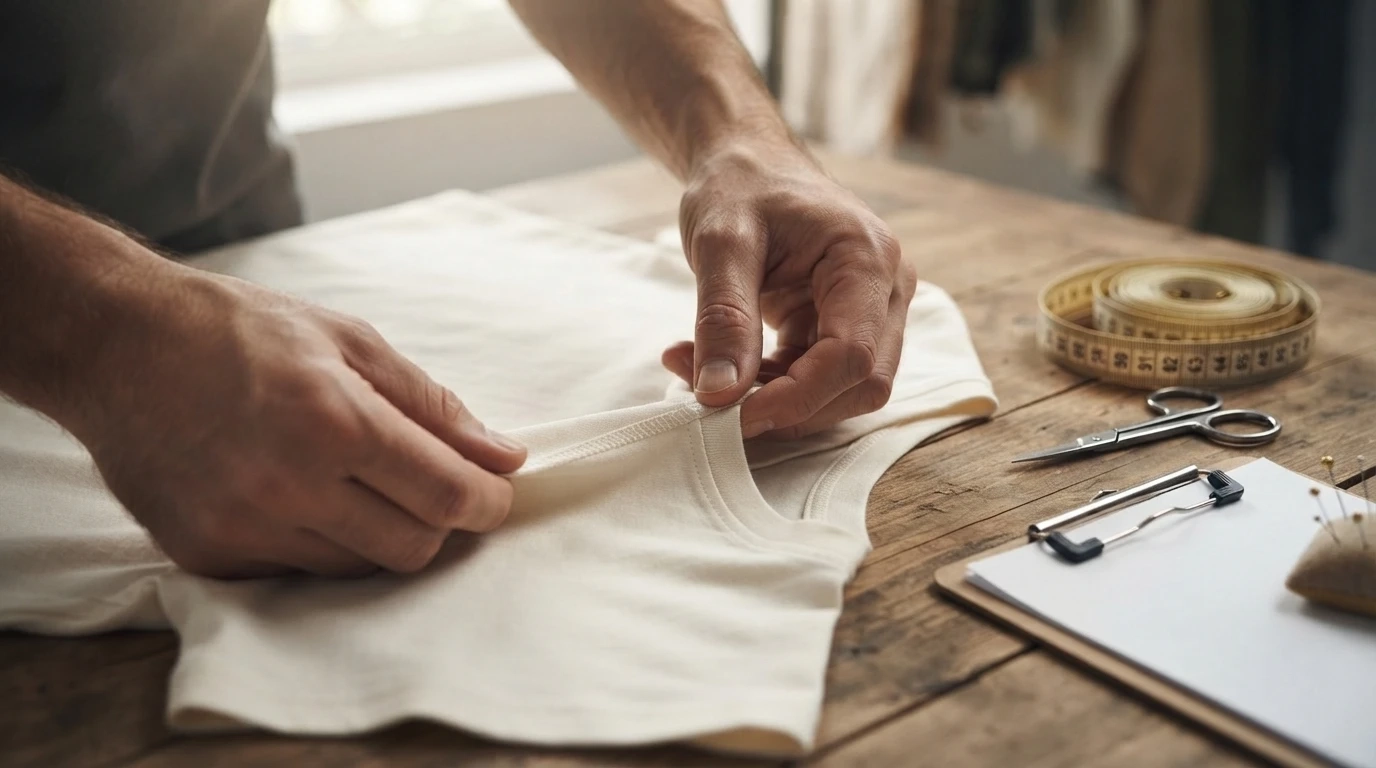
Check the fabric. Composition, weight (GSM), feel and colour.
Check the construction. Seams, stitching, hems, trims, labels and finish.
Check the fit. Measure the sample against your size chart and try it on a fit model if you can.
Wash-test it. Check shrinkage, colour fastness and pilling.
Approve the final sample in writing, and keep it as the reference for production.
Expect one or more sampling rounds, and plan time for them before your launch date.
Step 7: Run a safe first order
Start small. A smaller first order tests the factory, the quality and your market before you commit more money.
Agree payment terms in writing. A deposit with the balance after approval or before shipment is common. Avoid paying everything upfront.
Arrange an independent inspection before the goods ship, checked against your approved sample.
Plan shipping. Decide who arranges freight, which shipping terms apply and who handles customs clearance.
Calculate the landed cost before you set your selling price.
Keep records. Save the approved sample, quote, purchase order and all agreements.
Finding clothing manufacturers in Pakistan
Pakistan has a large garment and textile industry, with particular strength in cotton knitwear. Factories make T-shirts and polos, hoodies, activewear, uniforms, denim, leather jackets and more, and many work with overseas brands and retailers. If you are exploring Pakistan as a source, these pages explain what you can order and what to specify:
As with any country, the right factory depends on your product, so compare several. Baramdat helps buyers find and compare Pakistani manufacturers: you send one brief, we contact suitable factories, collect written quotes, and help arrange samples and an independent inspection. You pay the supplier directly, and any fee for our service is agreed in writing before work starts. Send a sourcing request to get started.
Common mistakes when choosing a clothing manufacturer
Contacting factories without a clear brief, then getting quotes that cannot be compared.
Choosing only on price per piece and ignoring minimums, lead time, freight and duties.
Skipping samples or approving them verbally.
Paying the full amount upfront.
Not checking who actually makes the garments, and finding out later that production was subcontracted.
Ignoring labelling and compliance rules for your market.
Ordering too much too early, before the product and the factory are proven.
Underestimating the timeline. Sampling, production and shipping each take time.
Clothing manufacturing terms every buyer should know
MOQ (minimum order quantity): the smallest order a factory will accept, often set per style and colour.
Tech pack: a document that describes a garment in detail, including measurements, fabric, trims, stitching and labels.
CMT (cut, make, trim): a service where the factory cuts and sews garments from your design and materials.
Full package: a service where the factory also sources fabric and trims and often makes samples.
GSM: grams per square metre, the standard measure of fabric weight.
Grading: scaling a pattern across the sizes in your size range.
Trims: the non-fabric components, such as zips, buttons, drawcords and labels.
Lead time: the time between approving the sample or placing the order and receiving the goods.
Landed cost: the full cost of a garment delivered to your warehouse, including freight, duties and handling.
Incoterms (EXW, FOB, DDP): standard shipping terms that state who pays for transport, insurance and customs at each stage.
Ready to find your manufacturer?
Finding the right clothing manufacturer takes a clear brief, a few well-chosen factories and careful checking, but it becomes much easier once you have a process. If you are considering Pakistan, see our private label clothing page or send a sourcing request, and our team will come back with questions and a plan.
Write a clear brief with your product, quantity, quality level, target cost and deadline. Build a shortlist from directories, referrals, trade shows or a sourcing agent, send the same brief to three to five factories, compare written quotes and order samples of your actual garment before committing.
Where can I find clothing manufacturers for small brands?
Small brands usually look at B2B directories and marketplaces, referrals from other founders, trade shows, sourcing agents and direct outreach. Ask each factory for its minimum order in writing, because it varies widely and some factories accept small first orders.
How do I find a clothing manufacturer with a low MOQ?
Say your quantity in the first message and ask for the minimum per style and per colour. Start with a small range, such as a few styles in few colours, which is easier for a factory to quote. Some factories offer lower minimums on basic styles from their existing range than on fully custom designs.
Is it better to use a domestic or an overseas clothing manufacturer?
It depends on your product, quantity, budget and timeline. Domestic factories often offer shorter lead times and easier communication. Overseas factories may offer a wider choice of fabrics and processes and different pricing. Get quotes from both and compare the full cost and lead time.
How do I know if a clothing manufacturer is legitimate?
Check that they manufacture the garments themselves, ask for examples of similar work, verify the company name and address against the quote and invoice, request a sample of your actual garment, and ask about audits or certificates. Be careful of prices far below other quotes and pressure to pay everything upfront.
How much does it cost to manufacture clothing?
The cost per piece depends on the fabric, the construction, the decoration, the quantity and the factory. There is no single number, so ask several factories to quote the same brief. Add freight, duties and handling to calculate the landed cost before you set your price.
How long does it take to produce clothing?
Allow time for sampling, production and shipping. The total depends on the garment, the factory's workload and the distance. Ask each factory for lead times in writing for both samples and production.
Do I need a tech pack to work with a manufacturer?
A tech pack removes guesswork, but it is not always required. Clear reference photos, measurements and a sample garment can also work, and some factories help with patterns and grading. Tell the factory what you have.
What is the difference between a manufacturer and a sourcing agent?
A manufacturer makes the garments in its own factory. A sourcing agent finds and manages factories for you, handling searching, vetting, quotes, samples and quality checks. Agents charge a fee or commission, so ask how they are paid.
Can Baramdat help me find a clothing manufacturer in Pakistan?
Yes. Send us your brief with the garments, quantity and destination country. We contact suitable factories, collect written quotes and help with samples and inspection. You pay the supplier directly, and any fee for our service is agreed in writing before work starts.
You can view the products listed orsign up on Baramdat for free