


What does a PET bottle washing line actually remove from recycled bottles?
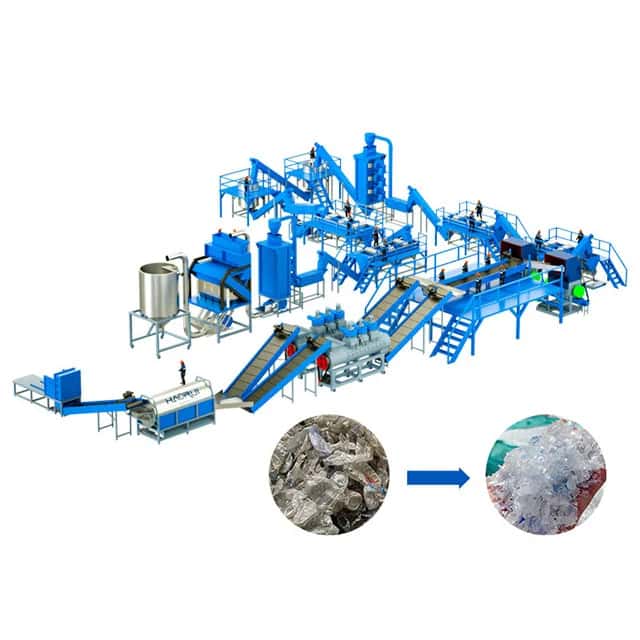
It strips labels, adhesive residue, dirt, oils, and other surface contaminants from baled PET bottles, and typically separates out caps and rings, so the material meets the purity level needed for downstream pelletizing or fiber-grade reprocessing.
Is there a difference between an industrial and a commercial bottle washing machine?
Industrial systems are generally built for continuous, high-volume processing (as in recycling plants), while commercial machines are sized for lower-throughput operations like breweries or bottling facilities — the core wash mechanics are similar, but capacity, automation level, and duty cycle differ.
Can the same type of washing line handle glass or beer bottles, not just PET?
The general wash-soak-rinse process carries over, but glass and beverage-refill lines use gentler mechanical action and food-safety-focused rinse cycles, while PET recycling lines are tuned for label/adhesive removal and higher-temperature caustic washing — so equipment is usually purpose-built per material rather than fully interchangeable.
Do automatic bottle washing machines make sense for plastic recycling operations?
For continuous, high-volume recycling, yes — automatic lines reduce labor cost per ton and maintain more consistent wash quality than manual or semi-automatic systems, though they carry a higher upfront cost that needs to be weighed against actual bale volume.
How does a bottle washing line fit into the broader plastic recycling process?
It sits between initial shredding/baling and pelletizing: washed, clean flake is what feeds a pelletizing line, so throughput between the washing stage and the pelletizing stage needs to be matched to avoid bottlenecks on either end.