The handle decides how a knife feels, how safe it is in wet hands, how long it lasts and how it looks. Knife handle materials range from natural stag antler, horn, bone and wood to modern micarta, G10 and resin. This guide compares the main materials for grip, durability, looks and care, explains how antler and horn differ, covers the import and export rules for animal materials and rosewood, and shows how handles are attached and how to choose one. It also explains how to order custom knife handles in bulk.
Why the Handle Material Matters
- Grip. A smooth handle is dangerous in wet or bloody hands. Texture and material decide how secure the hold is.
- Durability. Some materials swell, crack or shrink. Others are practically indestructible.
- Weight and balance. Brass and steel are heavy, and resin and polymer are light.
- Looks and value. Stag, horn and fine wood look special and are often chosen for gift and collector knives.
- Rules. Some natural materials are restricted in some countries.
Antler and Stag Handles
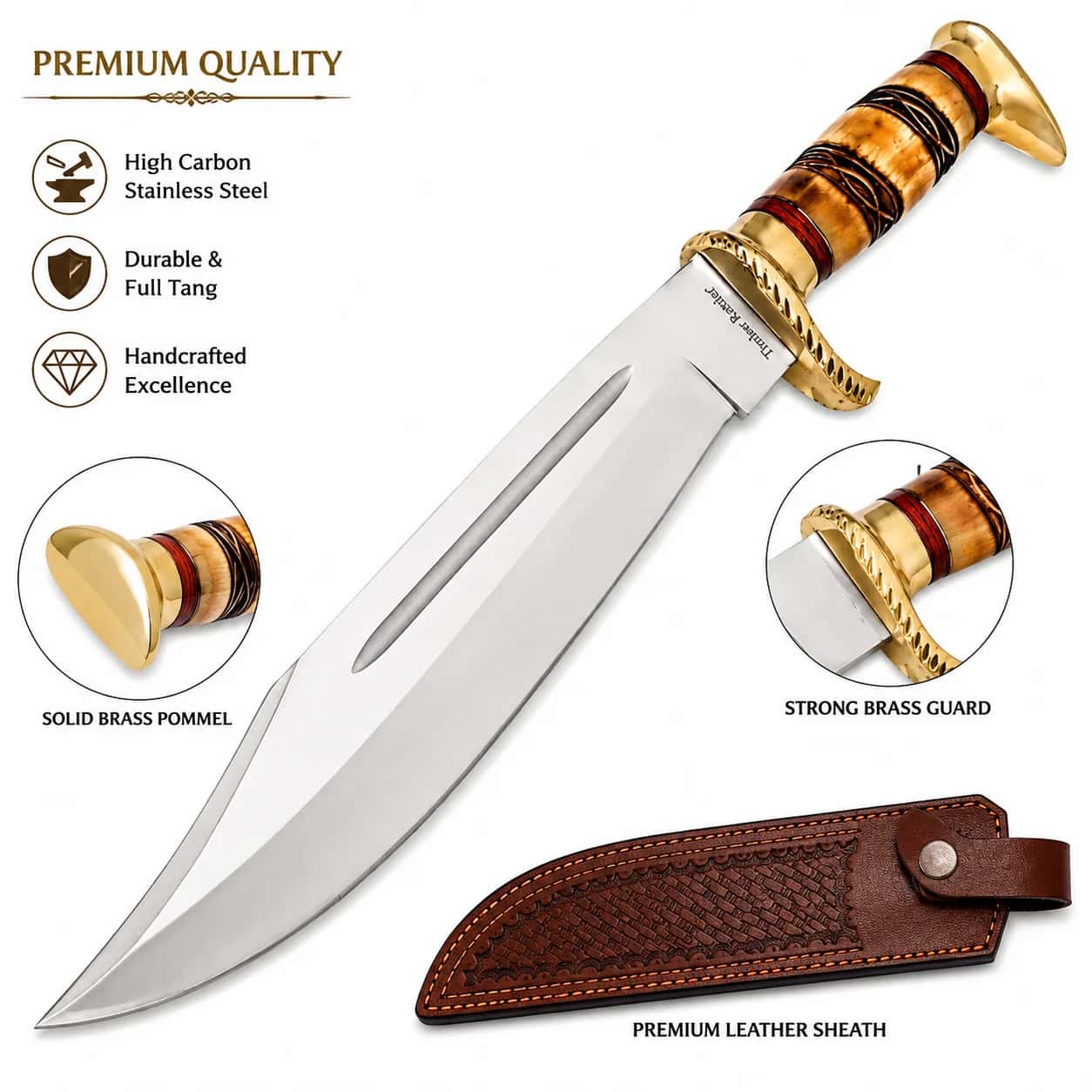
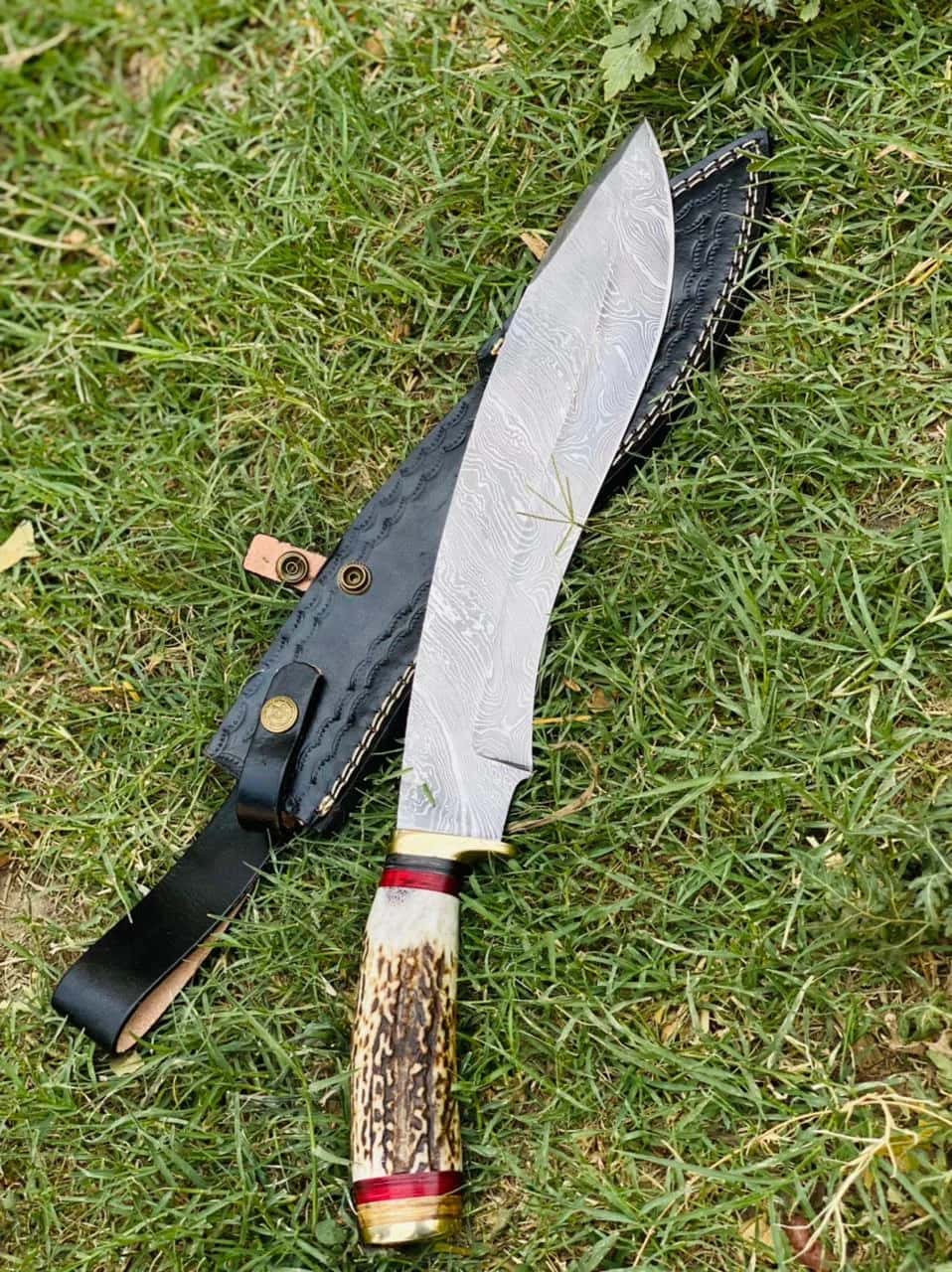
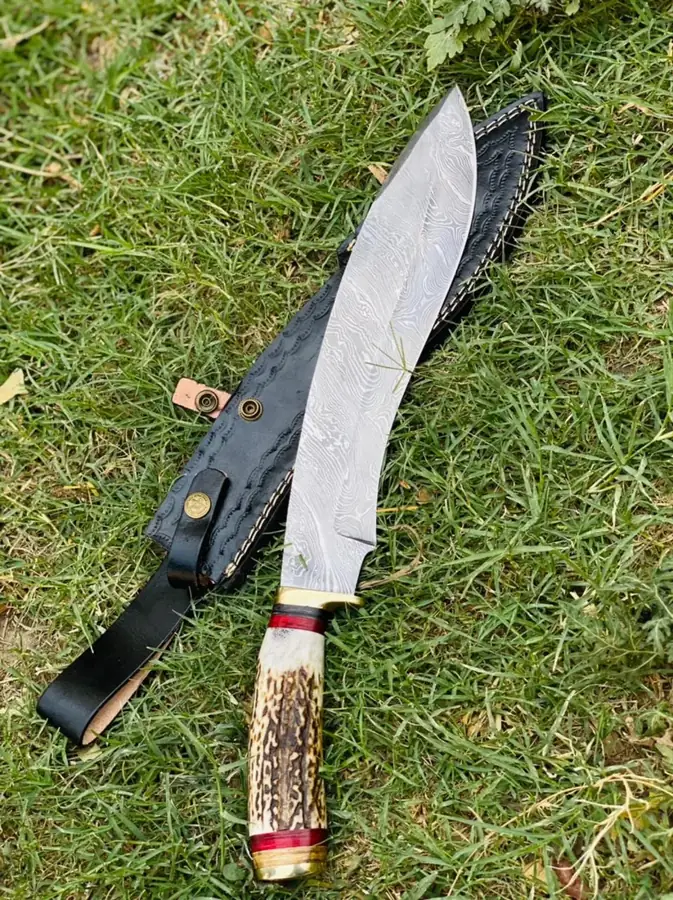
Antler comes from deer, elk and similar animals, and "stag" usually means red deer or sambar antler. It is shed naturally each year, which is why it can be collected. Antler has a rough, bumpy outer surface and a pale core, and no two pieces are alike. It is a classic choice for hunting knives, Bowie knives and kukris. Searches for stag and antler handle Bowie knives run at about 200 a month in the US.
- Pros. Distinctive, a good grip because of the texture, and traditional.
- Cons. Can crack if it dries out or is hit, and can vary in size and shape. Some countries restrict importing antler.
- Care. Keep it away from extreme heat and from soaking. A little wax or oil keeps it from drying.
Horn Handles (Buffalo, Ram and Cow)
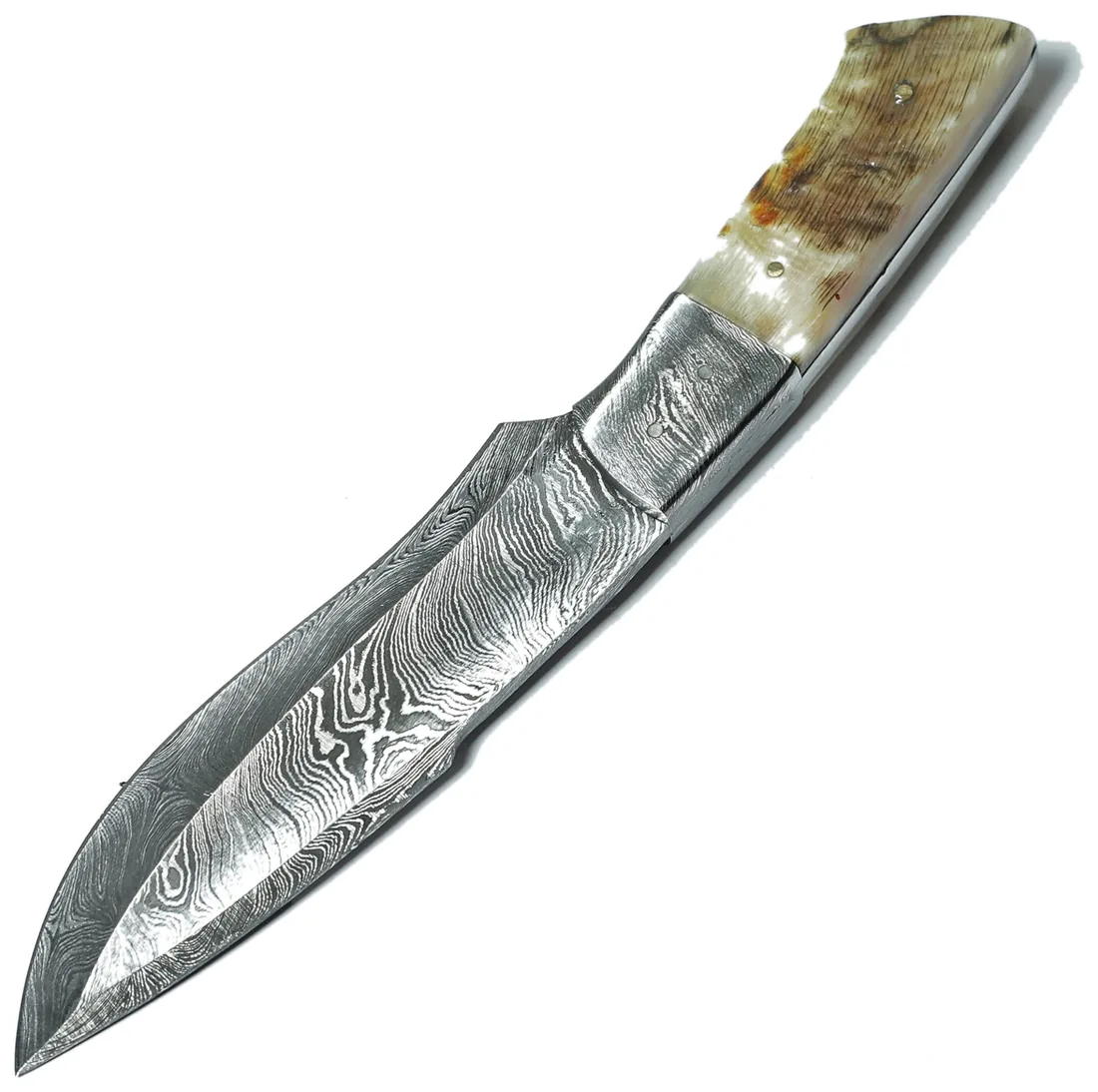
Antler and horn are different. Antler is bone-like and is shed each year. Horn is keratin (the same material as fingernails), grows over a bone core and is not shed. Handles are cut from buffalo, ram or cow horn. Buffalo horn is dark and smooth, and ram horn is lighter, with ridges and a banded pattern.
- Pros. Warm and attractive, with a natural grain, and lighter than antler. It can be polished to a high shine.
- Cons. It can swell or crack with moisture and heat changes. Natural pieces vary. Some countries restrict animal materials.
- Care. Keep it dry, and wipe it clean. Do not soak it.
Bone Handles
Bone handles, often camel or cow bone, are pale and smooth. They can be left natural, stained or "jigged" (cut with a pattern of grooves). Bone is popular on pocket knives and skinning knives.
- Pros. Attractive and affordable, and it can be dyed in many colours.
- Cons. It can crack or discolour, and it is smooth when wet unless it is jigged. Check the import rules.
Wood Handles
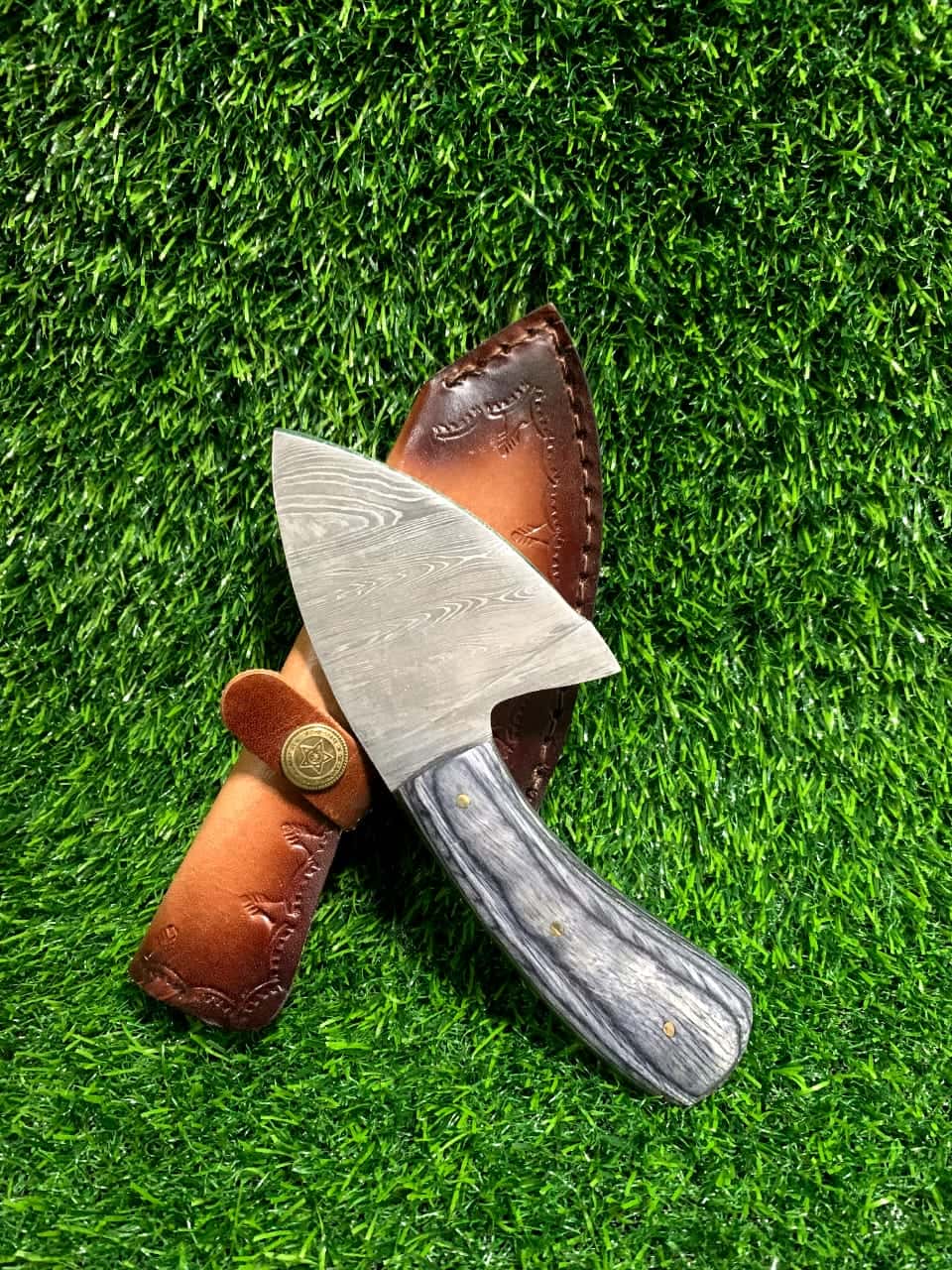
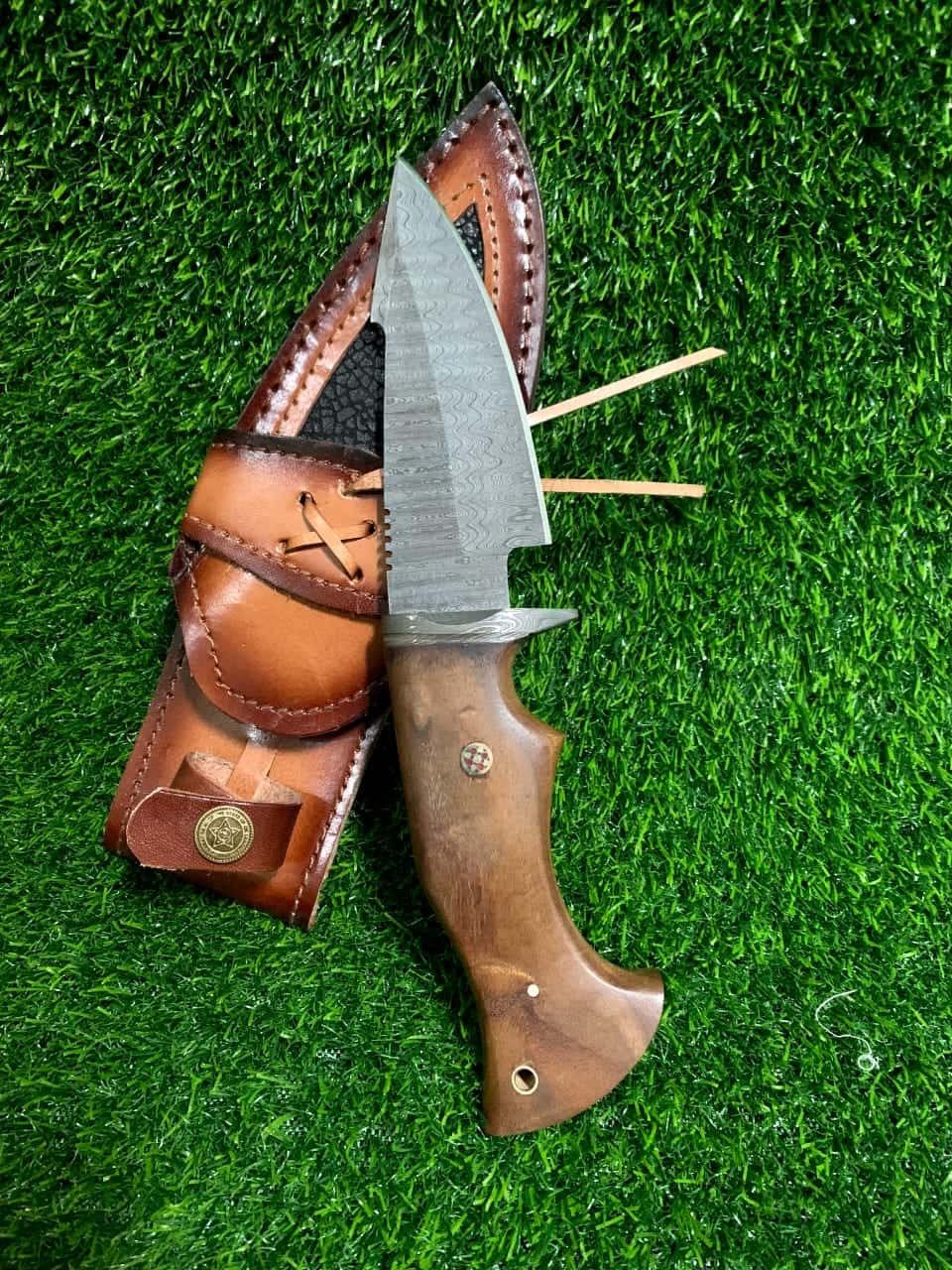
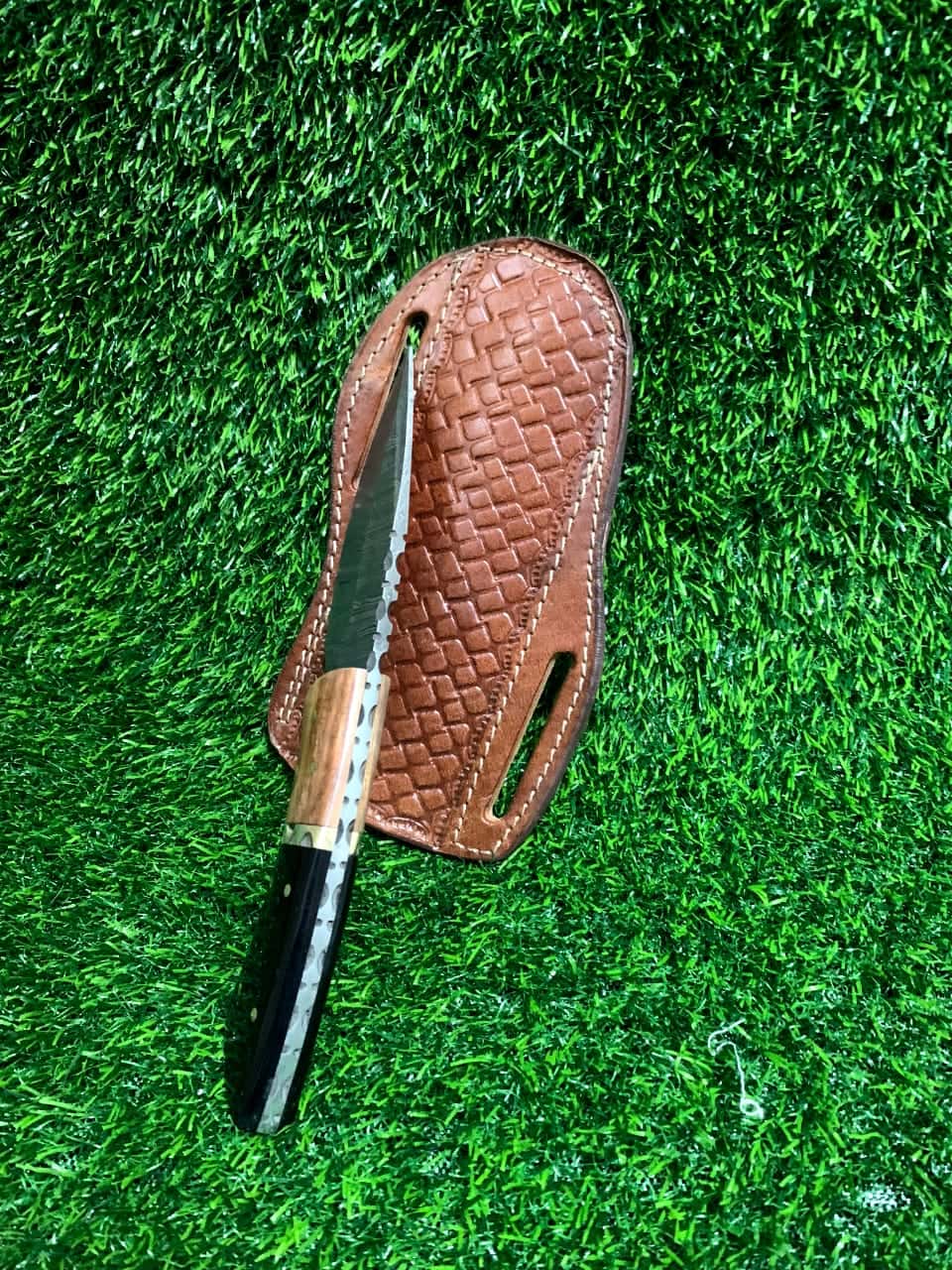
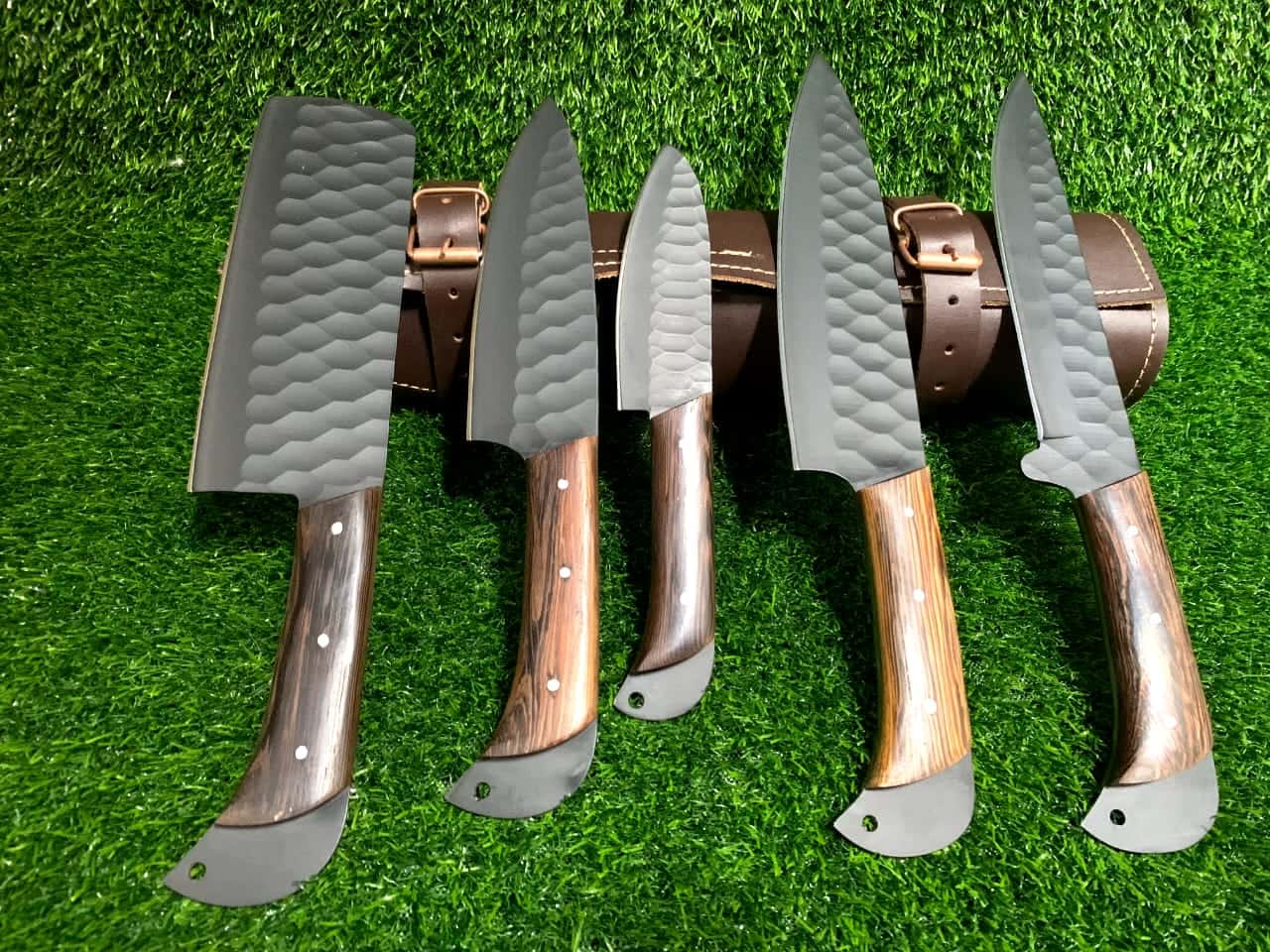
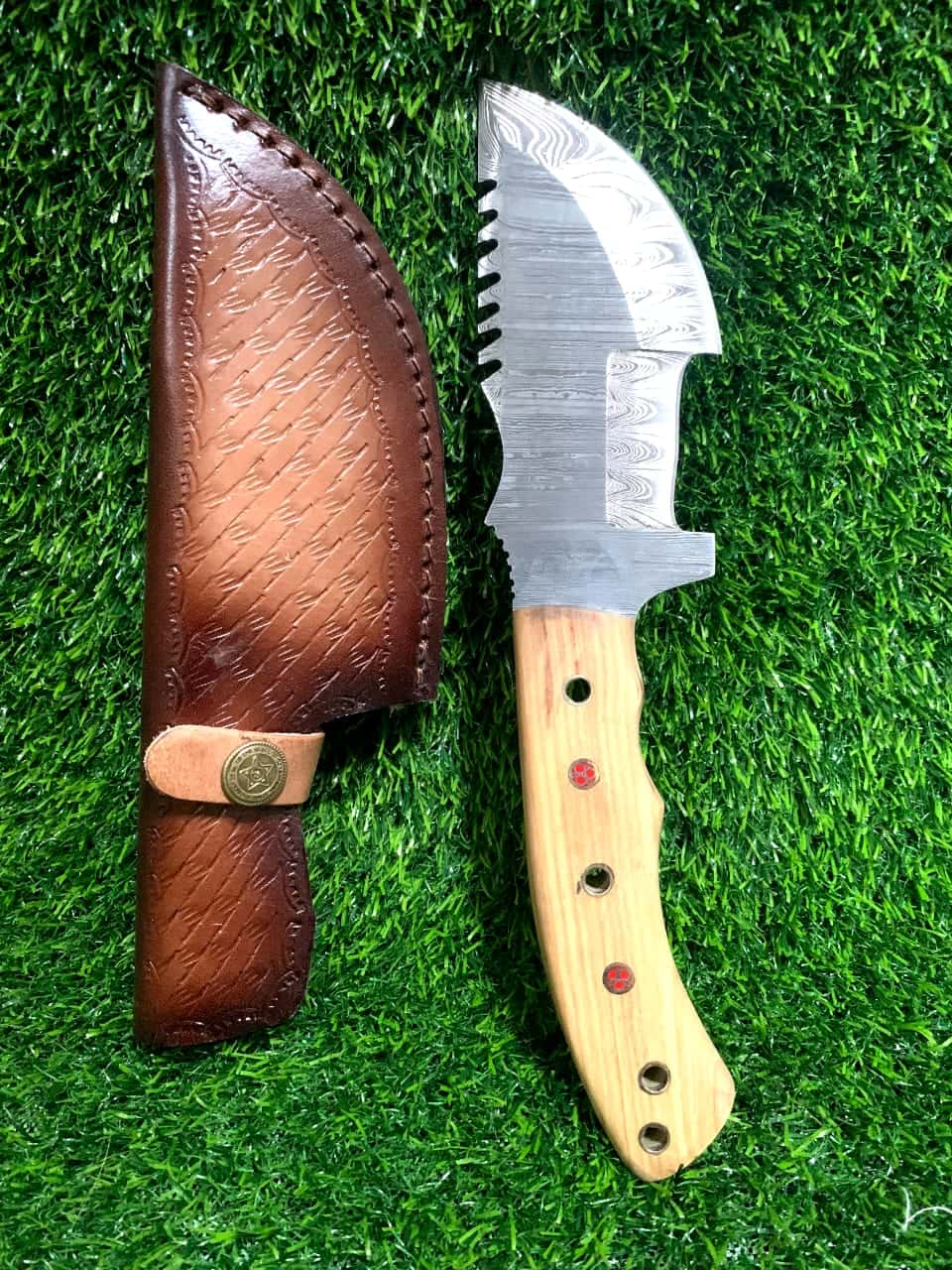
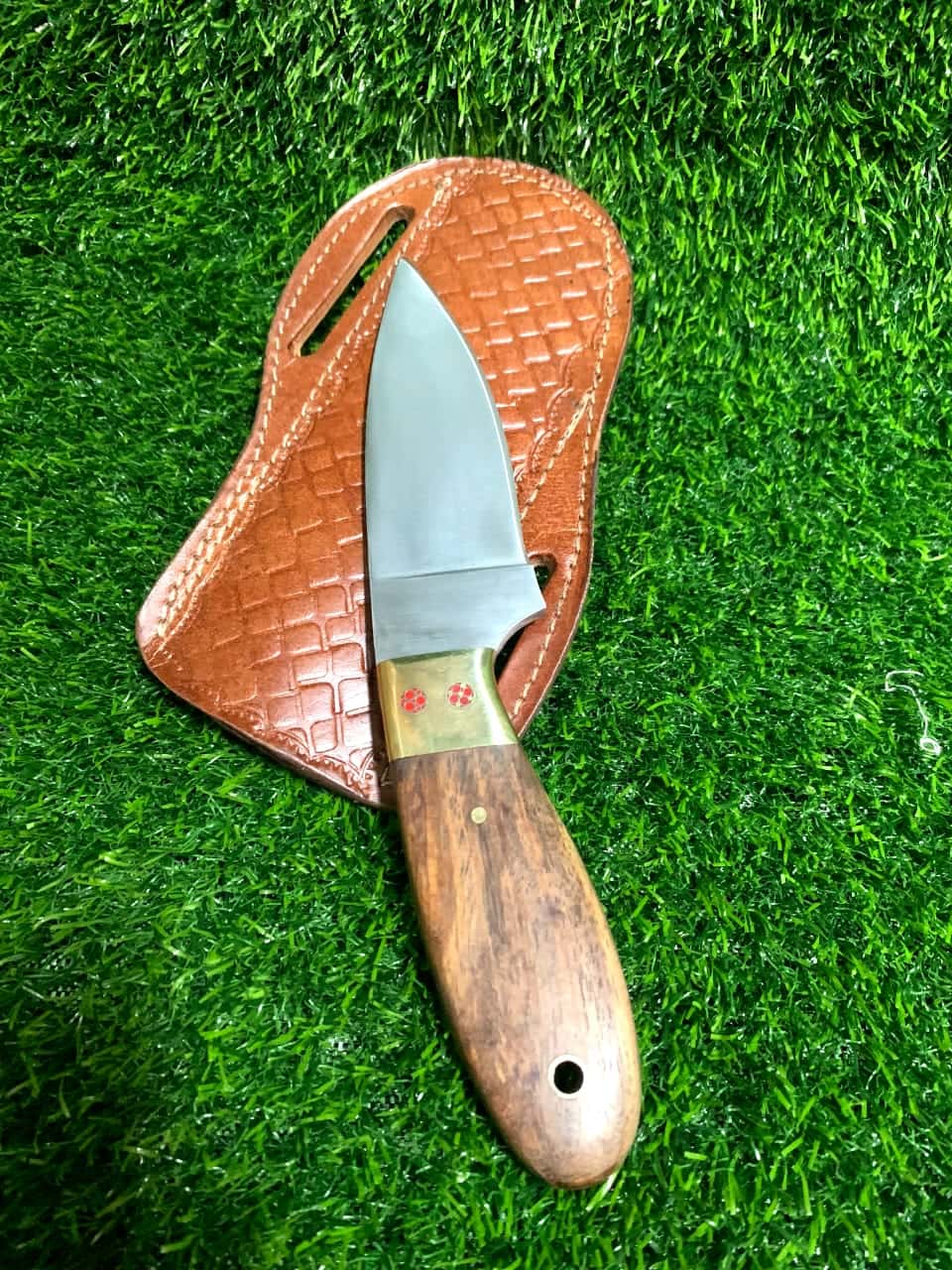
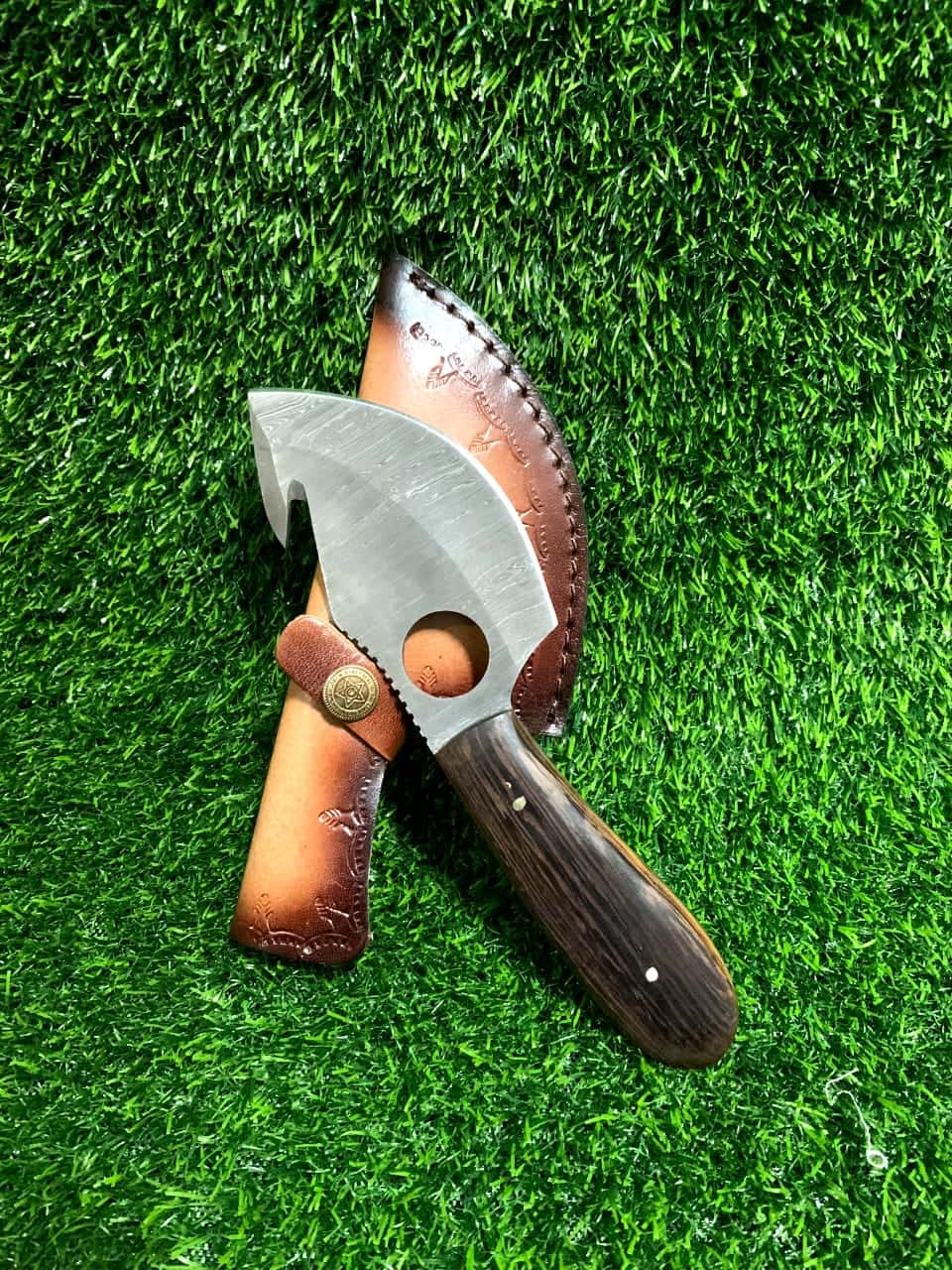
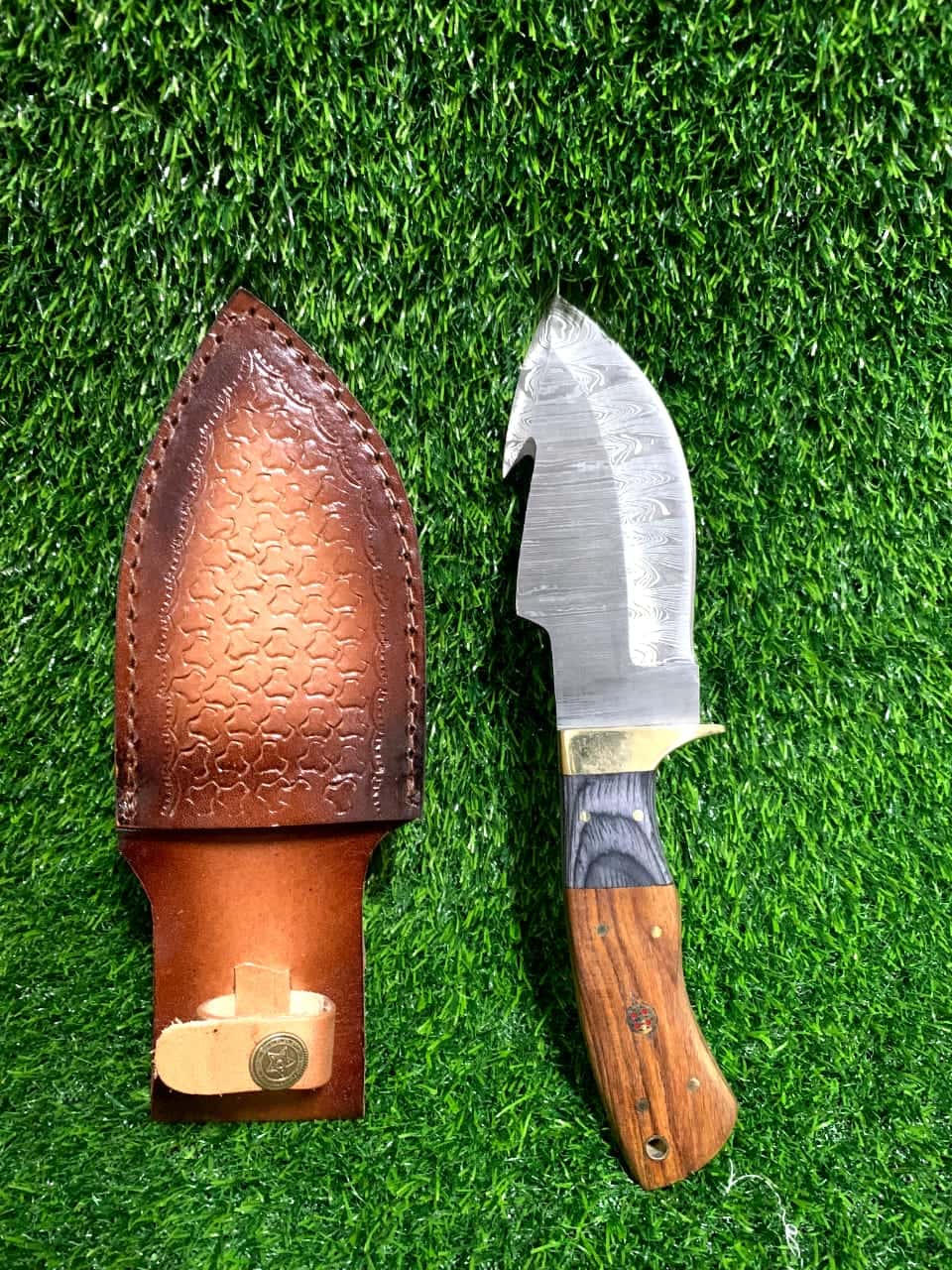
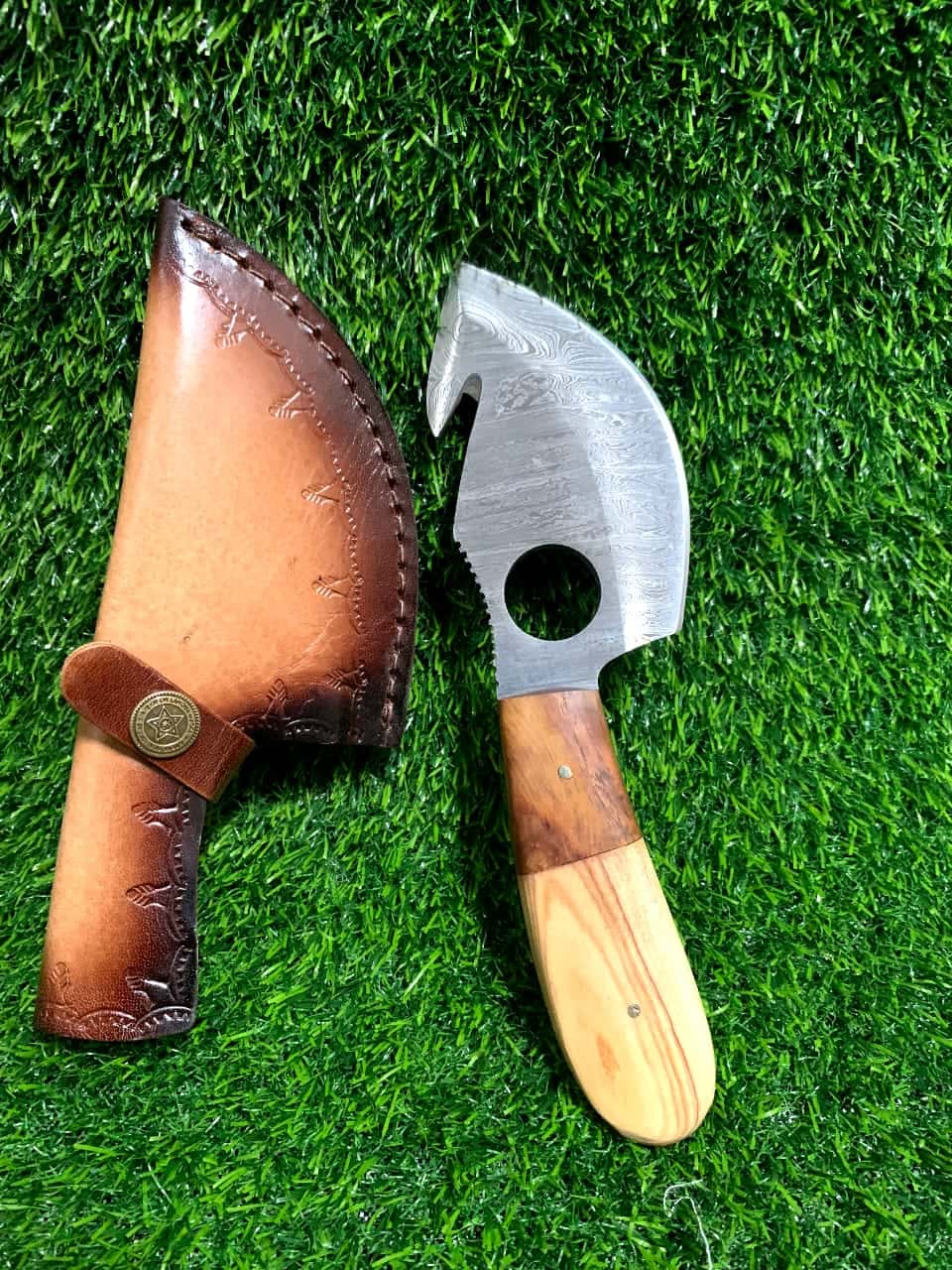
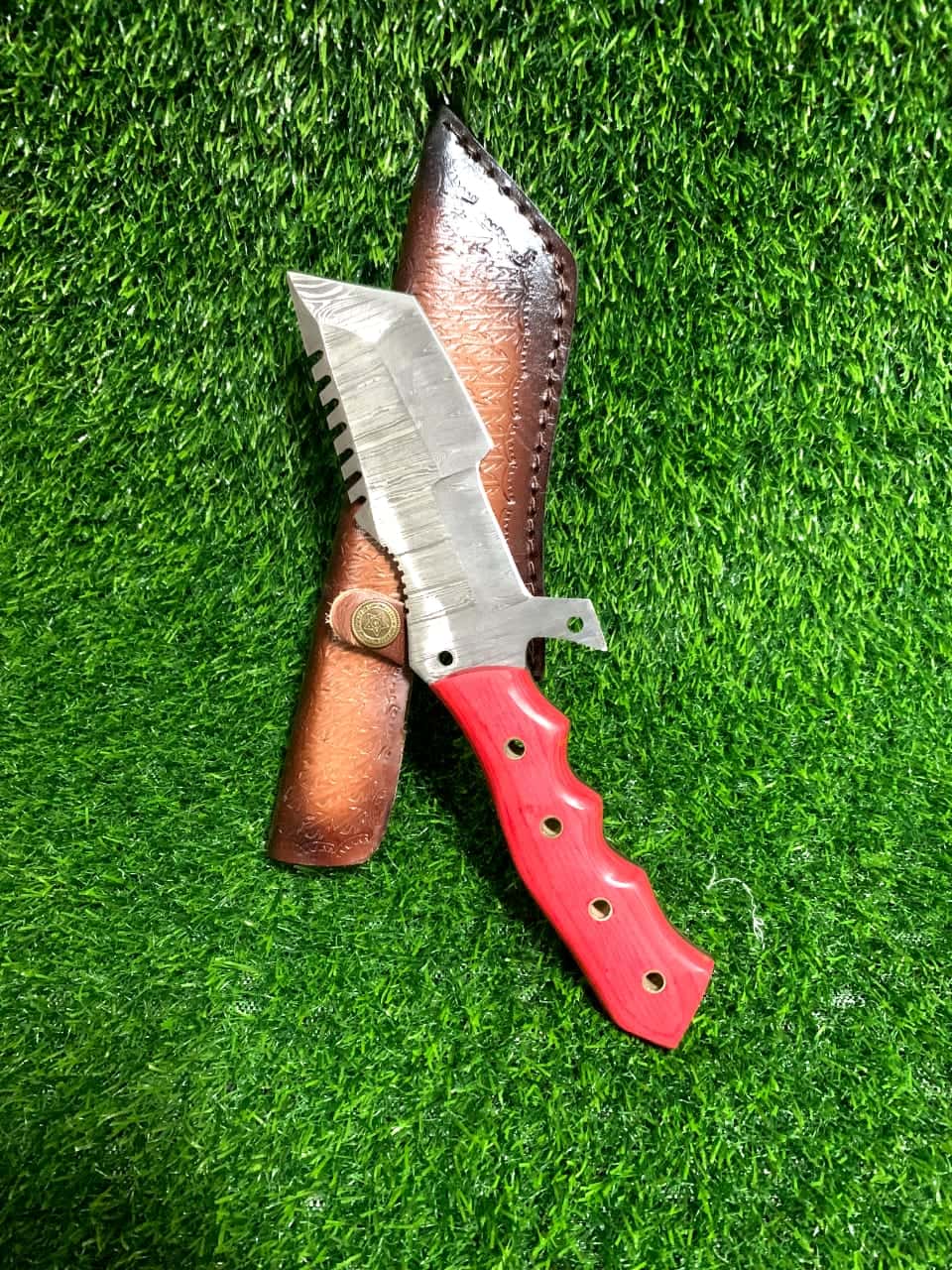
Wood is the classic handle material, warm in the hand and available in many types. Walnut, rosewood, olive wood, ebony, maple and burl woods are common on kitchen and hunting knives.
- Pros. Beautiful grain, a comfortable and warm hold, and repairable.
- Cons. Untreated wood absorbs water and can swell, shrink or crack. It needs sealing and oil.
- Care. Wipe it dry, and oil it lightly a few times a year. Never soak it or use a dishwasher.
A Note on Rosewood
Rosewood (the Dalbergia family of trees) is listed under CITES, the international agreement that controls trade in protected species. Shipping rosewood knife handles across borders can need documents. If you buy or sell knives with rosewood, ask the maker which species is used, and check the rules for your market.
Stabilised and Dyed Wood
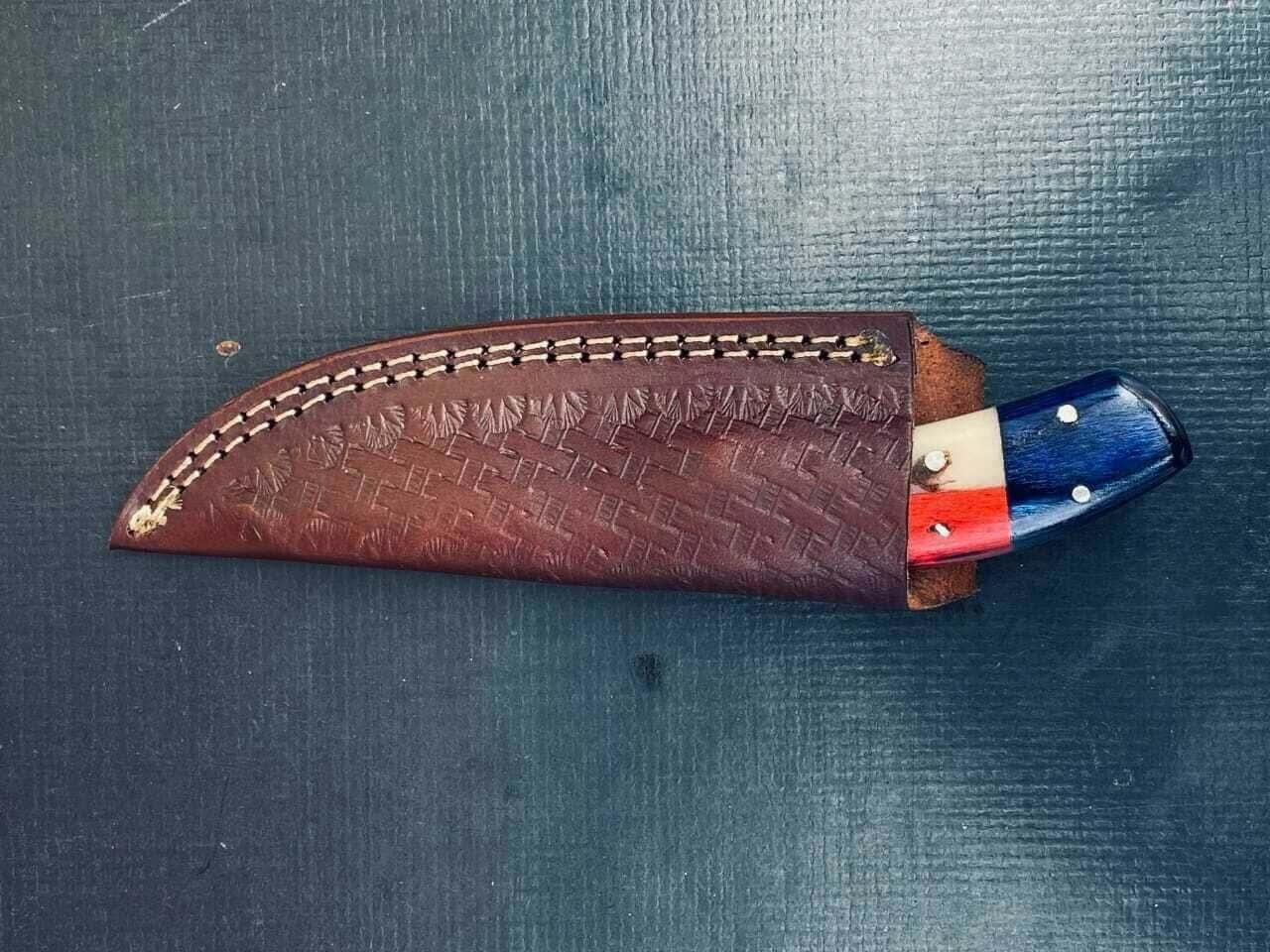
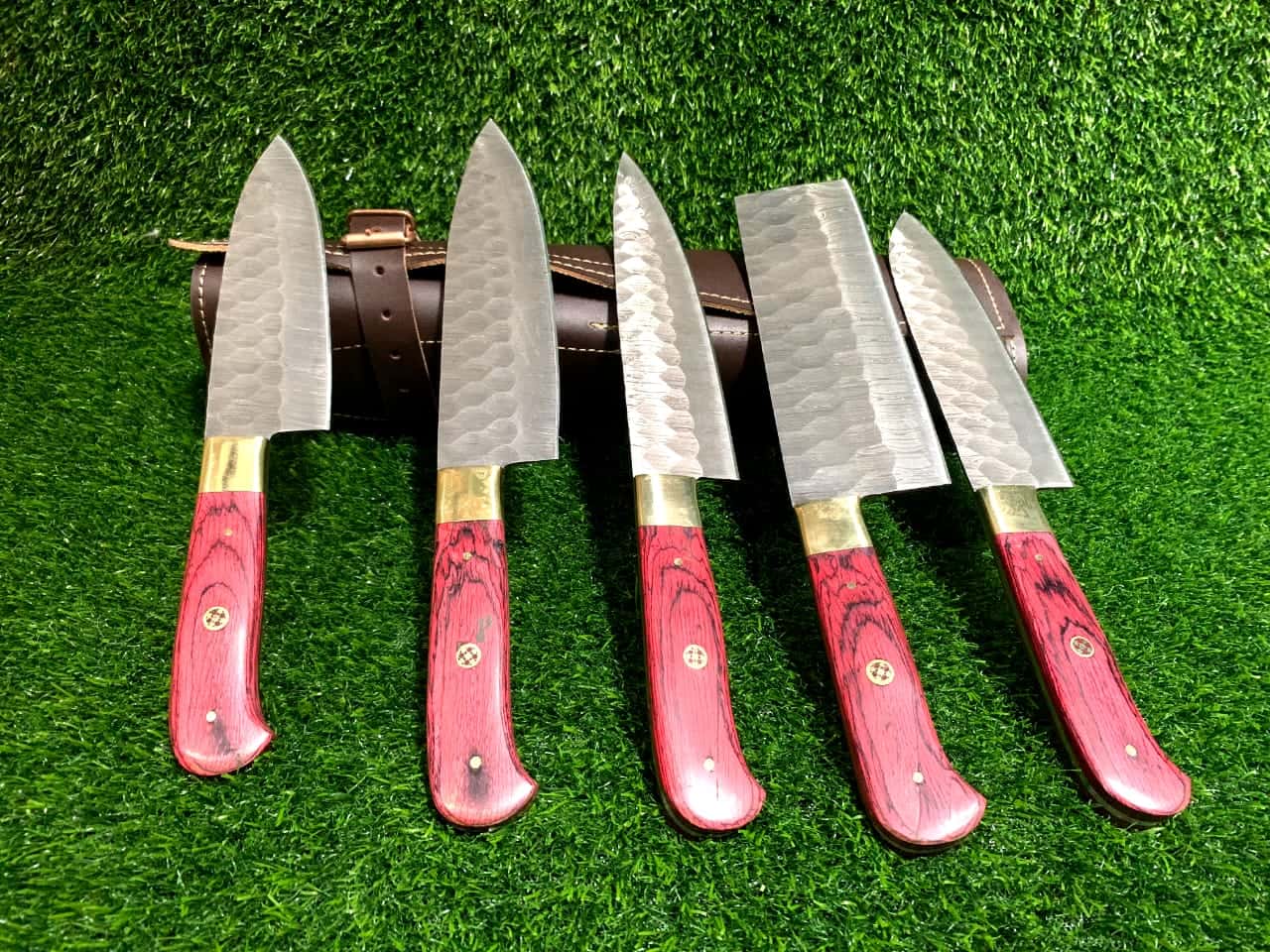
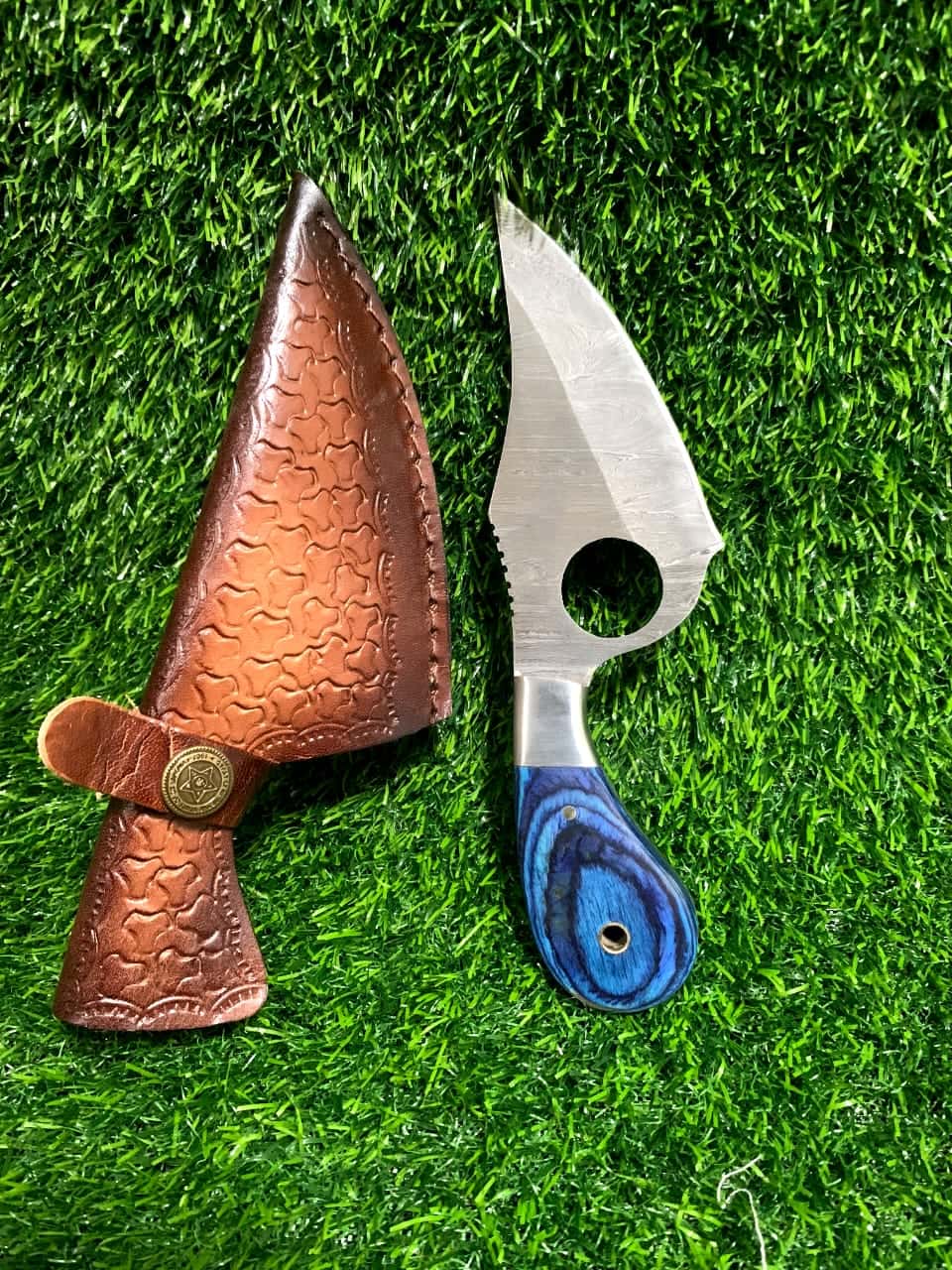
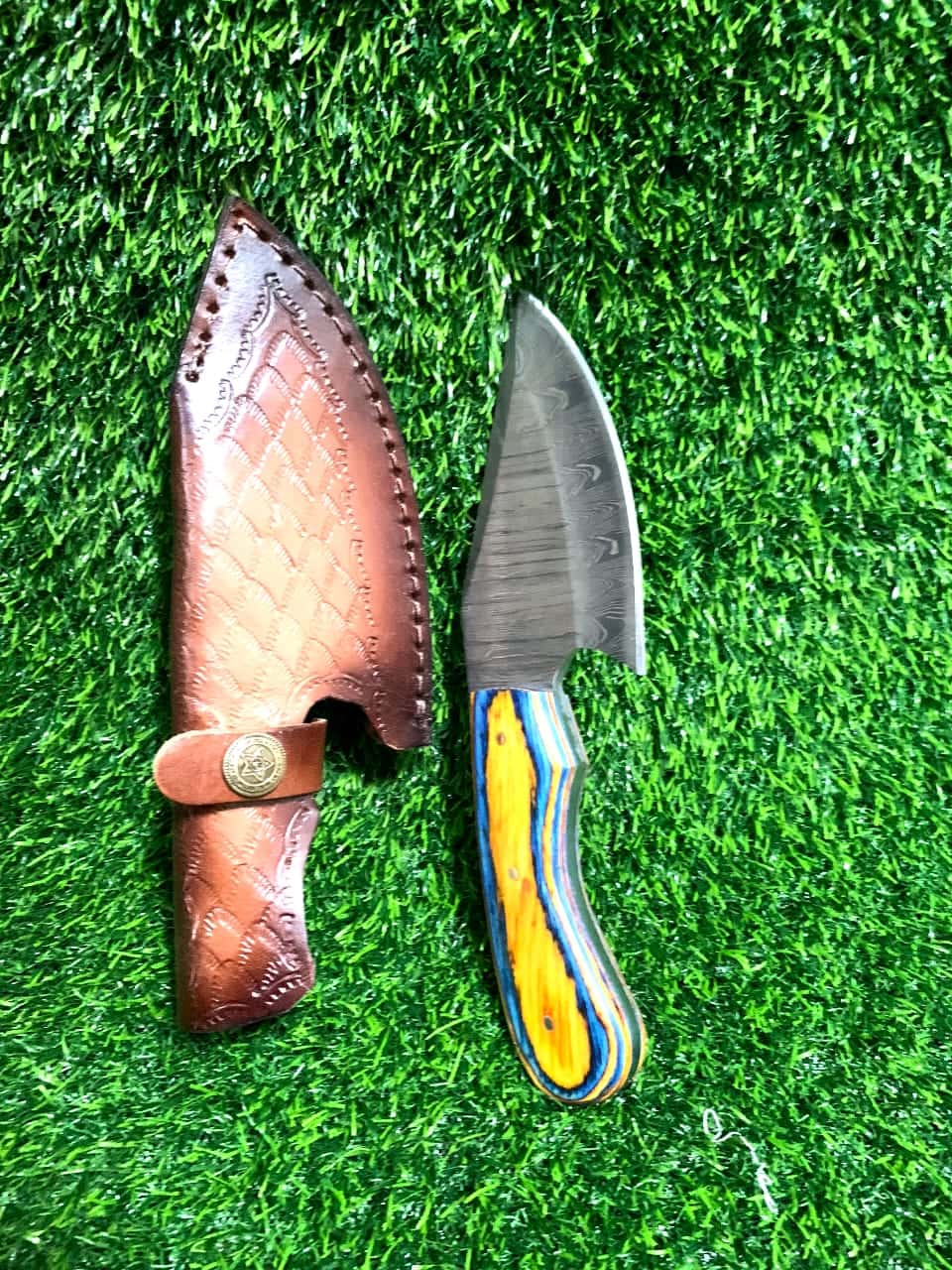
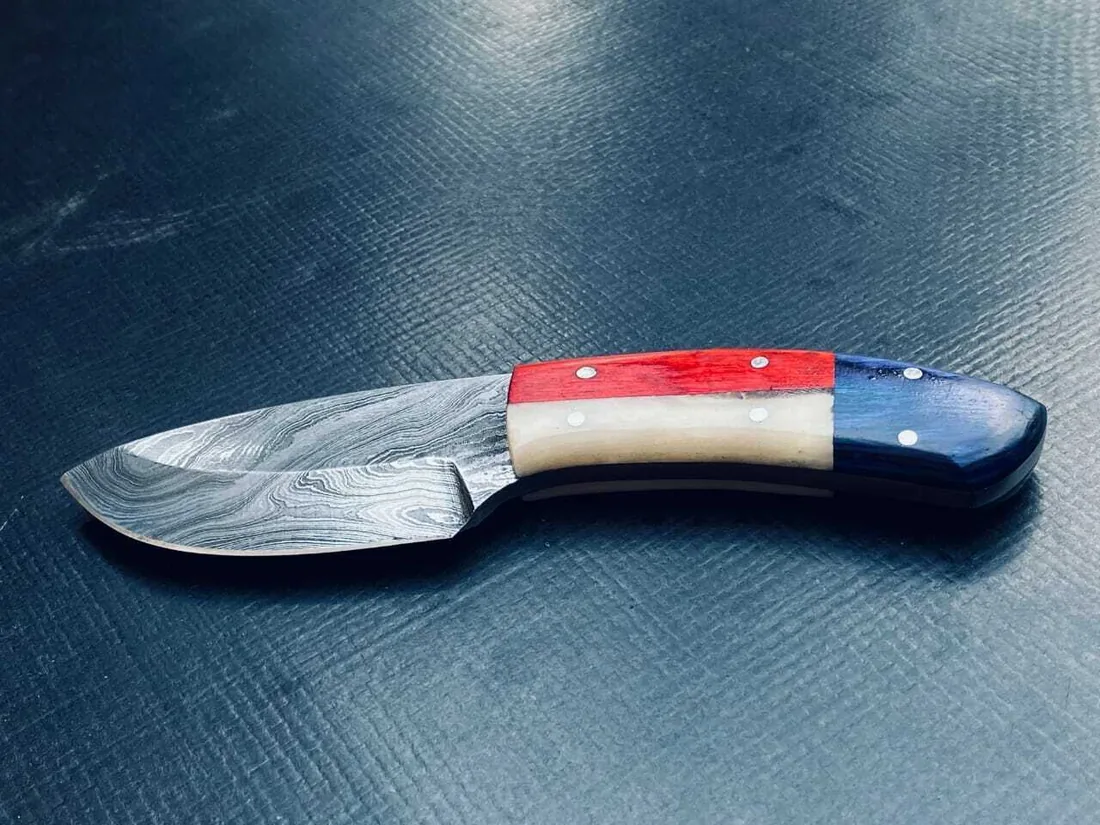
Stabilised wood is wood that has been impregnated with resin under pressure, which fills the pores and makes it hard, stable and water resistant. It is often dyed in strong colours such as blue, red and green, with layered spacer lines. It is the best choice for colourful or branded handles, and it grips well when finished with a texture.
- Pros. Water resistant, durable, available in any colour, and keeps the look of wood.
- Cons. Not as natural as plain wood, and bright colours can fade in strong sunlight over time.
Micarta
Micarta is made of layers of linen, canvas or paper soaked in resin and pressed under heat. The result is hard, tough and waterproof, with a textured surface that grips well when wet. It darkens with use, which many people like.
- Pros. Very durable, a great grip, waterproof, and easy to care for.
- Cons. Heavier than G10 and the look is plainer. It can be less attractive than natural materials.
G10
G10 is made of layers of fibreglass cloth in epoxy resin. It is lighter than micarta, extremely tough, and can be machined with a deep texture and in any colour. It is a very popular choice for hard-use and tactical knives.
- Pros. Nearly indestructible, a secure grip, waterproof, and holds its shape.
- Cons. Can feel harsh and cold, and sharp edges can be uncomfortable if not shaped well.
Micarta vs G10
Micarta feels warmer and more natural and gets better with use. G10 is lighter, tougher and keeps its colour. For a hunting or work knife, either is a good choice. For a fine knife, many people prefer micarta.
Resin and Composite Handles
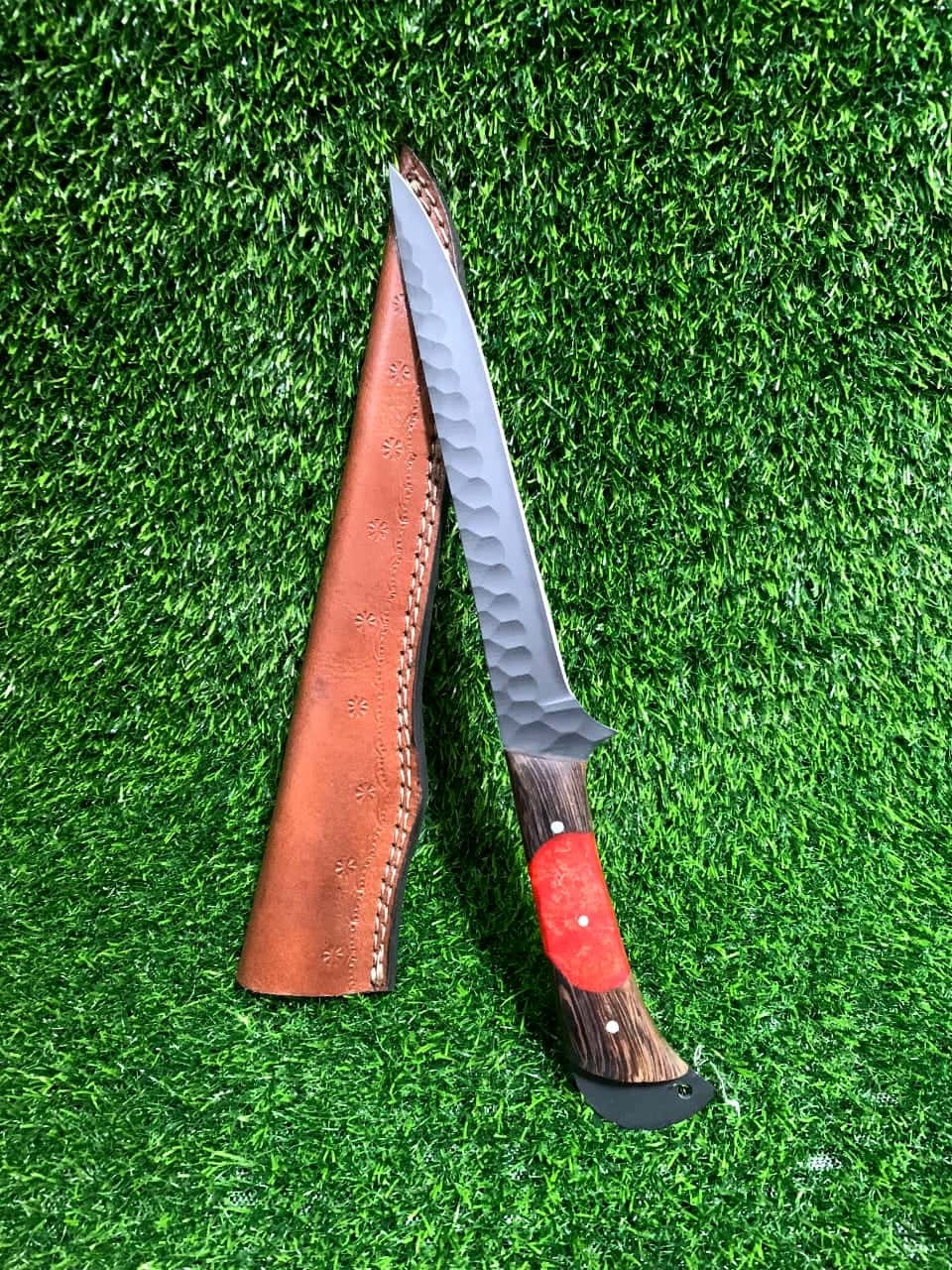
Epoxy resin and acrylic can be cast in any colour and pattern, and are often combined with wood, which gives wood-and-resin handles. They are smooth and shiny, so check the grip when wet. They are good for custom colours and gift knives.
Metal Handles and Fittings
Brass, steel, aluminium and titanium are used for guards, bolsters, pommels and sometimes the whole handle. Brass and steel add weight and balance. Titanium is light and strong, and is used on premium folders. Metal handles can be slippery when wet unless they are textured.
Leather and Cord
Stacked leather washers give a traditional, shock-absorbing grip, and paracord wraps are used on survival knives. They are comfortable but need care and can absorb moisture.
Handle Materials Compared
Material | Grip when wet | Durability | Looks | Care |
|---|
Stag antler | Good | Medium | Rustic, unique | Medium |
Horn | Fair | Medium | Warm, polished | Medium |
Bone | Fair | Medium | Pale, can be dyed | Medium |
Natural wood | Fair | Medium | Classic | High |
Stabilised wood | Good | High | Colourful | Low |
Micarta | Very good | Very high | Plain, ages well | Low |
G10 | Very good | Very high | Modern | Low |
Resin | Fair | High | Any colour | Low |
How Handles Are Attached
- Full tang with scales. The steel runs the full shape of the handle, with two slabs (scales) pinned or glued to each side. Strong and common on hunting knives.
- Hidden (stick) tang. A narrower tang goes inside a solid handle such as antler, horn or a wood block, held with epoxy and a pin or nut. Good for rounded handles, and it is lighter.
- Pins and fittings. Brass, copper or steel pins and a guard or bolster lock the handle in place.
A well-made handle has no gaps at the guard, and a smooth, comfortable shape without sharp corners. If you want to make your own handle, you can buy handle blanks and scales and shape them with files and sandpaper.
Import Rules for Natural Handle Materials
Antler, horn, bone and some woods can be treated as animal or plant products at the border. Rules differ widely. Countries such as Australia and the United States can inspect or restrict them, and some species need CITES documents. This is general information, not legal advice. Ask the maker which material is used, and check the rules with your importer. If your market is strict, choose stabilised wood, micarta, G10 or resin.
How to Choose a Handle Material
- Hunting and skinning. Micarta, G10 or stabilised wood for the best wet grip. See our skinning knife guide.
- Kitchen knives. Stabilised wood, micarta or good hardwood. See the best handmade kitchen knives.
- Display and gifts. Stag, horn and fine wood look the best.
- Branded or colour-matched knives. Stabilised wood or resin.
- Strict import markets. Choose synthetic materials.
Custom Knife Handles in Bulk
Makers in our network in Wazirabad, a Punjab city known for cutlery, work with stag, horn, bone, walnut, rosewood, olive wood, stabilised wood, micarta and resin, with brass, steel and Damascus fittings. You can choose the material, the shape, the colours and the spacers for your own knives. Send your requirement, the quantity and your destination, and approve a sample first.
Conclusion
There is no best knife handle material, only the best one for your use. Choose micarta, G10 or stabilised wood for wet, hard use, natural stag, horn and wood for looks and tradition, and a synthetic material if your market restricts animal products. Check the species and the import rules, and approve a sample before you order in bulk.