Best Japanese Pocket Knives: Higonokami, Seki Brands and How to Choose
Japanese pocket knife guide: Higonokami history, traditional vs modern folding knives, Seki brands, VG-10 and Damascus, laws, care and custom orders.
A Japanese pocket knife is a small folding knife made in Japan, from the traditional Higonokami to modern folders made in Seki with VG-10 and Damascus steel. Japanese pocket knives are known for sharp blades, clean design and careful finishing. This guide explains what makes them different, the history of the Higonokami, the types of Japanese folding knives, the brands to know, what to look for when buying, the laws on carrying knives in Japan, and how to order custom or wholesale pocket knives.
There is no single Japanese pocket knife. The name covers a few different kinds of small knife:
Traditional Japanese pocket knives. The best known is the Higonokami, a simple folding knife with a metal handle and a carbon steel blade.
Modern Japanese folding knives. Locking folders made by Seki makers in VG-10, Damascus and other steels, with handles of titanium, micarta, wood or carbon fibre.
Kiridashi. A small fixed-blade craft knife with a single bevel. It does not fold, but it is often grouped with traditional Japanese pocket knives.
History of the Japanese Pocket Knife and the Higonokami
Japan has been making fine blades for centuries, and the city of Seki in Gifu Prefecture is one of its main centres. The best-known traditional folding knife is the Higonokami (written Higo no Kami), which comes from the town of Miki in Hyogo Prefecture. It has been made there since the late 1800s. Miki has long been a centre of blacksmithing and hand tools.
The Higonokami is an everyday knife for small jobs, such as sharpening pencils, cutting string, whittling and opening parcels. Its design has hardly changed, which is part of its appeal.
How a Higonokami Works
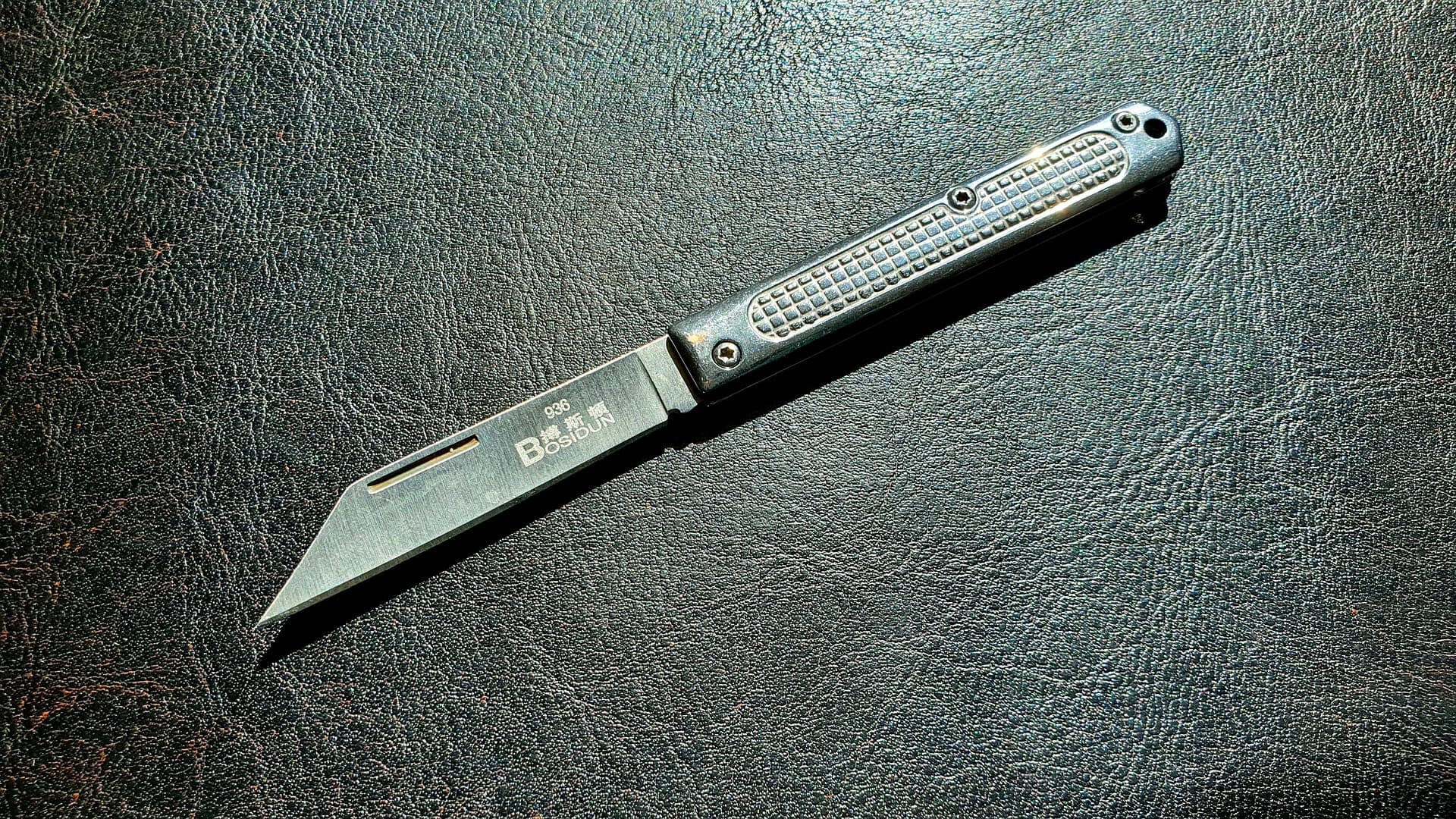
A Higonokami has no lock. The blade pivots in a folded metal handle, usually brass or steel, and the tail of the blade (the chikiri) sticks out of the handle. You hold the blade open by pressing your thumb on the tail while you cut. The blade is often laminated carbon steel, such as Aogami (blue paper steel), so it takes a very sharp edge and needs to be dried and oiled.
Types of Japanese Folding Knives
Traditional Japanese Pocket Knife (Higonokami)
Simple, slim and light, with a carbon steel blade, no lock and a metal handle. It is a collector's and craftsman's knife, not a hard-use survival knife.
Modern Japanese Pocket Knives
Modern folders from Seki keep the clean Japanese design and add modern parts: a locking mechanism for safety, steels such as VG-10, and handles in titanium, micarta, G-10, wood or carbon fibre. These are made for everyday carry, camping and fishing.
Japanese Damascus Pocket Knives
A Japanese Damascus pocket knife usually has a hard core steel such as VG-10 clad in layered Damascus steel, which gives the wavy pattern on the blade. The pattern is decorative, and the cutting performance comes mainly from the core steel.
Kiridashi
A small fixed-blade knife with a flat, single-bevel blade and a pointed tip. A kiridashi is used for marking, carving and craft work, and is often carried in a pocket or on a cord. It has a single bevel, which most folding pocket knives do not.
Unique Features of Japanese Pocket Knives
Feature
Traditional (Higonokami)
Modern Japanese folder
Lock
None. Held open by thumb pressure on the tail.
Usually a liner lock or similar.
Blade steel
Often laminated carbon steel, such as Aogami.
VG-10 and similar steels, sometimes Damascus clad.
Handle
Brass or steel.
Titanium, micarta, G-10, wood or carbon fibre.
Care
Dry and oil, because carbon steel can rust.
Easier care with stainless blades.
Best for
Light everyday tasks and collecting.
Everyday carry, camping and fishing.
Seki: Japan's Blade-Making City
Seki has made swords and blades for centuries, and today many of Japan's folding knives and kitchen knives are made there. Makers such as Mcusta and Kanetsune produce folding knives in Seki. If a knife is described as "Japanese made", check the product page for where it is actually made, because a brand can be Japanese or American and still make some models elsewhere. For example, Spyderco is an American company that makes some of its folding knives in Seki.
Japanese Folding Knife Brands to Know
Higonokami makers (Miki). The traditional friction folder in brass or steel handles. Look for a maker's mark, because many cheap copies exist.
Mcusta (Seki). Known for modern folders in VG-10 and Damascus, with clean lines.
Kanetsune (Seki). A Seki maker producing folding knives and other cutlery.
Spyderco (Japan Series). An American brand with some folding knives made in Seki, often in VG-10.
Treat any "best Japanese pocket knife" list as a starting point and check the steel, the lock, the handle and the country of manufacture of the exact model.
What to Look For When Buying a Japanese Pocket Knife
Blade steel. VG-10 is a popular stainless steel with good edge retention. Carbon steels such as Aogami take a finer edge but need care.
Lock or no lock. A Higonokami has none, so it suits light use. For harder use, choose a locking folder.
Handle and grip. Choose a material that gives a secure grip when wet, and check the weight and balance.
Size and law. Check the maximum blade length you may carry where you live.
Authenticity. Check that the knife is made where it is said to be made, and be careful with very cheap "Japanese" knives.
Price. Higher prices usually mean better steel, tighter tolerances and better finishing.
Carrying Pocket Knives in Japan
Japan restricts carrying blades in public. In general, carrying a knife with a blade longer than about 6 cm in public without a valid reason is restricted, and rules can change. If you are travelling to Japan, check the current rules, and pack knives in checked luggage, not in your pocket.
How to Care for a Japanese Pocket Knife
Wipe the blade dry after use, especially carbon steel.
Oil carbon steel blades and the pivot lightly.
Never use a dishwasher.
Sharpen on a whetstone and keep the original bevel.
Keep the knife in a pouch or sheath so it does not get knocked.
Custom and Wholesale Pocket Knives
If you run a shop or a brand, you can order pocket and folding knives in bulk. Makers in our network in Wazirabad, a Punjab city known for cutlery, make handmade knives to order, with a choice of steel, handle and your logo, and some also produce folding and pocket knives. Check that the style you want is legal to import and sell in your market, and approve a sample before the full order.
The Higonokami is a simple, beautiful traditional folding knife, and modern Seki makers offer strong, locking folders in VG-10 and Damascus. Decide how you will use the knife, choose the steel and the care level that suits you, and check where it is made and what you may carry. For shops and brands, custom pocket knives from the makers give you your own design and a better price per knife.
Frequently Asked Questions
What is a Japanese pocket knife?
A small folding knife made in Japan. It can be a traditional Higonokami with a metal handle and no lock, or a modern folder from Seki with a locking blade in VG-10 or Damascus steel.
What is a Higonokami knife?
A traditional Japanese friction folding knife from Miki, Hyogo Prefecture, made since the late 1800s. It has a brass or steel handle and a carbon steel blade, and no lock.
How do you open and hold a Higonokami?
Open the blade with your fingernail. It has no lock, so press your thumb on the tail of the blade (the chikiri) while cutting, which holds it open against the handle.
Are Japanese pocket knives good?
Yes. Japanese makers are known for sharp blades, good steels and careful finishing. Choose between a simple traditional folder for light tasks and a locking Seki folder for harder use.
Where are Japanese folding knives made?
Many are made in Seki, Gifu Prefecture, Japan’s main blade-making city. The traditional Higonokami is made in Miki, Hyogo Prefecture. Check the product page for where each model is made.
Which are the best Japanese folding knife brands?
Mcusta and Kanetsune make folding knives in Seki, and Higonokami makers in Miki make the traditional friction folder. Spyderco, an American brand, makes some models in Seki. Always check the model.
Can you carry a pocket knife in Japan?
Carrying a blade longer than about 6 cm in public without a valid reason is restricted in Japan. Check the current rules before you travel, and pack knives in checked luggage.
Can I order custom or wholesale pocket knives?
Yes. Makers can produce knives to order with your steel, handle and logo, and some make folding and pocket knives. Check that the style is legal in your market, and approve a sample first.
You can view the products listed orsign up on Baramdat for free