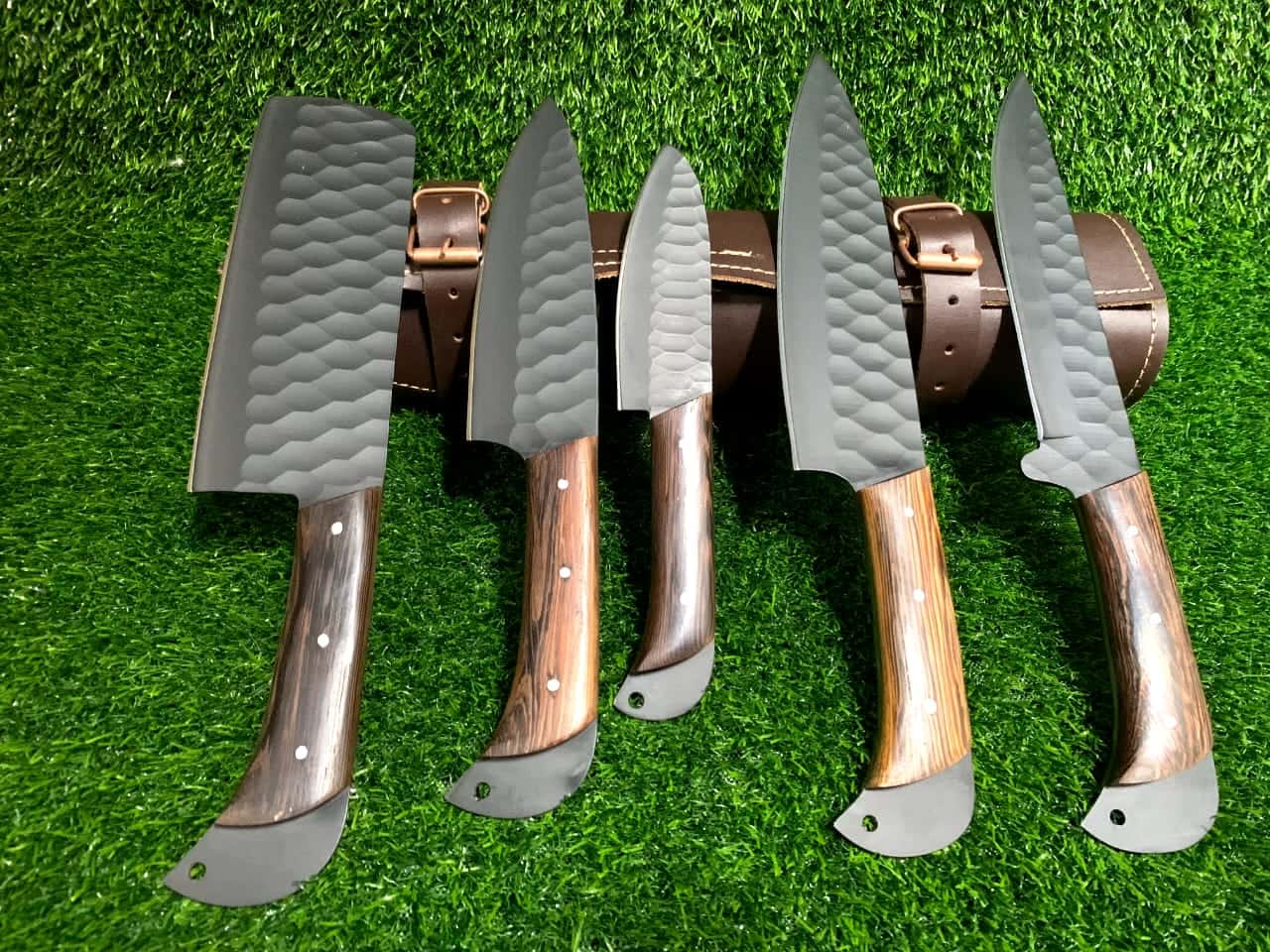
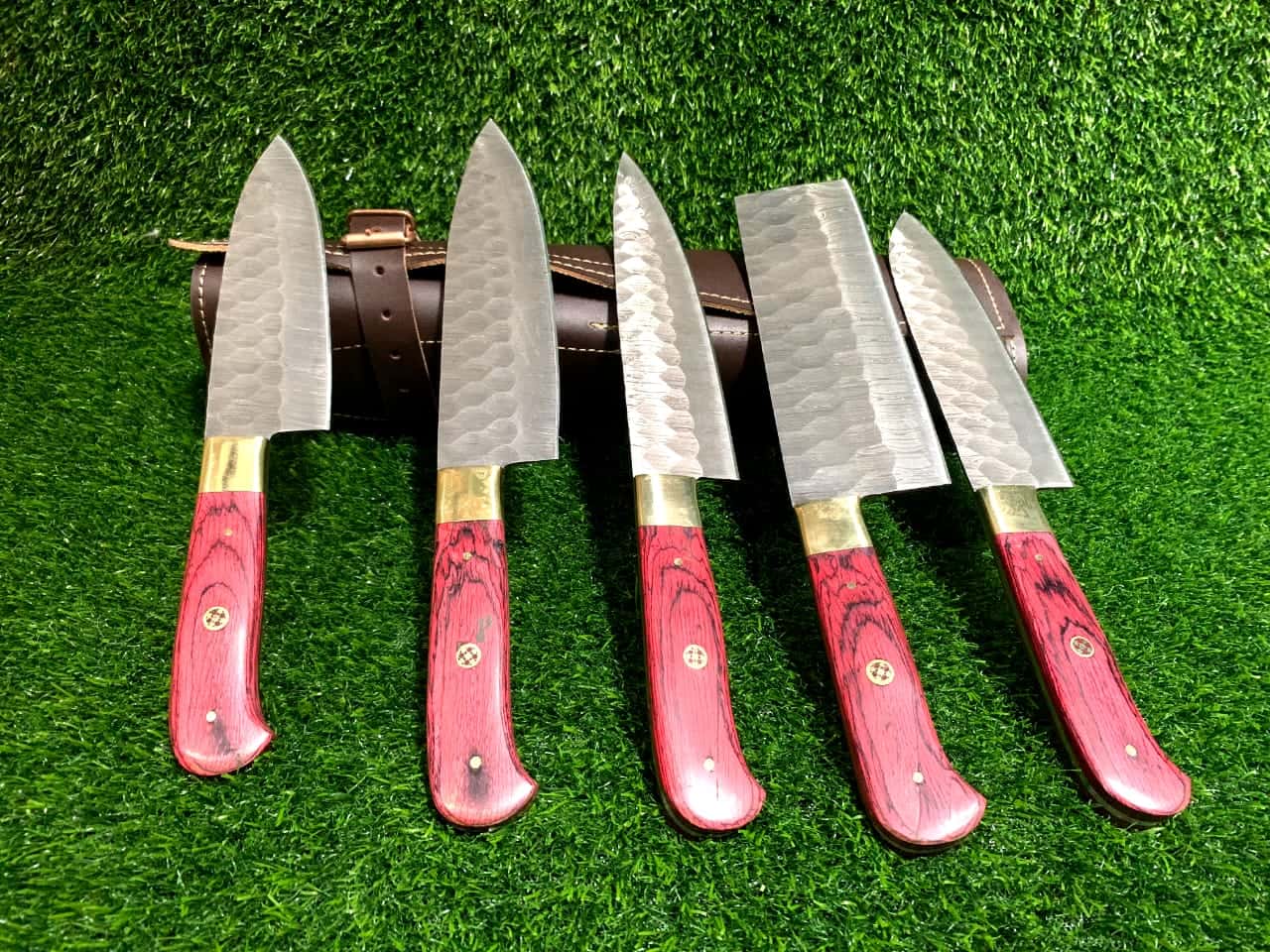
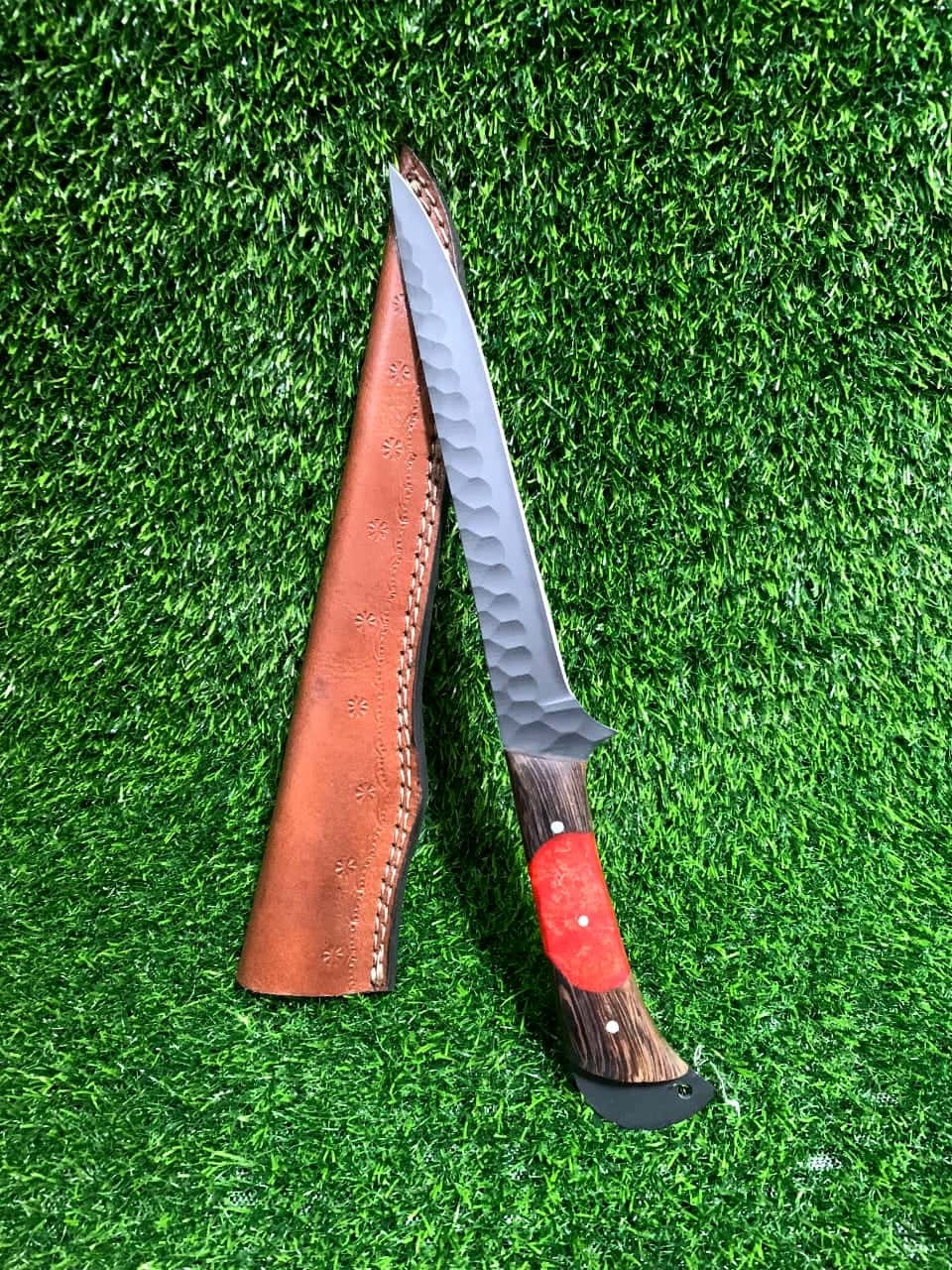
A fillet knife is a long, thin, flexible knife used to remove the bones and skin from fish and to trim meat. A custom fillet knife is made to your own specification, with the blade length, flex, steel, handle and sheath you choose. This guide explains what a fillet knife is, the types, how to choose blade length and flex, which steel and handle to pick, how to sharpen it, how it differs from a boning knife, and how to order custom or wholesale handmade fillet knives.
What Is a Fillet Knife?
A fillet knife has a narrow blade that bends slightly as it follows the backbone and ribs of a fish. The flexibility lets you slide along the bones and take off the fillet with little waste. Fillet knives are used by anglers, fishmongers and cooks, and for trimming and skinning meat.
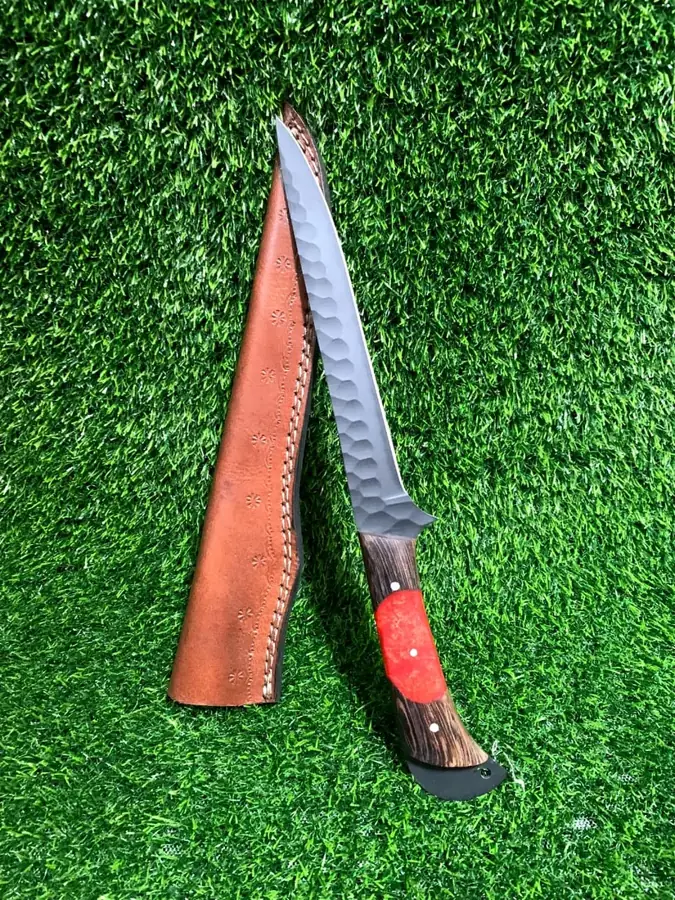
Types of Fillet Knives
- Manual fillet knife. The classic knife, in stainless or carbon steel, with a fixed blade. It needs no power and gives the most control.
- Electric and cordless fillet knife. A powered blade for filleting many fish quickly. It needs a battery or power outlet and is not handmade.
- Folding fillet knife. A compact fillet knife that folds for a tackle box or pocket. Check the law on folding knives where you live.
- Japanese fillet knives. Knives such as the deba and yanagiba are used for fish in Japanese cooking, and are sharpened on one side.
- Custom handmade fillet knife. A fixed-blade knife made to your choice of steel, handle, length and sheath.
Flexible vs Stiff Blades
Flex is the most important choice. A very flexible blade is best for small and delicate fish, such as trout, perch and panfish, because it follows the bones. A stiffer blade suits large fish, such as salmon, tuna and big saltwater fish, and tougher skin. If you fillet different fish, choose a medium flex.
Blade Length
- 6 to 7 inches. Small fish, such as trout and panfish.
- 7.5 to 9 inches. A good all-round length for most freshwater and inshore fish.
- 9 to 11 inches. Large fish, such as salmon and big saltwater species.
Steel: Stainless vs Carbon
- Stainless steel. Resists rust and is the best choice for use near water and salt. Easy to maintain.
- Carbon steel. Takes a very sharp edge, but it rusts if left wet. It suits a cook who dries and oils the knife.
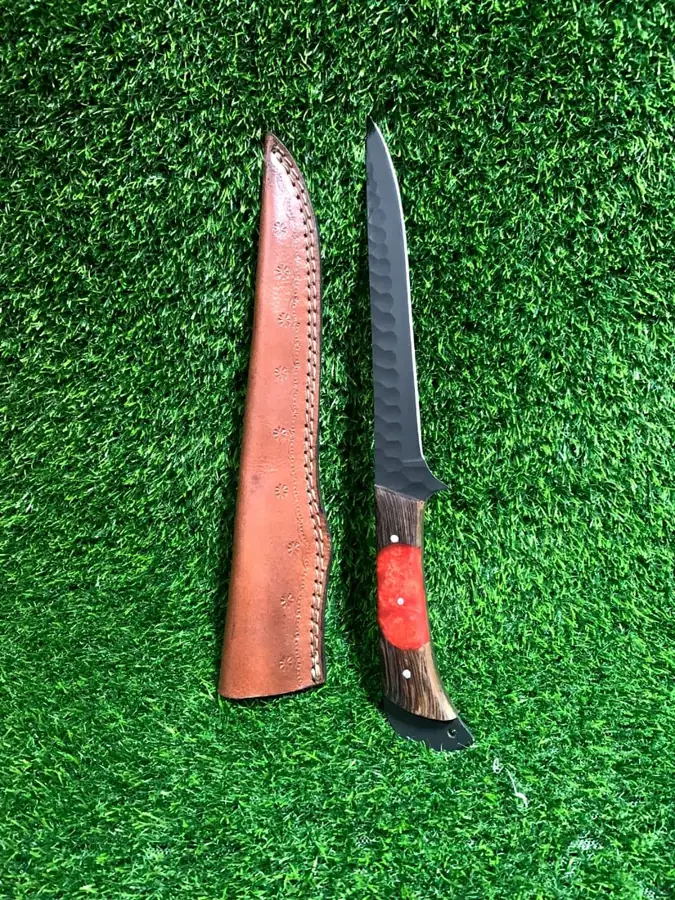
A hand-forged carbon steel fillet knife with a black forged finish is popular, but it needs drying and oiling after every use.
Handle and Grip
Fish are wet and slippery, so grip matters. Resin, rubber, micarta and textured polymer give a secure hold when wet. Wood looks warm and traditional, but it should be sealed or stabilised, and it needs drying. A wood-and-resin handle combines both. Choose a handle you can hold comfortably for many fish.
Fillet Knife vs Boning Knife
A boning knife is shorter and stiffer, and is for cutting meat from bones, such as on chicken, pork and beef. A fillet knife is longer and thinner, with more flex, and is for fish. A boning knife can fillet a fish in a pinch, but a fillet knife cuts fish cleaner.
How to Sharpen a Fillet Knife
- Use a fine whetstone, a ceramic rod or a guided sharpener. Hold the blade at about 15 to 20 degrees.
- Sharpen both sides evenly, with light pressure, because the blade is thin and flexible.
- Strop or hone the edge to finish.
- Rinse, dry and oil carbon steel blades.
How to Choose a Fillet Knife
- Fish size. Match the blade length and flex to the fish you catch most.
- Steel. Choose stainless for salt water and low maintenance.
- Handle. Choose a grip that does not slip when wet.
- Sheath. A leather or tough sheath protects the thin blade.
- Edge quality. A good fillet knife can be sharpened to a very fine edge.
Custom and Wholesale Fillet Knives
A custom fillet knife can be made with your blade length and flex, your choice of steel, a wood, resin or micarta handle, your logo and a handmade leather sheath. Makers in our network in Wazirabad, a Punjab city known for cutlery, hand-forge carbon steel and stainless fillet knives for anglers, outdoor brands and retailers. Send your requirement, the quantity and your destination, and approve a sample before the full order.
Conclusion
The best fillet knife is the one that matches your fish: a flexible 6 to 7 inch blade for small fish, a longer and stiffer one for large fish. Choose stainless steel for wet use, a grip that stays secure when wet, and a good sheath. If you need fillet knives in your own style, custom handmade fillet knives from the makers give you your design at a better price per knife.