
By Shahroz Ahmed - 10 June 2026 · 10 min read
Top 10 Cottage Industries in Pakistan 2026
List of the Top 10 Cottage Industries in Pakistan 2026, 1. Sports Goods Industry, 2. Surgical Instruments Industry, 3. Handicrafts
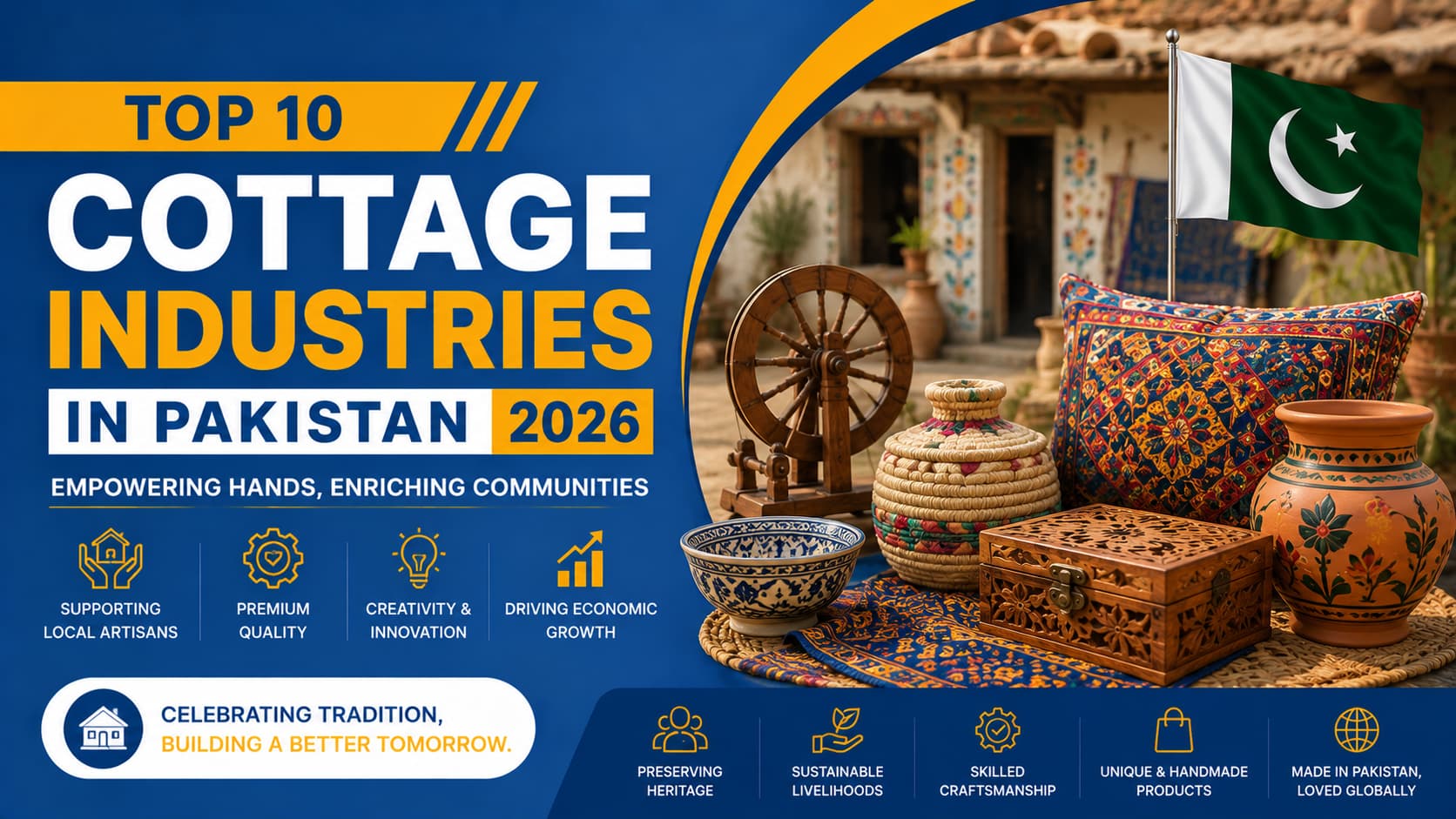
Pakistan's cottage industry sector remains one of the most important contributors to employment, exports, rural development, and traditional craftsmanship. Unlike large-scale manufacturing, cottage industries are typically operated through small workshops, family-owned businesses, home-based production units, and decentralized manufacturing networks.
Many of Pakistan's most successful export sectors originated as cottage industries before evolving into global supply chains. Today, industries such as sports goods, surgical instruments, handicrafts, carpets, leather products, embroidery, and musical instruments continue to generate significant export revenue while supporting thousands of skilled workers across the country.
For buyers, wholesalers, exporters, importers, and sourcing professionals, understanding the strongest cottage industries in Pakistan can help identify reliable product categories and procurement opportunities. This guide highlights the Top 10 Cottage Industries in Pakistan 2026 based on economic importance, production capabilities, export presence, historical significance, and buyer demand.
List of the Top 10 Cottage Industries in Pakistan 2026
The following list includes Pakistan's most recognized cottage industries. These sectors have built strong reputations through skilled craftsmanship, export performance, local employment generation, and long-standing production traditions.
Sports Goods Industry
Surgical Instruments Industry
Handicrafts Industry
Carpet and Rug Weaving Industry
Embroidery and Textile Crafts Industry
Leather Goods Industry
Musical Instruments Industry
Pottery and Ceramics Industry
Wooden Handicrafts and Furniture Industry
Brass, Copper, and Metal Crafts Industry
1. Sports Goods Industry
The sports goods industry is widely regarded as one of Pakistan's most successful cottage industry sectors. Centered primarily in the city of Sialkot, this industry has evolved from small family workshops into a globally recognized manufacturing hub. Pakistan produces footballs, cricket equipment, hockey sticks, gloves, protective gear, and various sports accessories for international markets.
Many production processes still rely on skilled handcrafting techniques that have been passed down through generations. Hand-stitched football manufacturing remains one of the industry's defining strengths. The cottage-industry structure allows manufacturers to subcontract specialized tasks to small workshops and home-based workers while maintaining large-scale export capabilities.
This industry is particularly attractive for wholesalers, sporting goods distributors, private-label brands, and international retailers seeking competitive manufacturing costs. Buyers can source custom-branded products, OEM manufacturing services, and export-ready sports equipment from hundreds of established producers throughout Sialkot.
2. Surgical Instruments Industry
Pakistan's surgical instruments industry represents another globally respected cottage industry cluster. Sialkot serves as the country's primary center for surgical instrument manufacturing and exports products to hospitals, distributors, healthcare suppliers, and medical brands worldwide.
The sector began with small workshops producing basic instruments but gradually expanded into sophisticated manufacturing operations capable of producing thousands of specialized medical tools. Many small and medium-sized workshops continue to play essential roles within the supply chain by manufacturing components, performing finishing work, and handling specialized production processes.
Healthcare distributors, medical procurement companies, and private-label medical brands often source directly from Pakistani manufacturers because of their expertise in precision metalworking and competitive production costs. Buyers should evaluate certifications, sterilization capabilities, quality assurance systems, and export experience before selecting suppliers.
3. Handicrafts Industry
Pakistan's handicrafts industry reflects the country's rich cultural heritage and remains one of the most diverse cottage industries in Pakistan. Products include decorative items, traditional artwork, home décor products, woven goods, handcrafted accessories, and gift items produced by artisans across multiple regions.
Many handicraft businesses operate from homes, villages, and small workshops where artisans use traditional production methods. Regions such as Sindh, Punjab, Khyber Pakhtunkhwa, Gilgit-Baltistan, and Balochistan each contribute distinctive craftsmanship styles that appeal to domestic and international buyers.
Importers, gift retailers, interior designers, and cultural product distributors frequently source handmade Pakistani products because of their uniqueness and craftsmanship. Buyers should prioritize suppliers capable of maintaining consistency, quality control, and scalable production when placing larger wholesale orders.
4. Carpet and Rug Weaving Industry
Carpet weaving remains one of Pakistan's oldest and most recognized cottage industries. Handmade carpets produced throughout Pakistan are valued for their craftsmanship, intricate designs, and durability. Traditional weaving techniques continue to be practiced by skilled artisans working from homes and small production centers.
Pakistani carpets are available in a wide variety of styles, including Persian-inspired designs, tribal patterns, wool rugs, and hand-knotted luxury products. Many export-oriented producers maintain relationships with international wholesalers, furniture retailers, and interior décor companies.
This sector is particularly attractive for importers seeking premium handmade products. Buyers should verify weaving quality, knot density, material composition, and export capabilities before committing to large orders.
5. Embroidery and Textile Crafts Industry
Traditional embroidery remains a major source of income for thousands of home-based workers across Pakistan. The industry includes hand embroidery, zari work, zardozi, mirror work, decorative textiles, traditional garments, and fashion embellishments.
Many artisans work from home-based production units that serve local fashion brands, textile exporters, bridal wear designers, and international buyers. The sector combines cultural artistry with commercial demand, making it one of the most resilient cottage industries in Pakistan.
Fashion labels, garment manufacturers, and textile exporters frequently partner with embroidery producers to create custom collections. Buyers should request production samples and assess consistency when sourcing handcrafted textile products.
6. Leather Goods Industry
Pakistan's leather sector includes numerous cottage-industry manufacturers producing wallets, belts, gloves, handbags, jackets, footwear, and fashion accessories. Many small workshops specialize in handcrafted leather products that combine traditional skills with export-quality manufacturing.
The industry benefits from Pakistan's established leather processing ecosystem, allowing smaller manufacturers to access quality raw materials and specialized production services. Cottage-industry workshops often support larger exporters through subcontracting arrangements.
Retail brands, fashion distributors, and private-label businesses often source leather products from Pakistan due to competitive pricing and customization opportunities. Buyers should evaluate leather grades, stitching quality, packaging capabilities, and export readiness.
7. Musical Instruments Industry
The musical instruments industry has long been associated with Pakistan's artisan manufacturing traditions. Small workshops produce string instruments, percussion instruments, woodwind instruments, and educational musical products for domestic and export markets.
Many instruments are handcrafted by skilled craftsmen who have inherited specialized techniques through generations. Production often occurs in family-owned workshops where attention to detail and craftsmanship remain central to the manufacturing process.
Music retailers, educational institutions, distributors, and international wholesalers can find sourcing opportunities within this sector. Product testing, sound quality verification, and material inspections should be part of every buyer's evaluation process.
8. Pottery and Ceramics Industry
Pottery and ceramics continue to provide employment for artisans across Pakistan. Traditional clay products, decorative pottery, ceramic tableware, vases, tiles, and handcrafted decorative items are produced through cottage-scale operations in multiple regions.
Many workshops combine traditional methods with modern design trends, creating products that appeal to both local consumers and export buyers. The industry remains especially important for preserving regional artistic traditions.
Home décor retailers, hospitality businesses, gift shops, and importers frequently source ceramic products from Pakistan. Buyers should inspect firing quality, finishing standards, packaging methods, and breakage protection systems.
9. Wooden Handicrafts and Furniture Industry
Woodworking is another important segment among cottage industries in Pakistan. Skilled craftsmen create decorative wooden items, carved furniture, home décor products, frames, cabinets, and custom furnishings.
Many workshops focus on handcrafted production rather than mass manufacturing, allowing buyers to access unique designs and customization options. Traditional carving techniques remain a defining characteristic of the sector.
Furniture retailers, interior designers, hospitality projects, and export buyers often work with these producers for custom-made products. Buyers should verify wood sourcing practices, finishing quality, and production timelines.
10. Brass, Copper, and Metal Crafts Industry
Metal craftsmanship has been practiced across Pakistan for centuries. Artisans produce decorative metalware, serving trays, lamps, traditional utensils, sculptures, and gift products using brass, copper, and other metals.
Many producers operate through small workshops where manual craftsmanship remains the primary production method. This creates distinctive products that stand out from factory-produced alternatives.
Gift suppliers, décor brands, cultural retailers, and importers often source handcrafted metal products from Pakistan. Buyers should review finishing standards, durability, packaging quality, and production capacity before placing large orders.
Why Cottage Industries Matter in Pakistan
Cottage industries play a significant role in employment generation, export earnings, women's participation in the workforce, and rural economic development. Many industries operate with relatively low capital investment while creating opportunities for skilled artisans and entrepreneurs.
These industries also help preserve traditional craftsmanship while contributing to Pakistan's manufacturing and export sectors. Several globally recognized industries, particularly sports goods and surgical instruments, continue to rely on cottage-industry production networks.
How to Choose the Best Cottage Industry Supplier
Evaluate Production Capacity
Before placing orders, buyers should determine whether a supplier can consistently meet volume requirements. Small workshops may excel in craftsmanship but struggle with large-scale production.
Request production schedules, lead times, and capacity estimates. Reliable suppliers should be able to explain how they manage seasonal demand and larger orders.
Verify Export Experience
Export experience often indicates stronger operational processes and quality standards. Suppliers familiar with international markets generally understand documentation, packaging, shipping, and compliance requirements.
Ask for export references, destination markets, and examples of previous international shipments when conducting supplier evaluations.
Request Samples Before Bulk Orders
Product samples provide insight into quality, workmanship, consistency, and finishing standards. Sample evaluations help reduce sourcing risks before making significant purchasing commitments.
Testing samples also allows buyers to compare multiple suppliers and identify the best fit for their product requirements.
Buyer Checklist Before Ordering
Verify business registration
Request product samples
Confirm production timelines
Review MOQ requirements
Assess export experience
Check quality control procedures
Confirm packaging standards
Evaluate communication responsiveness
Verify payment terms
Request references when possible
Final Thoughts
The Top 10 Cottage Industries in Pakistan 2026 demonstrate the country's remarkable blend of craftsmanship, entrepreneurship, and export potential. From globally recognized sports goods and surgical instruments to traditional handicrafts, carpets, embroidery, and metalwork, these sectors continue to support economic growth while preserving valuable artisanal skills.
For wholesalers, importers, distributors, and sourcing professionals, Pakistan's cottage industries offer access to unique products, competitive manufacturing capabilities, and specialized craftsmanship that remains difficult to replicate elsewhere. Careful supplier evaluation and quality verification remain essential for successful sourcing outcomes.
FAQs
What are cottage industries in Pakistan?
Cottage industries in Pakistan are small-scale manufacturing and production businesses typically operated from homes, villages, or small workshops. They often rely on skilled labor, traditional techniques, and family-based production systems while serving local and international markets.
Which is the most successful cottage industry in Pakistan?
The sports goods industry in Sialkot is widely considered one of the most successful cottage industries in Pakistan. The sector exports footballs, cricket equipment, and other sporting products to international markets and supplies globally recognized brands.
Why are cottage industries important for Pakistan's economy?
Cottage industries generate employment, support rural communities, increase export earnings, preserve traditional skills, and provide income opportunities for home-based workers. They contribute significantly to economic development and labor participation.
Which city is famous for cottage industries in Pakistan?
Sialkot is the most famous city associated with cottage industries, particularly sports goods, surgical instruments, leather products, and export-oriented manufacturing clusters.
Do cottage industries export products internationally?
Yes. Many cottage industries in Pakistan export products globally. Sports goods, surgical instruments, leather products, carpets, handicrafts, and musical instruments are among the country's most recognized export categories.
Are cottage industries suitable for wholesale buyers?
Yes. Many cottage-industry producers work directly with wholesalers, distributors, importers, and private-label brands. Buyers should evaluate production capacity, quality control systems, and export experience before placing orders.
What products can buyers source from cottage industries in Pakistan?
Buyers can source sports equipment, surgical instruments, carpets, handicrafts, embroidered textiles, leather goods, musical instruments, pottery, wooden crafts, and decorative metal products.
How can international buyers find suppliers in Pakistan?
International buyers can identify suppliers through trade associations, export directories, industry clusters, trade fairs, sourcing platforms, and B2B marketplaces such as Baramdat, which helps businesses discover manufacturers, wholesalers, exporters, and suppliers across Pakistan.

You can view the products listed orsign up on Baramdat for free

You might also like
How to Find a Clothing Manufacturer: Domestic vs Overseas Options for Small Brands
By Muhammad Umar - 20 October 2026
How small brands find and vet clothing manufacturers: domestic vs overseas, where to look, what to ask, red flags and how to run a first order.
Rock Phosphate Suppliers in Pakistan: A Buyer's Guide for 2026
By Muhammad Umar - 13 October 2026
Top 10 rock phosphate suppliers in Pakistan for 2026 - P2O5 grades, regions, MOQs, and what buyers should verify before ordering in bulk.
Fire Fighting Equipment Suppliers in Pakistan: A Buyer's Sourcing Guide
By Muhammad Umar - 13 October 2026
Sourcing fire fighting equipment from Pakistan? Compare extinguishers, hydrants, alarms & PPE, verify certifications, and connect with sellers on Baramdat.

Car Manufacturers in Pakistan: Complete 2026 Guide
By Muhammad Umar - 13 October 2026
See every PAMA-registered car manufacturer in Pakistan - Suzuki, Toyota, Honda, Hyundai, Kia, Changan, and more - with segments and verified sources.