
By Shahroz Ahmed - 28 April 2026 · 14 min read
Best Wholesale Clothing Suppliers in Pakistan
The best wholesale clothing suppliers in Pakistan with sourcing insights, supplier types, quality checks, pricing factors, and buyer guidance.
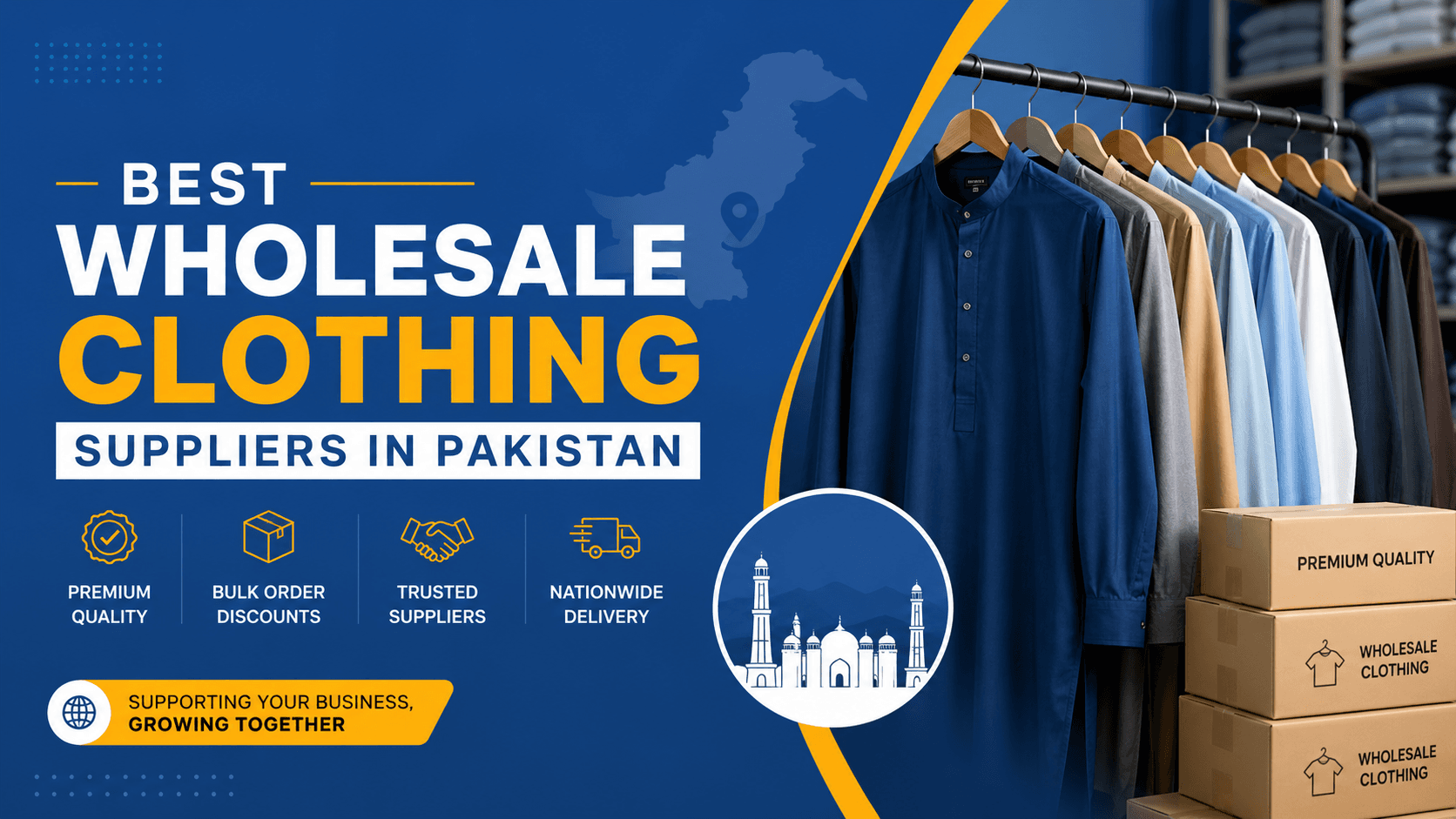
Pakistan is one of the strongest clothing and textile sourcing markets in the region, but finding the best wholesale clothing suppliers in Pakistan is not as simple as picking the first name that appears online. The market is wide, layered, and sometimes difficult to evaluate from the outside. This is why many buyers now use platforms like Baramdat to discover suppliers, compare categories, and start direct conversations before committing to samples or larger orders.
The real challenge is not whether Pakistan has clothing suppliers. It does.
The challenge is knowing which supplier type fits your business.
A buyer looking for export-grade hoodies will not need the same supplier as a boutique owner sourcing women’s ready-to-wear. A reseller buying seasonal stock has different priorities from a brand building a private-label clothing line. That is why this article does not treat every supplier the same. It explains the main types of wholesale clothing suppliers in Pakistan, how they differ, and how businesses should evaluate them before placing orders.
Pakistan’s textile sector also has real export depth. Official foreign trade data shows that the textile group contributed 53.46% of Pakistan’s total exports during July to June 2025, while more recent trade data from the Pakistan Business Council shows textile exports of about $10.9 billion during July 2025 to January 2026, accounting for nearly 60% of total exports in that period. This confirms that clothing and textiles are not small side categories in Pakistan’s economy. They are central to its manufacturing and export base.
Why Pakistan Is Strong in Wholesale Clothing
Pakistan’s strength in wholesale clothing comes from the depth of its textile value chain. The country does not only stitch garments. It has capacity across cotton, yarn, fabric, dyeing, finishing, apparel production, knitwear, home textiles, and private-label manufacturing.
That matters because clothing quality is rarely created at only one stage.
A shirt may look simple, but its final value depends on fabric selection, stitching, sizing consistency, finishing, washing, packaging, and delivery discipline. A supplier that controls more of this process usually offers better consistency. A smaller supplier may offer more flexibility, but the buyer must manage quality checks more carefully.
This is why Pakistan attracts different kinds of buyers. Some want high-volume export production. Some want low-cost wholesale stock. Others want custom clothing suppliers who can support private labels or smaller brands.
The best supplier depends on the buyer’s goal.
Pakistan Clothing and Textile Market Snapshot
The Main Types of Wholesale Clothing Suppliers in Pakistan
Instead of looking for one universal “best” supplier, buyers should first understand the supplier landscape.
Large textile mills are best for businesses that need scale, consistency, and structured production. They usually work with larger orders and are suitable for established companies.
Garment factories are better for buyers who need finished clothing, such as T-shirts, hoodies, uniforms, trousers, or children’s wear.
Private-label manufacturers are useful for brands that want custom tags, packaging, sizing, and product development.
Local wholesale market suppliers are better for fast-moving stock, lower pricing, and flexible buying, but they require more verification.
B2B platforms like Baramdat support the discovery stage by helping businesses find and compare suppliers before direct negotiation begins.
This layered ecosystem is exactly why sourcing from Pakistan can be powerful, but only when approached with structure.
Best Wholesale Clothing Suppliers in Pakistan
1. Baramdat
Baramdat is not a clothing manufacturer itself, but it deserves to be placed at the top because it helps solve one of the hardest problems in sourcing: supplier discovery.
Many buyers struggle because Pakistan’s clothing supply market is fragmented. Some suppliers are in industrial zones, some operate through wholesale markets, some work through referrals, and others are listed online without enough context. Baramdat gives buyers a more structured starting point by allowing them to explore suppliers and connect directly.
This is especially useful for businesses that do not already have strong sourcing contacts in Pakistan. Instead of beginning with random searches or scattered WhatsApp referrals, buyers can use Baramdat to narrow the field before moving into samples, pricing discussions, and order negotiation.
Its role is not to replace due diligence. It improves the first stage of sourcing so buyers can approach suppliers with more clarity.
2. Nishat Mills
Nishat Mills is one of Pakistan’s largest and most established textile groups. It represents the high-capacity end of the clothing and textile supply chain.
For wholesale buyers, companies like Nishat matter because they offer scale, process control, and export experience. This type of supplier is not usually the best fit for very small buyers testing a few designs. It is better suited for businesses that need reliable volume, consistent fabric standards, and structured production.
The strength of a large textile group lies in predictability. Buyers working at scale do not only need low prices. They need consistency across batches, dependable timelines, and the ability to maintain standards over repeated orders.
That is where larger mills become important.
3. Gul Ahmed Textile Mills
Gul Ahmed is one of the most recognized names in Pakistan’s textile industry, with a strong presence in fabrics, apparel, and retail-facing textile products.
Its value for wholesale clothing buyers comes from the connection between production and market understanding. A company with retail visibility often has a better sense of what consumers respond to in terms of fabric, color, design, and finishing.
For buyers sourcing clothing or fabric-based products, this matters. Wholesale is not only about getting stock at a lower price. It is about buying products that can actually move in the market.
Gul Ahmed represents a supplier type where manufacturing capability and consumer awareness overlap.
4. Sapphire Textile Mills
Sapphire Textile Mills is another major textile group with large-scale production strength. For businesses looking for structured sourcing, Sapphire represents the more organized side of Pakistan’s textile sector.
The main advantage here is operational discipline.
Large textile suppliers usually have established processes for production planning, quality control, and order management. That makes them valuable for buyers who need fewer surprises in the sourcing process.
Sapphire is better suited for businesses looking for consistent quality and repeatability rather than highly flexible small runs. If the buyer’s priority is reliability at scale, this type of supplier becomes highly relevant.
5. Interloop Limited
Interloop is especially important in Pakistan’s apparel export landscape because of its strong positioning in hosiery, knitwear, and apparel manufacturing.
For buyers interested in socks, activewear, knit products, or export-oriented apparel, Interloop represents a more specialized and globally experienced supplier type. The company is known for working within structured international supply chains, which usually means greater attention to compliance, consistency, and production discipline.
This makes Interloop more suitable for serious buyers who need reliable systems rather than informal flexibility.
It is not the easiest type of supplier for very small orders, but it is highly relevant for larger brands and distributors.
6. Alkaram Textile Mills
Alkaram has a strong reputation in Pakistan’s textile market and operates across fabrics, apparel, and finished textile products.
What makes Alkaram relevant is its balance between production capability and consumer-facing design. Like Gul Ahmed, it understands how textile products are positioned for end users, which can be useful for buyers seeking clothing that aligns with market demand.
For wholesale buyers, Alkaram-type suppliers are useful when the goal is not just generic production but product presentation. Fabric feel, print quality, color appeal, and finishing all influence whether clothing sells well.
7. Crescent Textile Mills
Crescent Textile Mills represents the established export-oriented textile supplier category in Pakistan. It is relevant for buyers who care about process, consistency, and longer-term sourcing relationships.
A supplier like Crescent is not typically chosen for quick, informal stock buying. It is chosen when a business needs production reliability.
This matters in wholesale clothing because inconsistency can damage customer trust. If sizing, fabric quality, or finishing changes across batches, the buyer’s own brand suffers.
Crescent belongs in this list because it reflects the structured manufacturing side of Pakistan’s clothing supply ecosystem.
8. Chenab Limited
Chenab Limited has long been associated with home textiles, fabric-based products, and lifestyle textile categories.
While not every buyer will approach Chenab for standard wholesale clothing, it is relevant for businesses that want textile products with stronger design and finishing. It represents the segment where manufacturing and lifestyle presentation meet.
For buyers building a clothing or textile retail concept, this kind of supplier can be useful because it understands product appearance, fabric handling, and market presentation.
It is especially relevant when the buyer wants more than basic stitched garments.
9. Private Label Clothing Manufacturers in Sialkot
Sialkot is widely known for export manufacturing, especially in sports goods, activewear, gloves, uniforms, and performance clothing.
Private-label clothing manufacturers in Sialkot are important for buyers who want to build their own brand rather than resell generic stock. These suppliers often support custom labels, specific sizing, logo placement, and product adjustments.
This category is especially useful for sportswear brands, gymwear businesses, uniform buyers, and niche apparel startups.
The main advantage is customization.
The main challenge is verification.
Buyers should always test samples and confirm whether the supplier can maintain consistency beyond the first order.
10. Wholesale Clothing Suppliers in Karachi
Karachi plays a major role in Pakistan’s garment and wholesale clothing supply because of its industrial base, port access, and large commercial markets.
Wholesale suppliers in Karachi are often useful for buyers who need variety, fast-moving stock, and access to both local and export-oriented supply chains. The city offers a mix of garment factories, fabric traders, and ready-made clothing suppliers.
Karachi suppliers can be attractive for buyers looking at larger distribution because the city’s logistics access supports domestic and international movement.
However, supplier quality varies, so proper verification remains important.
11. Wholesale Clothing Suppliers in Lahore
Lahore is one of Pakistan’s most active commercial and fashion-oriented cities. Its wholesale clothing suppliers often serve boutiques, retailers, and small businesses looking for ready-to-wear, women’s apparel, kidswear, and seasonal clothing.
Compared with large mills, Lahore-based wholesale suppliers can offer more flexibility. They are often closer to market trends and faster-moving fashion demand.
This makes Lahore useful for buyers who need product variety and quicker style changes.
The tradeoff is that quality and pricing can vary depending on the supplier, so buyers should compare carefully.
12. Wholesale Clothing Suppliers in Faisalabad
Faisalabad is often called Pakistan’s textile hub, and for good reason. It has a deep manufacturing base across yarn, fabric, processing, and garment-related supply.
For wholesale clothing buyers, Faisalabad is especially important when fabric sourcing and production depth matter. Many suppliers here are connected to the textile value chain more directly than suppliers in purely commercial markets.
This can be an advantage for buyers who want better control over fabric selection, production quality, and cost structure.
Faisalabad is particularly useful for bulk buyers and businesses sourcing fabric-led apparel.
How to Choose the Right Wholesale Clothing Supplier
Choosing the right supplier depends on what kind of business you are building.
If you are a retailer looking for fast-selling stock, local market suppliers in Lahore or Karachi may be more practical. If you are building a private-label clothing brand, Sialkot or Faisalabad manufacturers may be a better fit. If you need export-grade consistency, large mills and structured manufacturers become more relevant.
The decision should not start with price alone.
It should start with fit.
A low-cost supplier who cannot maintain sizing, fabric quality, or delivery timelines can become expensive very quickly. On the other hand, a slightly higher-priced supplier with consistency can protect your brand and reduce operational stress.
Supplier Type Comparison
Final Buying Advice
The best wholesale clothing suppliers in Pakistan are not all found in one place. They are spread across mills, factories, markets, and digital platforms.
That is why smart buyers use a mixed approach.
They begin with supplier discovery, shortlist relevant options, communicate directly, request samples, and then scale gradually. This reduces risk and helps businesses avoid the common mistake of placing large orders too early.
Platforms like Baramdat are useful because they make the discovery stage more structured. But the final decision should always be based on supplier fit, sample quality, communication, and consistency.
Conclusion
Pakistan is one of the strongest markets for wholesale clothing sourcing because it has both industrial depth and supplier variety. From large textile mills to private-label manufacturers and local wholesale suppliers, businesses can find options for nearly every sourcing model.
The key is knowing how to choose.
The best wholesale clothing suppliers in Pakistan are not simply the biggest names or the cheapest vendors. They are the suppliers that match your business model, quality expectations, order size, and long-term goals.
For modern buyers, the smartest approach combines digital discovery through platforms like Baramdat with practical verification through samples, communication, and gradual scaling.
That is how wholesale sourcing becomes less risky and far more effective.
FAQs
1. Who are the best wholesale clothing suppliers in Pakistan?
The best wholesale clothing suppliers in Pakistan include large textile mills, private-label manufacturers, city-based garment suppliers, and local wholesale market vendors. The right choice depends on your business model, order size, product category, and quality expectations. Buyers should compare suppliers carefully instead of choosing only by price.
2. Is Pakistan good for wholesale clothing sourcing?
Yes, Pakistan is a strong wholesale clothing sourcing market because textiles are one of its largest export sectors. Official trade data shows textiles contribute a major share of Pakistan’s exports, which reflects strong manufacturing depth, supplier availability, and experience in apparel-related production.
3. How do I verify a wholesale clothing supplier in Pakistan?
Start by checking the supplier’s product range, communication quality, and ability to provide samples. Then place a small order before scaling. This helps you evaluate fabric quality, stitching, sizing, finishing, packaging, delivery timelines, and overall consistency before committing to a larger wholesale clothing order.
4. Which city is best for wholesale clothing suppliers in Pakistan?
Faisalabad is strong for textile production and fabric-led sourcing, Karachi offers garment supply and logistics access, Lahore is useful for fashion and market-driven clothing, while Sialkot is strong for sportswear, uniforms, and private-label activewear. The best city depends on the clothing category you want to source.
5. Can small businesses buy wholesale clothing from Pakistan?
Yes, small businesses can source wholesale clothing from Pakistan, especially through local suppliers, private-label manufacturers, and B2B discovery platforms. Large mills may require higher order quantities, but smaller manufacturers and city-based suppliers often offer more flexibility for startups, boutiques, and growing clothing brands.
6. What should I check before choosing a clothing supplier?
Before choosing a supplier, check product quality, fabric consistency, sizing accuracy, communication speed, minimum order quantity, delivery timelines, customization options, and payment terms. A reliable supplier should be able to explain their process clearly and maintain quality across repeated orders, not only during the first sample.
7. How does Baramdat help with wholesale clothing sourcing?
Baramdat helps by giving buyers a more structured way to discover and connect with suppliers. Instead of relying only on referrals or scattered searches, businesses can use the platform to explore supplier categories, shortlist options, and begin direct communication before moving into samples, negotiation, and larger sourcing decisions.

You can view the products listed orsign up on Baramdat for free

You might also like
How to Find a Clothing Manufacturer: Domestic vs Overseas Options for Small Brands
By Muhammad Umar - 20 October 2026
How small brands find and vet clothing manufacturers: domestic vs overseas, where to look, what to ask, red flags and how to run a first order.
Rock Phosphate Suppliers in Pakistan: A Buyer's Guide for 2026
By Muhammad Umar - 13 October 2026
Top 10 rock phosphate suppliers in Pakistan for 2026 - P2O5 grades, regions, MOQs, and what buyers should verify before ordering in bulk.
Fire Fighting Equipment Suppliers in Pakistan: A Buyer's Sourcing Guide
By Muhammad Umar - 13 October 2026
Sourcing fire fighting equipment from Pakistan? Compare extinguishers, hydrants, alarms & PPE, verify certifications, and connect with sellers on Baramdat.

Car Manufacturers in Pakistan: Complete 2026 Guide
By Muhammad Umar - 13 October 2026
See every PAMA-registered car manufacturer in Pakistan - Suzuki, Toyota, Honda, Hyundai, Kia, Changan, and more - with segments and verified sources.