But here's the catch: because pink salt has become such a booming export category, dozens of companies now claim to be "Pakistan's #1 exporter" or "the leading supplier since decades ago." Some of that is real, some of it is marketing copy recycled from a template. If you're trying to source pink Himalayan salt in bulk — whether for food service, spa and wellness products, home décor, or private-label retail — knowing which companies actually have the history, capacity, and track record to back up their claims makes all the difference.
We've put together this list of 10 established pink Himalayan salt exporters in Pakistan, based on their export history, product range, and the markets they already serve. Whether you're placing your first trial order or scaling up an existing supply chain, this should give you a solid starting shortlist.
Why Pakistan is the only real source of pink Himalayan salt
A quick bit of context before the list, because it actually matters when you're vetting suppliers: genuine pink Himalayan salt is mined from ancient sea deposits inside the Khewra Salt Range, part of the foothills of the Himalayas in Punjab, Pakistan. It's not scraped off a mountain in Nepal or Tibet, and it's not "Himalayan" in the sense that it comes from anywhere near the Himalayan peaks most people picture — the name refers to the broader mountain system the Salt Range is geologically connected to.
This matters commercially for one big reason: some pink salt gets exported from Pakistan as cheap raw rock, then gets re-processed, re-packaged, and re-sold by a country like India at a markup — often without ever mentioning Pakistan as the country of origin. If your business cares about being able to say "genuine, direct-from-source Himalayan pink salt" on your own packaging, buying straight from a Pakistani exporter (rather than a middleman reseller elsewhere) is what actually backs that claim up.
It's also worth knowing upfront that pink salt exporters in Pakistan generally fall into a few different categories, and figuring out which type you're actually dealing with will save you a lot of back-and-forth. Some are true manufacturers with their own mines or long-term mining contracts, processing everything in-house from raw rock to finished product. Others are processors who buy raw salt from mine owners and focus purely on grinding, grading, and packaging. And a smaller number are pure trading companies — they don't touch the salt themselves at all, but manage the export paperwork, logistics, and international relationships on behalf of a processor. None of these models is automatically better or worse, but it does affect things like pricing, minimum order sizes, and how much direct input you'll have over specifications like grain size or packaging.
Before we explore each company in detail, here's a quick comparison of 10 established pink Himalayan salt exporters in Pakistan.

1. Ittefaq Salt
Ittefaq Salt has been in the business since 1983, which makes it one of the longest-running names in Pakistan's salt export industry. The company owns two of its own mines — including one in Kalabagh, a region known for particularly high-quality pink salt — and runs its own processing facility rather than outsourcing production. That vertical control tends to matter for quality consistency, since the company isn't relying on third-party middlemen for its raw material.
Ittefaq exports to more than 90 countries and says it works with over 400 businesses worldwide, offering private labeling so wholesalers and retail brands can sell the salt under their own name. The company has also represented Pakistan's salt industry at trade exhibitions across Europe, the UK, and the US, and has been publicly recognized for its performance in the industry.
Website: ittefaqsalt.com
2. Tanveer Salt Traders
Tanveer Salt has one of the more compelling backstories in this list. The family's involvement in the salt trade goes back to 1942, when the founder — born in Khewra itself — first got into the business. The company as it's known today was formally established in 1977, and by the mid-2000s the founder's son had taken the business international, expanding it from a local operation into a global exporter.
Based in Muridke, Punjab, Tanveer Salt now says it serves over 500 businesses across more than 30 countries. Their product range covers the full spectrum: dark pink, medium pink, and light pink edible salt, plus white and black salt varieties, salt lamps, cooking plates, and compressed lick salt blocks for livestock. If you're looking for a supplier with genuine multi-generational roots in Khewra rather than a company that entered the export business more recently, this is a strong one to talk to.
Website: tanveersalt.com
3. Al-Azeem Enterprises
Founded in 1998, Al-Azeem has built a broad catalog that goes well beyond just edible salt. Alongside standard culinary pink salt, they produce bath salts and body scrubs, salt lamps, and salt bricks and tiles used in décor and even construction projects. That range makes them a reasonable one-stop option if your business touches multiple product categories — say, a wellness brand that wants both edible salt and spa products from the same source.
They also offer private labeling, which is worth asking about upfront if you're planning to launch your own branded product line rather than reselling under their name.
Website: alazeement.com
4. Pink Salt Pakistan
Established in 2002, Pink Salt Pakistan has grown its export footprint to a claimed 95+ countries, including major markets across Europe, Asia, the US, and Australia. Alongside pink, black, and white edible salt, they offer bath salt and animal lick salt lines, and — like most established exporters — private labeling for distributors who want their own branding on the packaging.
The company markets itself heavily around reliability and consistent quality control "from mining to manufacturing," which is a reasonable thing to actually verify by asking for their quality documentation and testing process before committing to a large order.
Website: pinksaltpakistan.com
5. Friends Rock Salt (FRS)
Friends Rock Salt is younger than most names on this list — founded in 2016 — but it's grown quickly and picked up industry recognition along the way, including award mentions. What stands out about FRS is that they maintain in-house labs and their own inspection units, rather than relying purely on external certification bodies, which can mean tighter day-to-day quality control.
Their catalog spans culinary salt, décor items like tiles, lamps, and candle holders, spa and personal care products, and agricultural salt. They currently ship to markets including the US, UK, and Europe.
Website: friendsrocksalt.com
6. Standard Salts
With more than two decades in the business, Standard Salts has built up export relationships across roughly 85 countries. They offer pink, black, and white Himalayan salt, and — notably — say they have direct access to their own mine sources rather than buying raw salt through intermediaries.
They work with a mix of retailers, bulk buyers, and international distributors, which suggests some flexibility in order size if you're not ready to commit to a full container load right away.
Website: standardsalts.com
7. Ghani Himalayan Salt
Ghani Himalayan Salt operates under the umbrella of Ghani Group, a larger, diversified Pakistani industrial conglomerate. If you're the kind of buyer who prefers working with a company backed by broader corporate infrastructure — rather than a standalone family business — this backing may be a point in their favor, since it usually means more established financial and logistical systems behind the scenes.
Website: ghanigroup.com.pk
8. Harmain Global
Harmain Global has been exporting Khewra-origin pink salt since 1985, and what sets them apart on this list is just how specific they get about their quality documentation. They state ISO 22000 certification, FDA registration, Halal certification, and GACC registration — the last of which specifically matters if you're importing into China, since it's a required clearance for that market.
They also publish their actual testing thresholds: NaCl purity of 98% or higher, moisture content capped at 0.2%, and heavy-metal testing aligned with EU maximum residue limits. Every shipment reportedly comes with a Certificate of Analysis and a Certificate of Origin — useful if your own buyers or regulators require documented proof of where the salt actually came from. Their catalog covers culinary, wellness and bath, décor, animal nutrition, cooking surfaces, and industrial bulk salt.
Website: harmainglobal.com
9. Reign Corporation (Salt Pakistan)
Reign Corporation runs a 14,000 square foot processing facility and, unlike most names here, doesn't only export salt — they also handle marble, sandstone, and rice. If your business already sources other Pakistani commodities alongside pink salt, consolidating with one export partner across multiple product categories can simplify your logistics and paperwork considerably.
Website: saltpakistan.com
10. 786 Enterprises
786 Enterprises exports to more than 40 countries across Europe, North America, and the Middle East, with a product line covering edible salt, salt lamps, and salt blocks. They've built part of their identity around eco-friendly packaging, which may be worth highlighting if sustainability credentials matter to your end customers.
Website: 786enterprises.com
A few more names worth a look
A handful of other companies also came up in our research and may be worth exploring depending on exactly what you need: Suhail Salt, The Salt (thesalt.pk), and Salt Mine Khewra. All three describe themselves as manufacturer-exporters, though there was less distinguishing detail available on their specific history or certifications compared to the ten above — so a direct conversation with their sales teams is the best way to evaluate them.
Pink Himalayan Salt Product Types Exporters Offer
Not every exporter produces every type of pink Himalayan salt product — and knowing the difference matters when you're sourcing, since a company set up for bulk edible salt processing isn't always equipped to also carve lamps or cut tiles at scale. Here's a rundown of the main product categories you'll come across, and what each is typically used for.

Edible Salt (Fine & Coarse)
Hand-mined and minimally processed, edible-grade pink salt retains its full mineral content — around 84 trace minerals, according to most exporters. Sold in fine grain for everyday cooking or coarse grain for grinders and finishing salt. This is usually the highest-volume category for exporters targeting food service, gourmet retail, and private-label grocery brands.
Bath Salt
Coarse or medium-grain salt sold for spa and wellness use, often marketed around its mineral content and detoxifying properties. A common entry point for wellness brands looking to add a Himalayan salt line without investing in decor manufacturing.
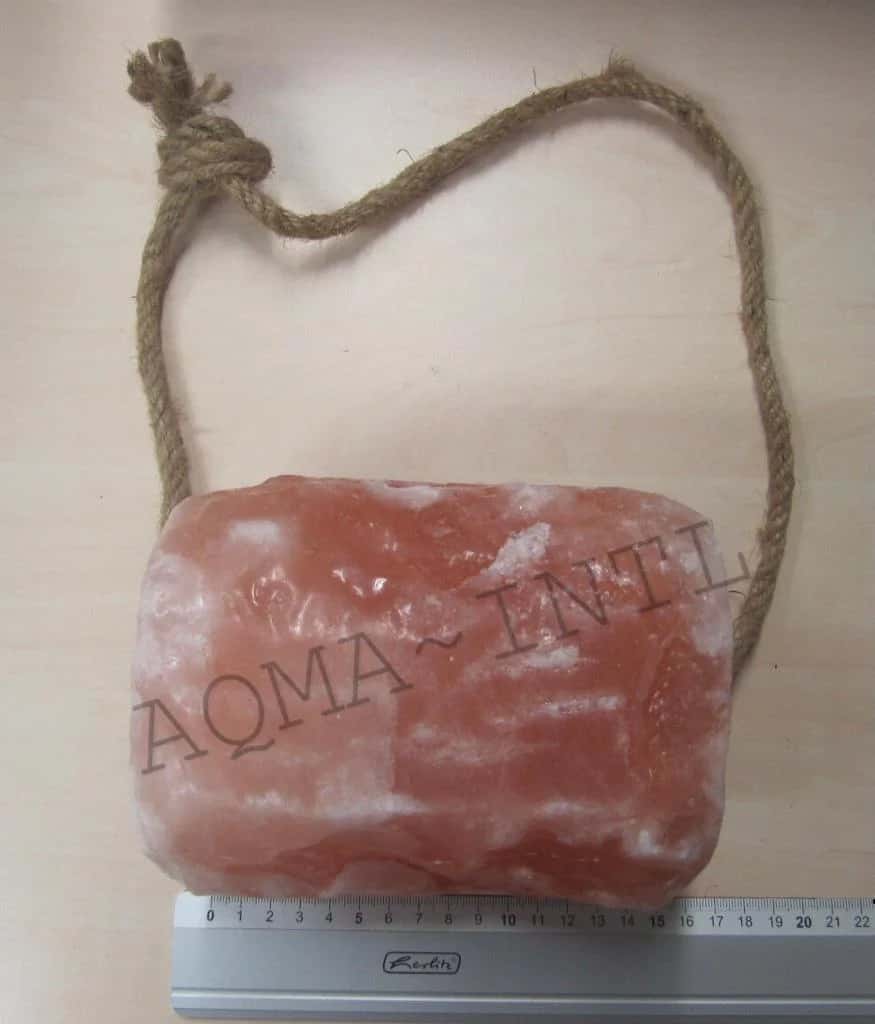
Lick Salt (Animal Salt Licks)
Compressed or block-form salt sold for livestock and farm animal nutrition, replenishing minerals and electrolytes. A steady, less trend-dependent export category compared to consumer wellness or decor products.
Salt Lamps
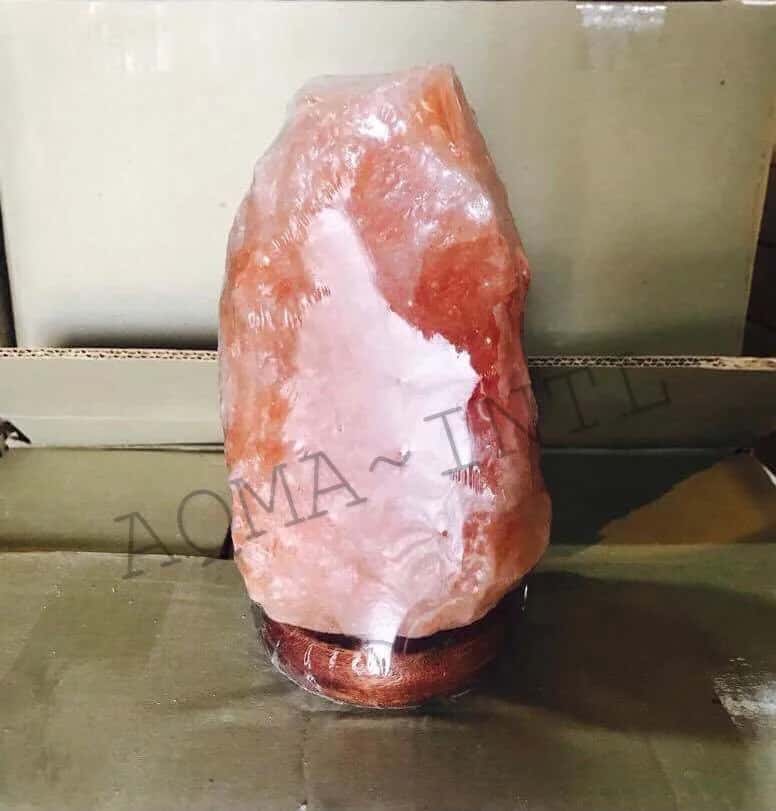
Hand-carved from larger salt chunks and fitted with a light source, salt lamps are one of the best-known Himalayan salt exports globally, valued for their warm amber glow and use as a natural decor/air-ionizing product. Production capacity for lamps is worth asking about separately from a supplier's edible salt output, since it's a distinct carving and finishing process.
Salt Candle Holders
Smaller carved pieces designed to hold a tea light, giving off a soft glow through the translucent salt. A popular lower-cost decor item alongside full lamps, often ordered in bulk for gift and homeware retailers.
Culinary Blocks (Cooking & Serving Plates)
Solid slabs of salt used for grilling, searing, chilling, or serving food directly on the salt surface, which imparts a subtle seasoning. Popular with restaurants and specialty cookware retailers.
Aromatherapy & Tea-Light Products
Smaller carved salt pieces designed around ambient lighting and relaxation use — often overlapping with the candle holder category but marketed more toward spa and wellness retail than general home decor.
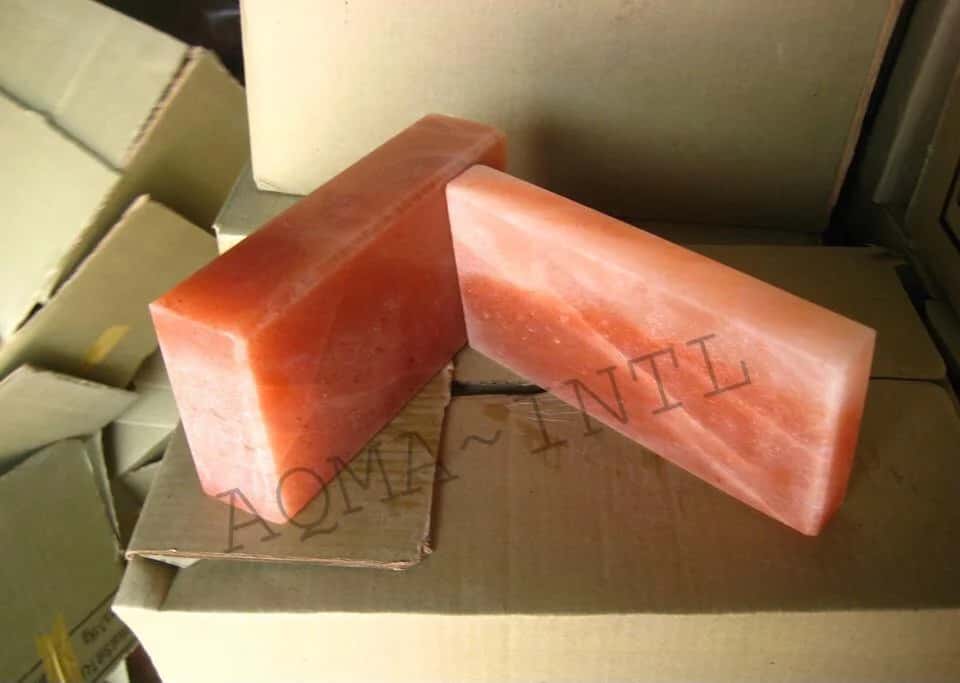
Salt Tiles & Bricks
Larger flat-cut salt pieces used for interior walls, sauna rooms, and spa construction projects. This is a more specialized, lower-volume category — typically only offered by exporters with dedicated cutting equipment for construction-grade pieces.
How to Choose the Right Pink Himalayan Salt Exporter
Before wiring a deposit to any exporter — on this list or elsewhere — it's worth doing a bit of your own due diligence, especially since pink Himalayan salt has become such a crowded, competitive export category.
Ask to see current certificates rather than taking a website's word for it. ISO 22000, HACCP, Halal, and FDA registration (for US-bound shipments) or GACC registration (for China) are among the certifications most commonly requested by international buyers. A Certificate of Origin is also worth requesting, as it confirms the salt genuinely came from the Khewra Salt Range rather than being blended or re-exported through a third country.
If you're sourcing food-grade Himalayan salt, it's also worth asking for recent laboratory test reports in addition to certification documents. These reports typically include sodium chloride (NaCl) purity, moisture content, particle size, microbiological testing, and heavy metal analysis, giving you a clearer picture of product quality and consistency.
It's also completely normal—and smart—to request a sample or place a small trial order before committing to a full container load. Reputable exporters expect this and won't push back on it. Always get your minimum order quantity (MOQ), production capacity, packaging options, and estimated lead times confirmed in writing, since these can vary depending on whether you're ordering edible-grade salt, lamps, decorative products, private-label packaging, or industrial-grade bulk salt.
Finally, don't hesitate to ask for customer references or examples of previous export shipments to your country. Established exporters are usually happy to share their export experience, product catalogs, and packaging options, helping you make a more informed purchasing decision.
How Pink Himalayan Salt Is Exported from Pakistan
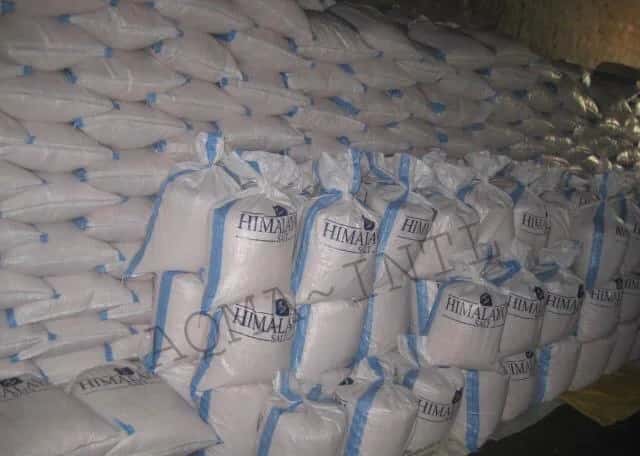
If you haven't imported from Pakistan before, it helps to know roughly what to expect once you've picked a supplier and placed an order. Most exporters on this list ship out of Port Qasim or Karachi Port, Pakistan's two largest seaports that handle the majority of the country's export container traffic. Raw and semi-processed salt typically moves in full container loads (FCLs) for larger orders, while smaller wholesale orders—especially finished products like lamps or packaged culinary salt—can sometimes be shipped as less-than-container-load (LCL) consignments if your supplier offers that flexibility.
Before confirming your order, make sure you've agreed on the shipping terms (Incoterms) with your supplier. Whether your quotation is based on EXW, FOB, CFR, or CIF can significantly affect your total landed cost, as each option determines who is responsible for transportation, insurance, export clearance, and freight charges. Clarifying these terms upfront helps prevent unexpected costs and delays later in the shipping process.
Lead times vary depending on how much processing your order needs. A straightforward bulk order of pre-processed raw or coarse salt may be ready to ship within two to three weeks, while a large custom order involving finished lamps, private-label packaging, or a specific grain size may require additional production time. Always ask for a written production schedule and estimated shipping timeline before confirming your purchase.
Most established exporters will also prepare the necessary export documentation, including the commercial invoice, packing list, bill of lading, certificate of origin, and any agreed inspection or quality certificates. However, import requirements vary from country to country, so it's important to confirm exactly which documents your supplier will provide. If this is your first shipment from Pakistan, working with an experienced freight forwarder or customs broker can make the entire import process much smoother and help avoid unnecessary customs delays.